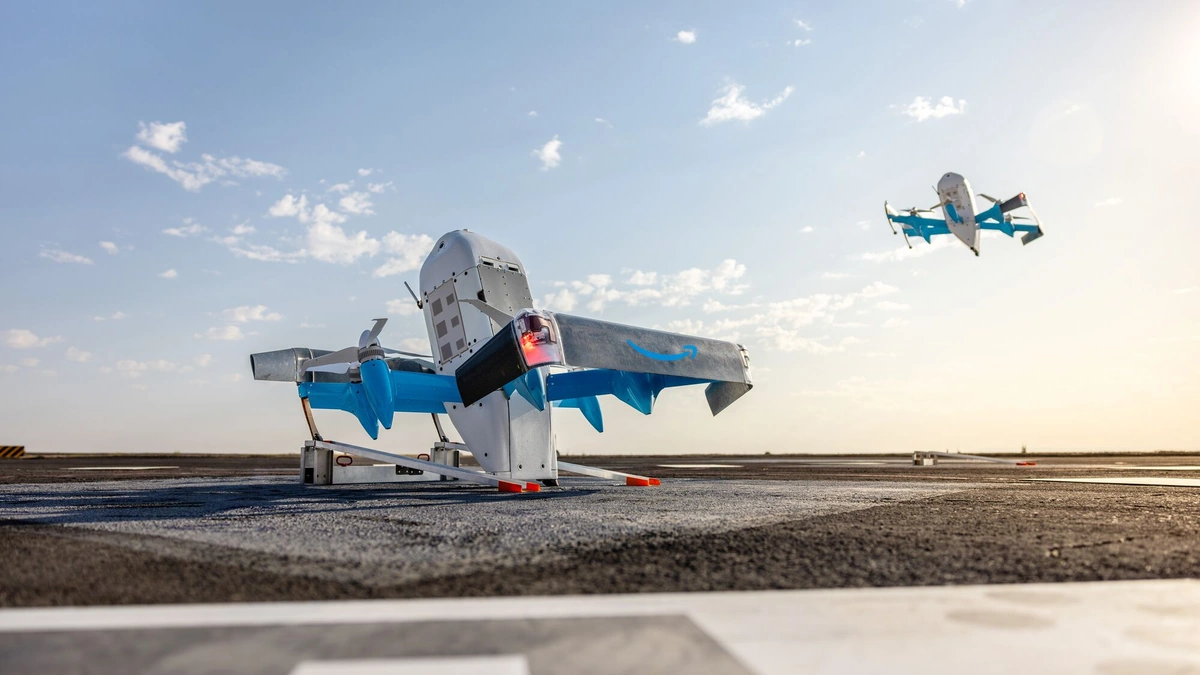
Drone delivery is a logistics service that uses small uncrewed aircraft to carry packages from a store, warehouse or hospital to a customer's yard or a designated drop point. In the US it has moved past the pilot-project stage in a handful of metros: Wing serves Dallas-Fort Worth, Atlanta, Charlotte, Houston and Orlando, much of it with Walmart orders, and Amazon's Prime Air runs from 11 sites across seven states. Coverage is still a patchwork of small circles around launch sites, and the federal rule that would make long-range flights routine has not been finalized. Whether drone delivery reaches a given door depends on three things: the operator's service area, what the order weighs, and the airspace rules over that neighborhood.
How Drone Delivery Works
Drone delivery sends a small order from a nearby store or hub on a highly automated aircraft that sets the package down in the customer's yard or driveway. Customers order in an app, choose drone delivery and a drop spot, and Wing and Amazon both cap orders at about five pounds, with deliveries in as little as 30 minutes.
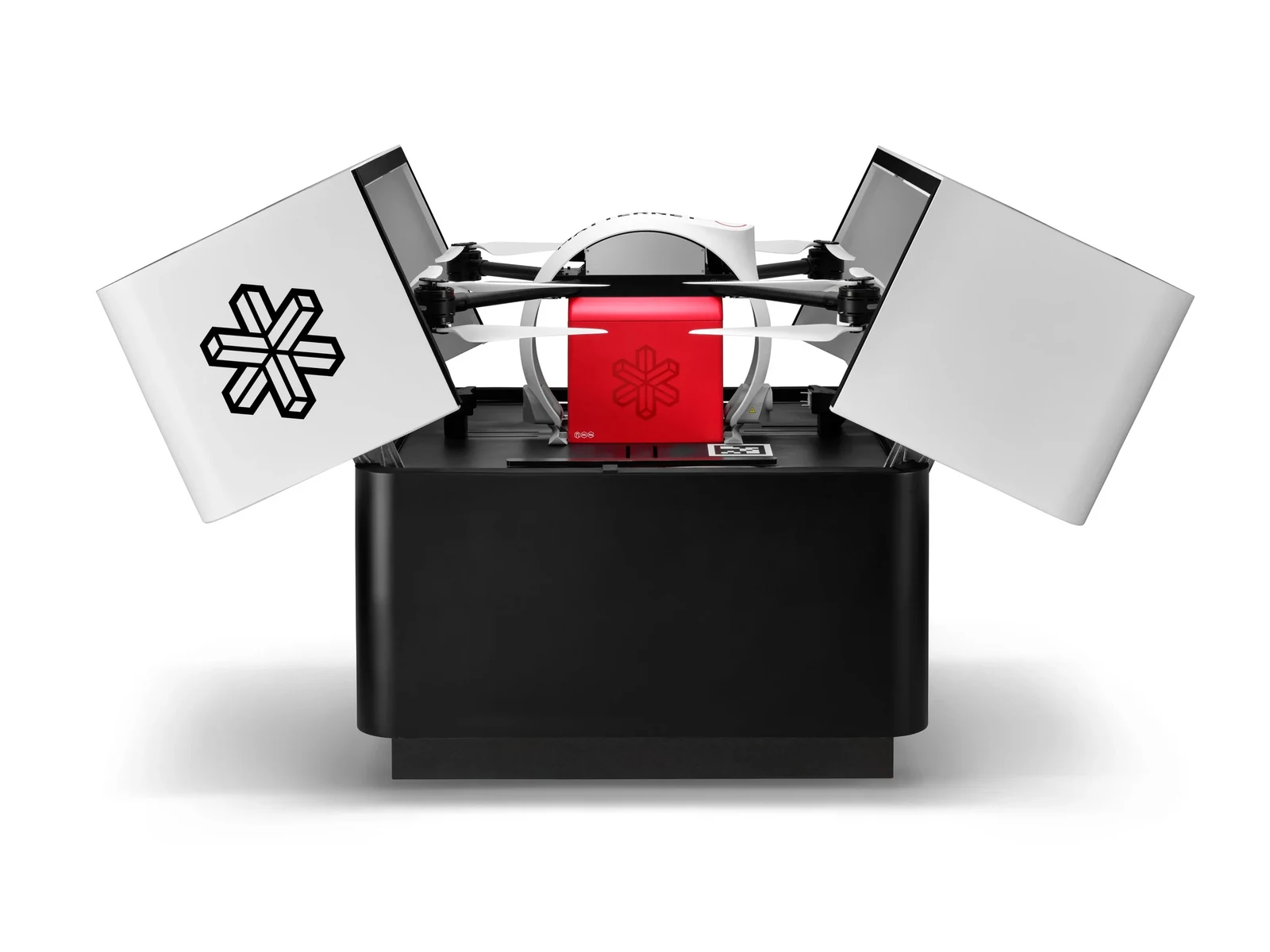
From the customer's side it looks like any app order, and most of the complexity sits in automation behind it. Wing describes a typical order in five steps:
- Route planning. When the order comes in, Wing's system picks a route automatically, avoiding other aircraft and obstacles.
- Pickup. At the partner store, a staff member loads the package onto a Wing pickup station, and a drone flies in to collect it.
- Cruise. The aircraft flies at up to 60 mph, with a range of up to 12 miles round trip.
- Drop. Over the address, the drone checks the chosen delivery zone for obstacles such as cars or trampolines, moves if needed, and lowers the order on a tether.
- Oversight. Throughout, remote pilots monitor weather and air traffic across many flights at once from a central location.
That last point is the real change from early trials. Wing says individual flights do not need human control; its pilots oversee the whole system. Amazon takes a similar line with a detect-and-avoid system that Amazon compares to a trained pilot scanning the sky, letting each drone make its own real-time decisions in flight. The onboard camera data is processed on the drone itself, which is a working example of the trade-offs in edge computing versus cloud computing: the decision has to happen where the aircraft is, not in a data center.
How to Get Drone Delivery
Getting drone delivery starts with the address, because eligibility is decided house by house, not city by city. The operators' own instructions reduce to five steps:
- Check the address. Wing has an address lookup on its delivery page, and Amazon points customers to amazon.com/dronedelivery; Amazon adds that not every location inside a listed ZIP code is eligible.
- Order in a partner app. Wing is reached through apps such as Walmart and DoorDash or through its own marketplace, and Wing notes that smaller items are more likely to be available by drone. Prime Air sits inside the regular Amazon app and checkout.
- Choose drone and a drop spot. In Wing's flow, the customer selects drone as the fulfillment method and, if the address and items qualify, picks a precise spot such as a driveway or backyard. Amazon asks customers to confirm a delivery point on their first drone order.
- Follow the countdown. Wing says its delivery countdowns are accurate to within a couple of seconds.
- Collect the package. Wing lowers the order to the ground and flies off, with no clip for the customer to undo.
On Amazon's Prime Air page, customers at eligible locations see the drone option as they shop and at checkout, and drone orders keep Amazon's usual customer service, returns and A-to-z Guarantee.
Aircraft Types and Drop Methods
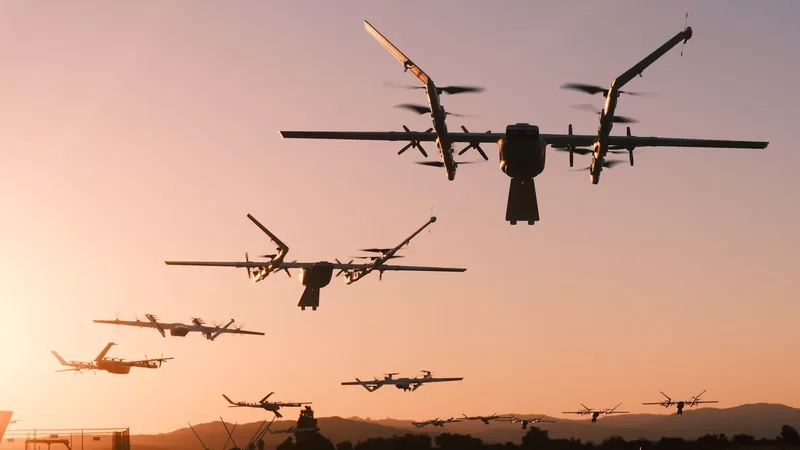
Drone delivery aircraft come in three basic shapes, and the choice decides how far and how fast a service can fly. The FAA's package delivery page lists fixed-wing, multirotor and hybrid vertical take-off and landing designs, says commercial delivery drones have an average wingspan of about five feet, and notes that delivery flight paths stay under 400 feet:
- Multirotor: lifts and cruises on the same rotors, which suits hovering and precise drops.
- Fixed-wing: flies like a small plane, which suits longer, faster routes.
- Hybrid VTOL: combines the two. Wing's aircraft use vertical lift motors for take-off, delivery and landing plus separate cruise motors for efficiency over longer distances.
The published limits of the best-known US operators, plus two newly announced aircraft, show how similar the consumer offer has become. Each figure below is the company's own claim:
| Operator | Payload | Reach | Speed | Delivery detail |
|---|---|---|---|---|
| Wing | Up to five pounds | Up to 12 miles round trip | Up to 60 mph | Lowered on a tether |
| Amazon Prime Air | 5 pounds or less, shoebox size | 7.5-mile radius per site | N/A | Drop-off at the confirmed delivery point |
| Zipline | N/A | N/A | Up to 70 mph | Insulated pod |
| Matternet M3 | Up to 11 pounds | 10-mile service radius | N/A | Cargo bay takes ordinary merchant bags and boxes |
| DoorDash Air | About 80% of typical DoorDash restaurant orders | N/A | N/A | Winch for pickup and drop-off |
Sources for the table: Wing states the five-pound payload alongside its 60 mph cruise; Amazon gives the 7.5-mile radius around each fulfillment center and the shoebox rule on its Prime Air page; Zipline says its aircraft fly at up to 70 mph on a direct path, hover up to 300 feet above the ground and carry orders in insulated pods that keep hot food hot; Matternet announced its M3 aircraft in September 2026 and targets commercial service for the second half of 2027; and DoorDash sized its aircraft from its own order data. Amazon adds that its current MK30 drone has double the range and half the noise of any previous Amazon delivery drone. The five-pound ceiling that both Wing and Amazon publish is the number that shapes what drone delivery is for today: a prescription, a phone charger or a hot meal, not a weekly grocery run.
Where Drone Delivery Operates
Drone delivery in the US runs only where an operator holds FAA approval and has built a launch site, so availability is measured in sites, not states. The FAA keeps a public list of the operators it has certificated for package delivery, which reads like a short history of the industry:
- Wing Aviation: first drone air carrier certificate, in April 2019, after delivering food and over-the-counter medicine in Christiansburg, Virginia.
- UPS Flight Forward: first standard air carrier certificate, flying medical supplies on the WakeMed hospital campus in Raleigh with Matternet aircraft.
- Amazon Prime Air: first to operate a drone heavier than 55 pounds under an air carrier certificate.
- Zipline: the first fixed-wing operator certificated for package delivery, starting in Charlotte, North Carolina.
- Causey Aviation Unmanned, DroneUp and Drone Express: later entrants flying Flytrex, Prism V2 and Telegrid aircraft in North Carolina, Texas and Ohio.
The FAA list names seven certificated operators, the most recent added in April 2025, and had not added another by its September 2026 update. DoorDash says its DoorDash Labs unit earned Part 135 certification in July 2026, and the company calls itself the eighth drone operator to earn the certificate. Amazon lists 11 Prime Air sites, from Tolleson in the Phoenix metro to Waco, Texas, each covering a service area of about 175 square miles, and says it plans to reach nearly 500 cities and towns.
Outside the US, the strongest use case so far is hospital logistics. In South West London, Wing works with Apian and the NHS to fly medical samples, including urgent blood samples, between St George's Hospital and a health center in South Wimbledon, turning a road journey of up to 40 minutes into a five-minute flight. Amazon has launched Prime Air in Darlington, England, its first customer service outside the US. For hospitals, a drone link is one piece of a wider technology stack that also includes the tools covered in the guide to implementing AI in healthcare.
Walmart, Amazon and DoorDash Drone Delivery
For shoppers, drone delivery shows up inside retailer and delivery apps, and Walmart, Amazon and DoorDash each run it differently.
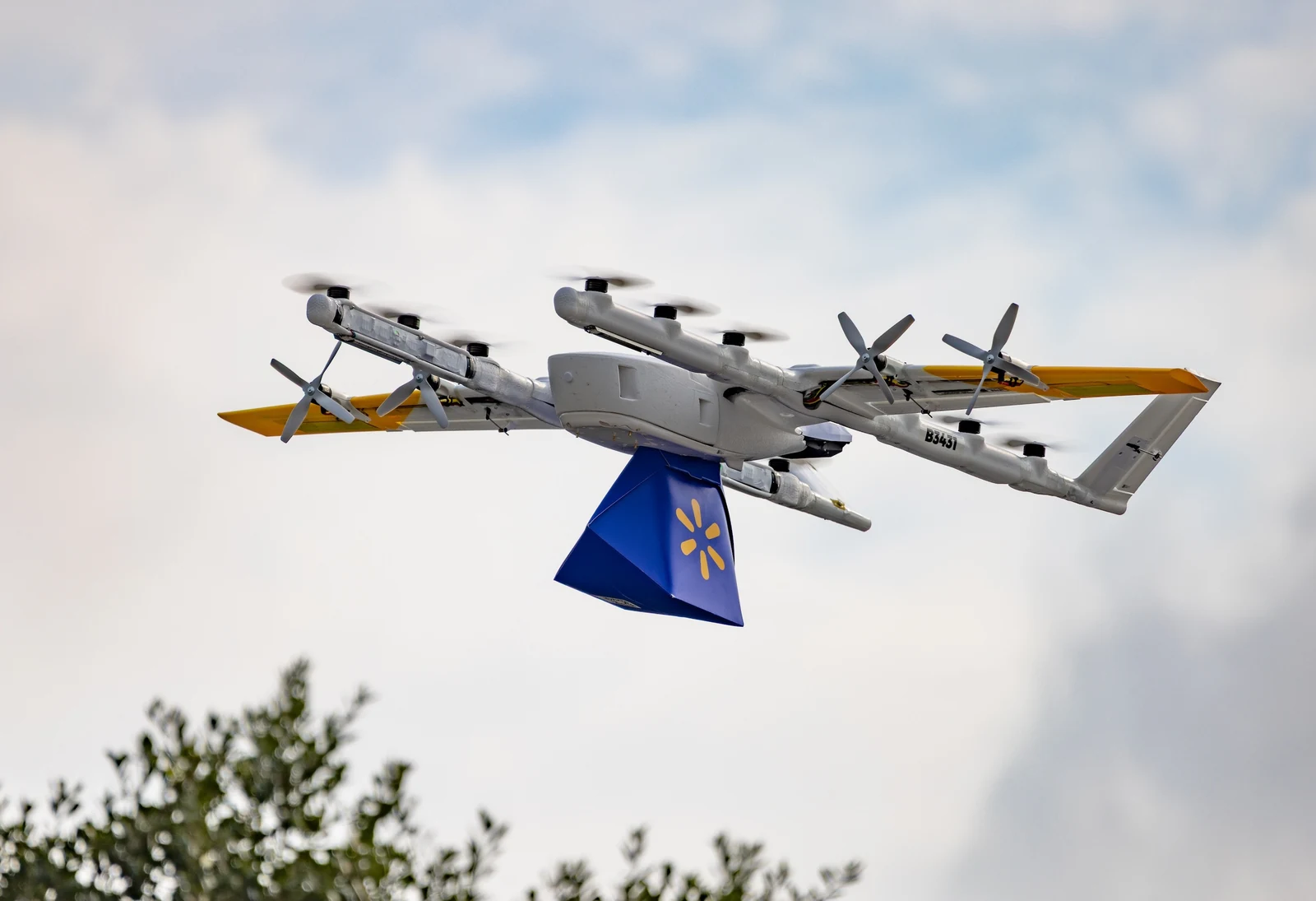
Walmart drone delivery runs on outside operators. Walmart says it works with providers including Wing and Zipline, and in May 2026 it passed one million drone deliveries, with service from 66 stores in four states across five metro markets, an average delivery time of 23 minutes and a fastest delivery of 4 minutes 44 seconds. Wing and Walmart say their partnership already gives more than three million customers access to drone delivery, and Wing plans to reach more than 270 Walmart stores, with Denver and Seattle among the next metros. Wing says its fleet is made up of two of the industry's lightest-weight aircraft.
Amazon drone delivery is run by Amazon itself under the Prime Air name. Amazon says nearly all items of 5 pounds or less that fit in a large shoebox can fly, which it puts at more than 60% of the items customers buy most often, and it plans to launch soon in the Chicago, Syracuse, Cleveland, Atlanta and Boise metro areas.
DoorDash drone delivery has run through partners such as Wing and now also has an in-house program, DoorDash Air. DoorDash said in September 2026 that its own aircraft would begin pilot deliveries in Northern California with restaurant partners including Chipotle and Popeyes Louisiana Kitchen. The company says the aircraft uses six slow-spinning propellers, which hold cruising noise to roughly that of a passing car at delivery height. In its certification announcement, DoorDash estimated that drones delivered in an average of 25 minutes in 2025.
The Rules Behind Drone Delivery
Commercial drone delivery in the US is regulated as air carriage, not as hobby flying. The FAA says Part 135 certification is the only path for small drones to carry someone else's property for compensation beyond visual line of sight, and an operator must also obtain an exemption or waiver for those flights. The FAA notes that many traditional rules in 14 CFR Part 135 do not fit drones, so operators petition for exemptions from them. According to the FAA, a delivery operator has to:
- Obtain a Part 135 air carrier certificate and airspace authorization, going through the five phases of FAA certification.
- Secure exemptions or waivers for beyond visual line of sight flight and for rules that do not fit drones, such as carrying flight manuals on board.
- Complete an environmental assessment under the National Environmental Policy Act before the certificate is issued.
- Build a hub and delivery infrastructure, inform the local community and answer public questions, including about noise.
- Comply with state and local requirements, which can mean separate approvals from local government.
The FAA says it has completed more than 20 environmental assessments for individual delivery proposals, each ending in a finding of no significant impact, covering states from Arizona to Virginia. The bigger change is still pending. In August 2025 the FAA published a proposed Part 108, Normalizing Unmanned Aircraft Systems Beyond Visual Line of Sight Operations, which names package delivery among the operations it aims to make routine without waivers or exemptions. The proposed Part 108 would:
- replace one-off approvals with two tiers of authorization, operating permits and operating certificates;
- cover aircraft weighing up to 1,320 pounds, with lower limits for some operation types;
- keep operations primarily below 400 feet above ground level;
- drop the airman certificate requirement; instead, each operator would name an operations supervisor responsible for overall safety, with flight coordinators who can intervene in individual flights;
- require a detect-and-avoid system for flights in busier Class B and C airspace;
- require drones to yield to aircraft broadcasting their position with ADS-B and, in some areas, to use strategic deconfliction through traffic management services.
The FAA then reopened comments on two contested pieces, right-of-way and electronic conspicuity, in January 2026. No final Part 108 rule has appeared in the Federal Register, so delivery still runs on Part 135 certificates and exemptions. For delivery companies the operations supervisor model is the piece to watch, because it would write into rule the one-team, many-drones setup Wing already describes. The rule would sit on top of Remote ID, which since a 2021 final rule requires drones to broadcast identification, location and performance data in flight; a connected fleet broadcasting its position raises the same hardening questions covered in the guide to securing IoT devices. Britain is building its own version: the UK government is funding a numberplate-style Remote ID system and faster approvals for medical logistics drones.
What Drone Delivery Costs, Benefits and Trade-offs
Drone delivery wins on speed for small, urgent items, and the independent cost evidence cited here is far less flattering. Wing advertises a fastest delivery time of 2 minutes 47 seconds and more than one million commercial deliveries to homes, and Amazon says Prime Air orders arrive in as little as 30 minutes, with most arriving around 60 minutes after checkout. An independent modeling study in npj Sustainable Mobility and Transport compared vans, drones and bicycles for medical samples in the UK. It found transit-time cuts of up to 90% with drones, but costs rose by 133%, and the biggest gains needed drone access to every site and residents willing to accept up to 40 flight movements per hour.
- Price to the customer: Amazon charges Prime members $2.99 on drone orders under $50 and others $4.99, with free drone delivery for Prime orders of $50 or more.
- Speed: flights skip traffic entirely, which is why hospital links such as the London service show the clearest gains.
- Emissions: Amazon says its drones are fully electric with zero exhaust emissions.
- Noise: Amazon says drop-off sound is below an idling delivery truck and lasts about 30 seconds; Wing says its propellers are designed to be quieter than a truck. The FAA also expects operators to respond to public inquiries about noise-sensitive areas.
- Weather: Wing says its drones handle windy days and moderate rain, and Amazon cites light rain; the npj authors flag changeable weather as a limit on benefits.
- Payload: the roughly five-pound ceiling at Wing and Amazon rules out most bulky orders.
- Operating cost: in the npj medical-sample case, every faster option raised costs, and the drone option's 133% rise sat above the 119% and 124% rises for van-only options.
Read together, the vendor figures and the npj study suggest drone delivery is worth its premium when minutes matter, as with a blood sample or a missing medicine, and much harder to justify for routine goods that could ride in a van already on the street.
Drone Delivery and the Alternatives
Drone delivery is one fast option among several, and Amazon's own lineup shows where it fits. Amazon places Prime Air in primarily suburban areas and serves denser neighborhoods with other services:
| Option | Stated speed | Where it fits |
|---|---|---|
| Prime Air drone | As fast as 30 minutes | Suburban homes within 7.5 miles of a drone-equipped fulfillment center |
| Amazon Now | 30 minutes | Smaller sites in more populated areas |
| 1-hour and 3-hour delivery | One to three hours | More than 90,000 everyday items |
| Same-Day and Next-Day | Same or next day | Orders that can wait hours or a day |
On the operators' published limits, drone delivery suits suburban homes with a clear yard, light orders and customers who value minutes. Amazon's choice to serve more populated areas from smaller Amazon Now sites, rather than by drone, hints at the limit, although Amazon does not say why. For medical networks, the London service and the npj study show the strongest case: a fixed, high-value route between labs and clinics where a five-minute flight replaces a drive of up to 40 minutes. For everyone else, the practical test is to check the operator's address lookup, then decide whether a five-pound, 30-minute order is worth the fee over the van that is coming anyway.
Further reading
Frequently Asked Questions
How do I get drone delivery?
Check whether an operator serves your address, then order through an app that offers it. Wing is reached through apps such as Walmart and DoorDash or its own marketplace: select drone as the fulfillment method, and if the address and items qualify, pick a drop spot such as a driveway or backyard. Amazon shows the Prime Air option at checkout for eligible locations and asks you to confirm a delivery point on your first drone order.
Is drone delivery available near me?
Check the operator's own address lookup, because service areas are small circles around a launch site rather than whole cities. Wing's site asks for a home address and lists the metros it serves, and Amazon says each Prime Air site covers about 175 square miles, with customers inside a 7.5-mile radius of the fulfillment center eligible. Even inside that circle, Amazon notes that not every ZIP code qualifies, and Wing says its drones need a clear spot about the size of a picnic blanket.
What drones does Walmart use for delivery?
Walmart says it works with drone delivery providers including Wing and Zipline. Wing, which serves Walmart stores in metros such as Dallas-Fort Worth, Atlanta, Houston and Orlando, says its fleet is made up of two of the industry's lightest-weight aircraft and carries up to five pounds at up to 60 mph. Zipline says its aircraft fly at up to 70 mph and carry orders in insulated pods.
How much does drone delivery cost?
Amazon publishes its fees: Prime members pay $2.99 for Prime Air orders under $50 and nothing on orders of $50 or more, and customers without Prime pay $4.99. For operators the economics are harder; an independent npj study of UK medical-sample logistics found that drones cut transit times by up to 90% but raised costs by 133%.
What can a delivery drone carry?
Small, light orders: both Wing and Amazon cap drone orders at about five pounds. Amazon says nearly all items of 5 pounds or less that fit in a large shoebox can fly, which it puts at more than 60% of the items its customers buy most often. Wing says its aircraft carry up to five pounds and can deliver tens of thousands of Walmart items, from groceries to allergy medication. Bulky or heavy goods still go by van.
Do delivery drones record video of my home?
Amazon says its drones use onboard cameras for navigation and obstacle detection but do not track individuals or record movements. According to Amazon, there is no live camera feed watched by a person, and the camera data is processed on the drone itself. Other operators publish their own privacy terms, so the policy of the service that flies over a given street is the one that matters.