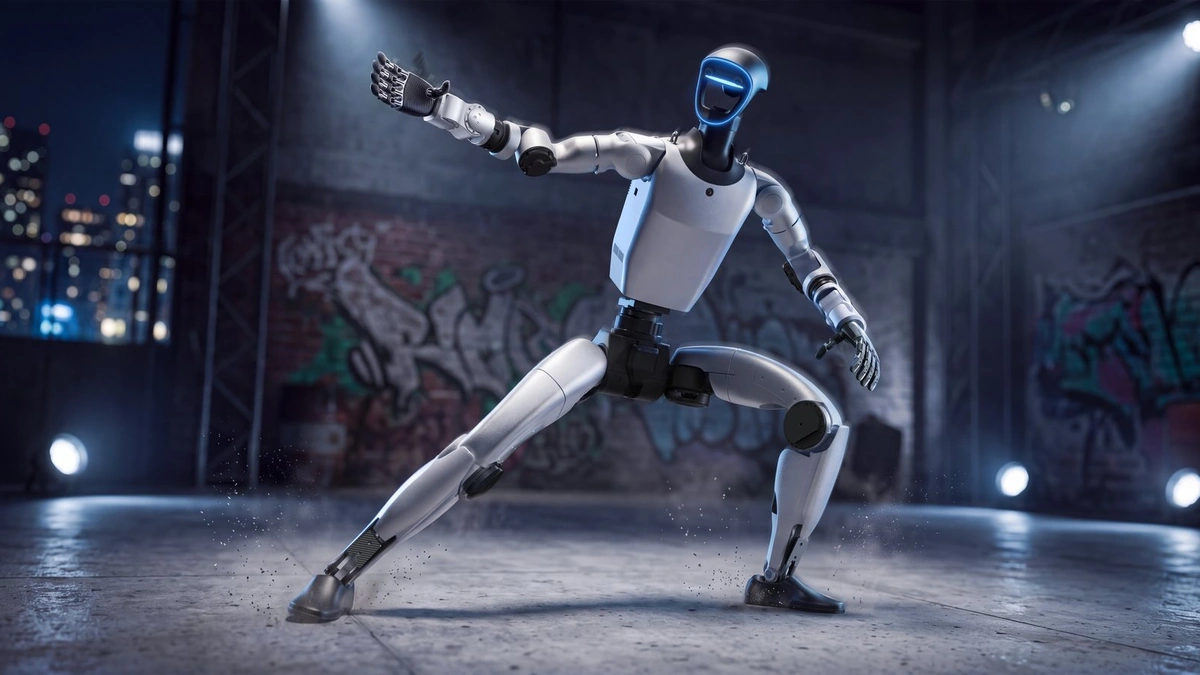
The Unitree G1+ humanoid robot can now be preordered in Japan, where GMO AI & Robotics (GMO AIR) began taking orders for the G1+ and a G1+ EDU variant on October 13. The Tokyo-based trading company signed on as Unitree's authorized agent for the country in June.
The Unitree G1+ sits one step above the G1, the compact humanoid that Japanese buyers already use for research, exhibition floors and reception work. The changes aim at settings where people talk to the machine, such as reception, guiding visitors, education and exhibitions, in addition to research.
As GMO AIR describes it, the changes start at the neck. The G1 is about 134 cm tall and weighs about 35 kg, and the Unitree G1+ adds a two-axis neck that moves up, down and side to side, lifting the body's degrees of freedom from 23 to 25. Peak torque in the shoulder and waist motors is 2.1 times the G1's figure, and the arm motors reach 1.4 times. GMO AIR also says the shoulder and waist motors generate about 30 percent less heat at the same output. Arm payload rises from roughly 2 kg to roughly 3 kg, or 4 kg on the EDU version.
Perception and speech get new hardware too. The robot combines binocular cameras in the head, a wide-angle camera in the chest and a 3D LiDAR. For conversation it carries a six-microphone array that can estimate where a sound comes from, two 10 W speakers and a touch sensor on the head. A swappable battery runs about two hours, and the robot can also draw external power, which GMO AIR pitches at trade-show demos and long lab sessions.
Price and delivery timing are not published. GMO AIR says both depend on configuration and use, and it quotes them individually through its inquiry form. The company has been widening its Unitree range since the June agreement, adding the H2 Plus, H2-D and As2-W in August alongside the G1, H2 and the quadruped Go2 and B2.
The listed upgrades cover the neck, the shoulder, waist and arm motors, the sensors and the speech hardware, with nothing said about the legs, so the G1+ reads as an upgrade for interaction more than for walking. For a Japanese venue weighing it as a front-desk or guide robot, the two-hour battery, or a cable to external power, is the number to plan a full opening day around.