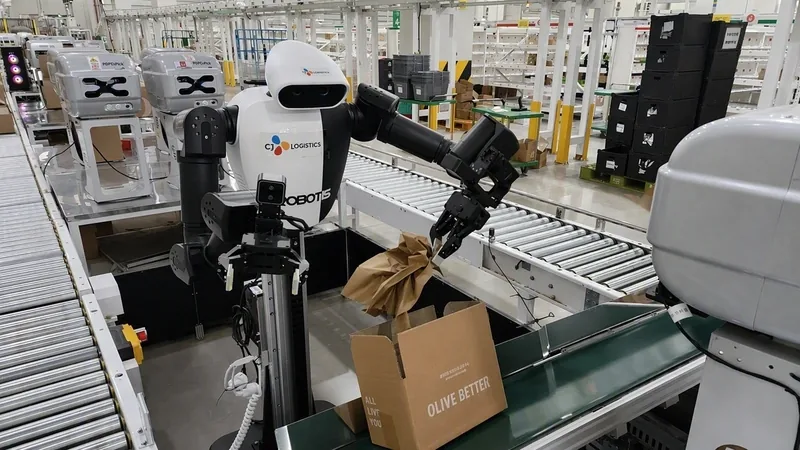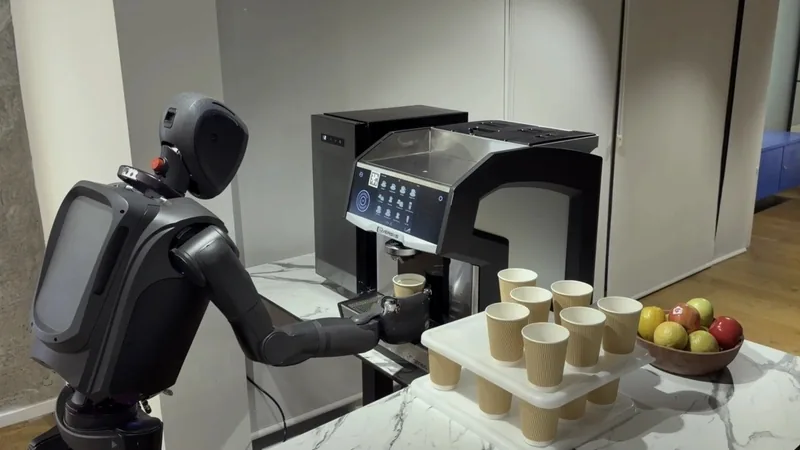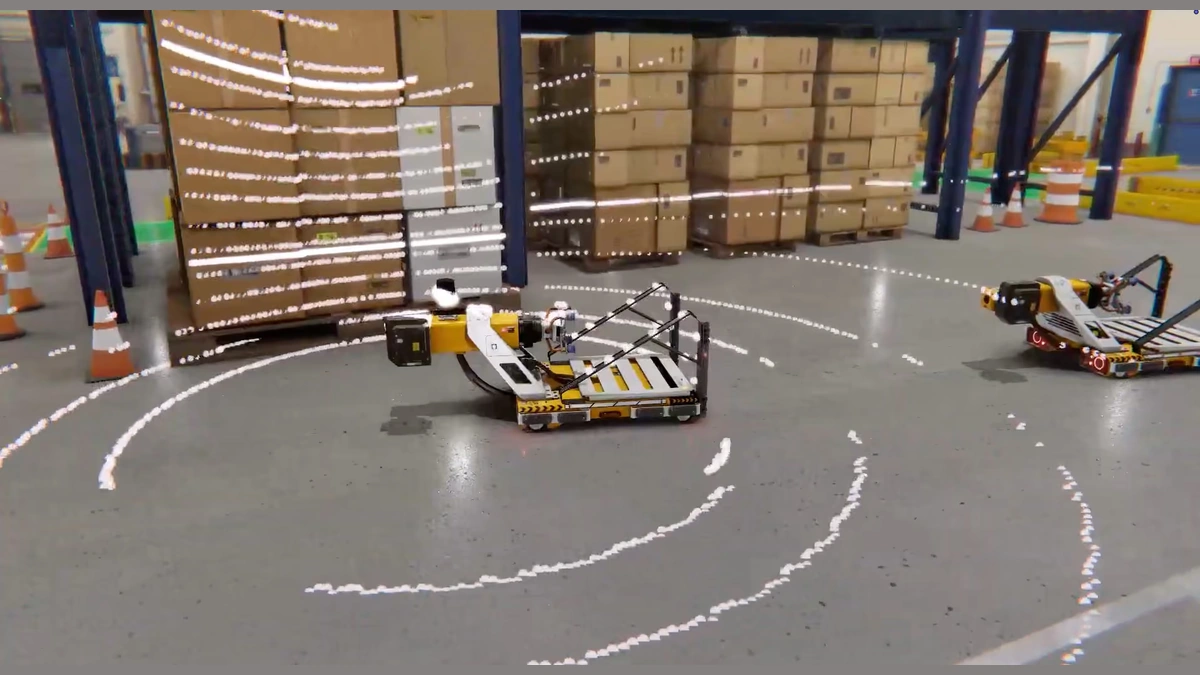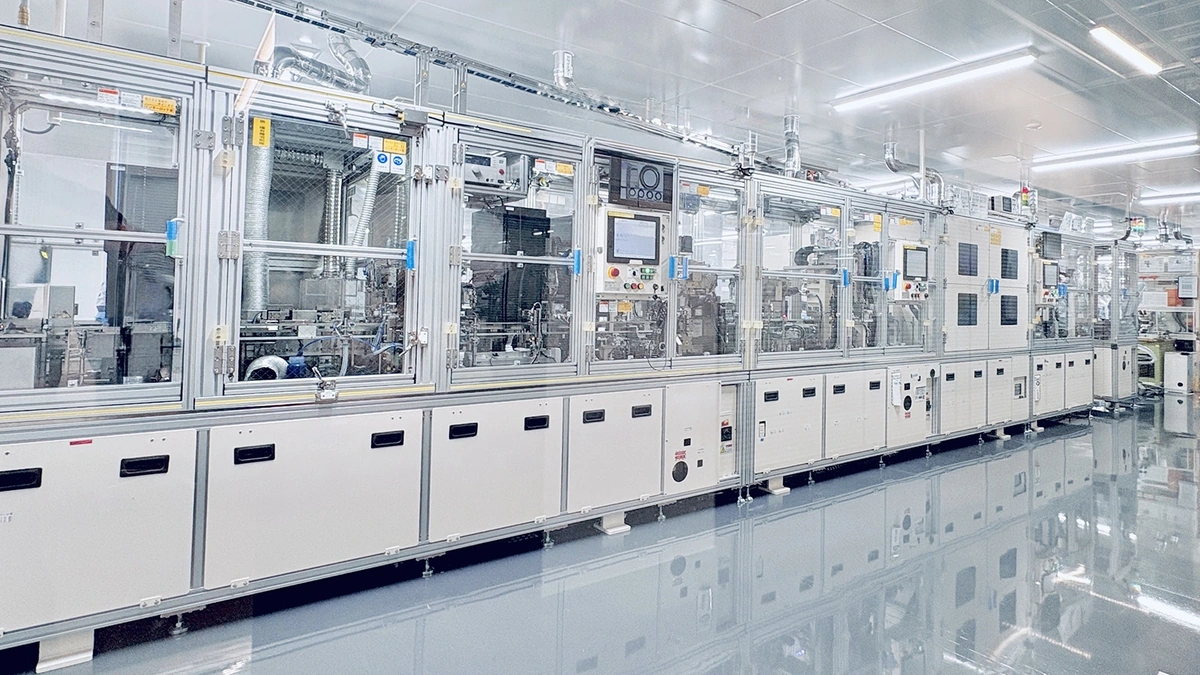
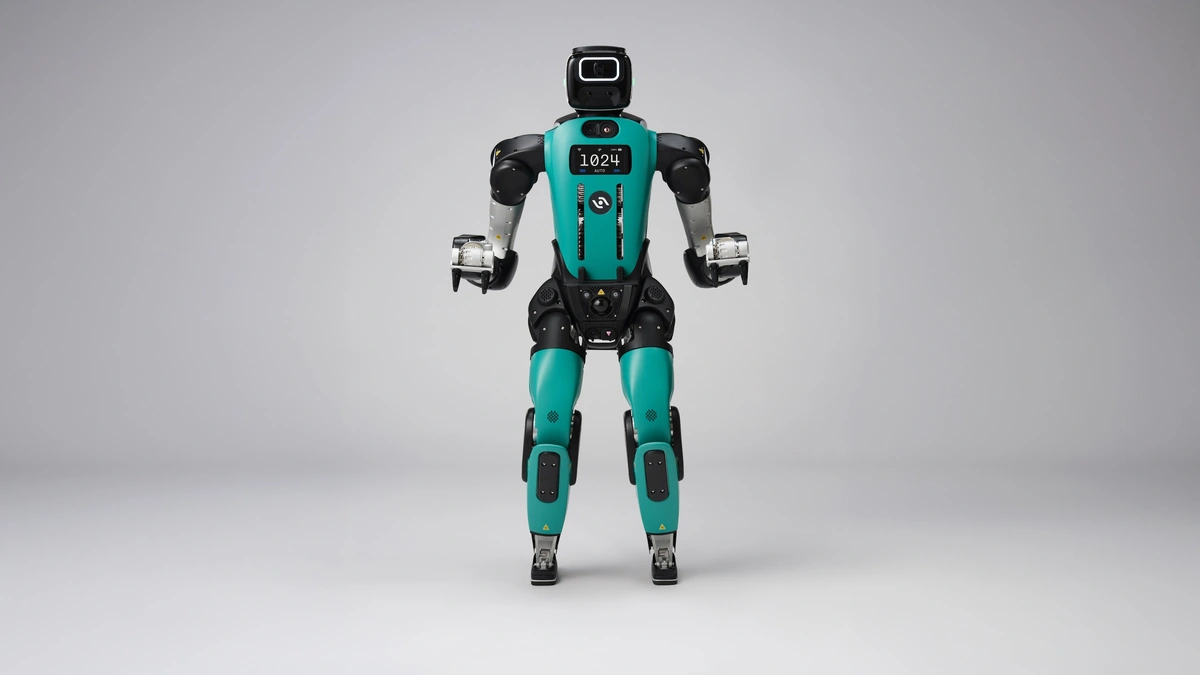
An industrial robot is a programmable machine that moves tools and parts through three or more axes, and a humanoid robot is a human-shaped machine that tries to do similar work in spaces built for people. The first group is mature. The International Federation of Robotics (IFR) counts a record 5 million industrial robots operating in factories, after more than 600,000 new installations in 2025, according to its World Robotics report. The second group is young: the IFR estimates that about 7,000 full-size humanoids, taller than 140 cm, were sold worldwide in 2025 for commercial and professional use.
The two categories answer different questions. A welding arm earns its keep by repeating one motion thousands of times inside a guarded cell. A humanoid is sold on flexibility, the idea that one machine can walk to a shelf, pick up a tote and hand it to a conveyor without anyone rebuilding the floor around it. Which promise holds up depends on the task, the building and the safety case.
How Industrial and Humanoid Robots Differ
An industrial robot is built around one task: a mounted arm repeats programmed motions inside a guarded or risk-assessed cell. An industrial humanoid robot is built around the workplace, moving through aisles sized for people and using two arms on varied jobs. Arms are the mature, high-volume option, while humanoid sales are still counted in thousands, not millions.
The table sets the two side by side, with the collaborative robot (cobot) in between:
| Factor | Traditional arm | Cobot | Humanoid robot |
|---|---|---|---|
| Best fit | High-volume, fixed tasks | Small batches next to staff | Varied tasks in human-built spaces |
| Workspace | Guarded robot cell | Shared, after a risk assessment | Shared aisles and stations |
| Payload range | Up to 2,300 kg (FANUC) | 8 to 35 kg (heavier UR Series) | About 2 kg per arm to 50 kg (Unitree G1 to Atlas) |
| Safety standard | ISO 10218-1 and -2 | ISO 10218 plus ISO/TS 15066 | ISO 25785-1, still a committee draft |
| Installed base | 5 million industrial robots in service | About 7,000 full-size units sold in 2025 | |
What Counts as an Industrial Robot
An industrial robot has a formal definition, which the IFR takes from ISO 8373: an automatically controlled, reprogrammable, multipurpose manipulator, programmable in three or more axes and used for automation in an industrial environment. The IFR's definitions page unpacks the key words. Reprogrammable means the motions can change without altering the mechanics, and a manipulator is a chain of segments that are jointed or slide against each other. The arm may be fixed in place or mounted on a mobile platform, a detail that starts to matter once robots move around a plant.
The IFR sorts arms by mechanical structure, and the structure goes a long way toward deciding the job. Examples come from the federation's own press image library:
- Articulated robot: three or more rotary joints, the familiar arm with a shoulder, elbow and wrist. One IFR image shows a KUKA arm sanding wood in a joinery.
- SCARA robot: two parallel rotary joints that keep the arm compliant in one plane. Robotphoenix uses one to place eyeshadow palettes on a cosmetics line.
- Parallel or delta robot: arms whose links form a closed loop. Robotphoenix pairs delta robots with a vision system to pick egg tarts of different sizes.
- Cartesian or gantry robot: three sliding (prismatic) joints set at right angles, like an overhead crane with precision.
- Cylindrical and polar robots: mixes of rotary and sliding joints that sweep a cylindrical or spherical work envelope.
How an Industrial Robot Works
Every industrial robot runs the same loop: a controller turns a program into joint motions, motors drive the axes, and a tool at the end of the arm does the actual work. The main parts, in the order a job flows through them:
- Controller and program. The controller stores motion paths and input/output logic. Universal Robots ships every arm with its PolyScope software and says its robots connect to PLCs over PROFINET, EtherNet/IP, Modbus TCP and EtherCAT without extra hardware or licenses.
- Manipulator. The arm itself, whose size sets reach and payload capacity.
- End effector. The gripper, welding torch, vacuum cup or sander bolted to the wrist. Changing the end effector is how one arm moves from one job to the next.
- Sensors and vision. Cameras and force sensors let the robot find parts that are not perfectly placed. A KUKA demonstration in the IFR library uses AI to grip parts out of a box.
- Safety system. Guarding, or sensors that detect people and slow or stop the arm when someone enters its workspace, a setup the IFR describes on its industrial robot page.
Scale varies enormously. FANUC lists its M-2000iA/2300 with a 2,300 kg maximum payload, a 3,734 mm reach and a mechanical weight of 11,000 kg, and says it can lift and position an entire car. Its repeatability, the spread between repeated moves to the same point, is ±0.18 mm. At the small end, the UR8 Long weighs 44.7 kg and repeats to ±0.08 mm. Repeatability, more than speed, is what lets a robot do the same weld on the ten-thousandth car as on the first.
Cobots and the Safety Rules Behind Them
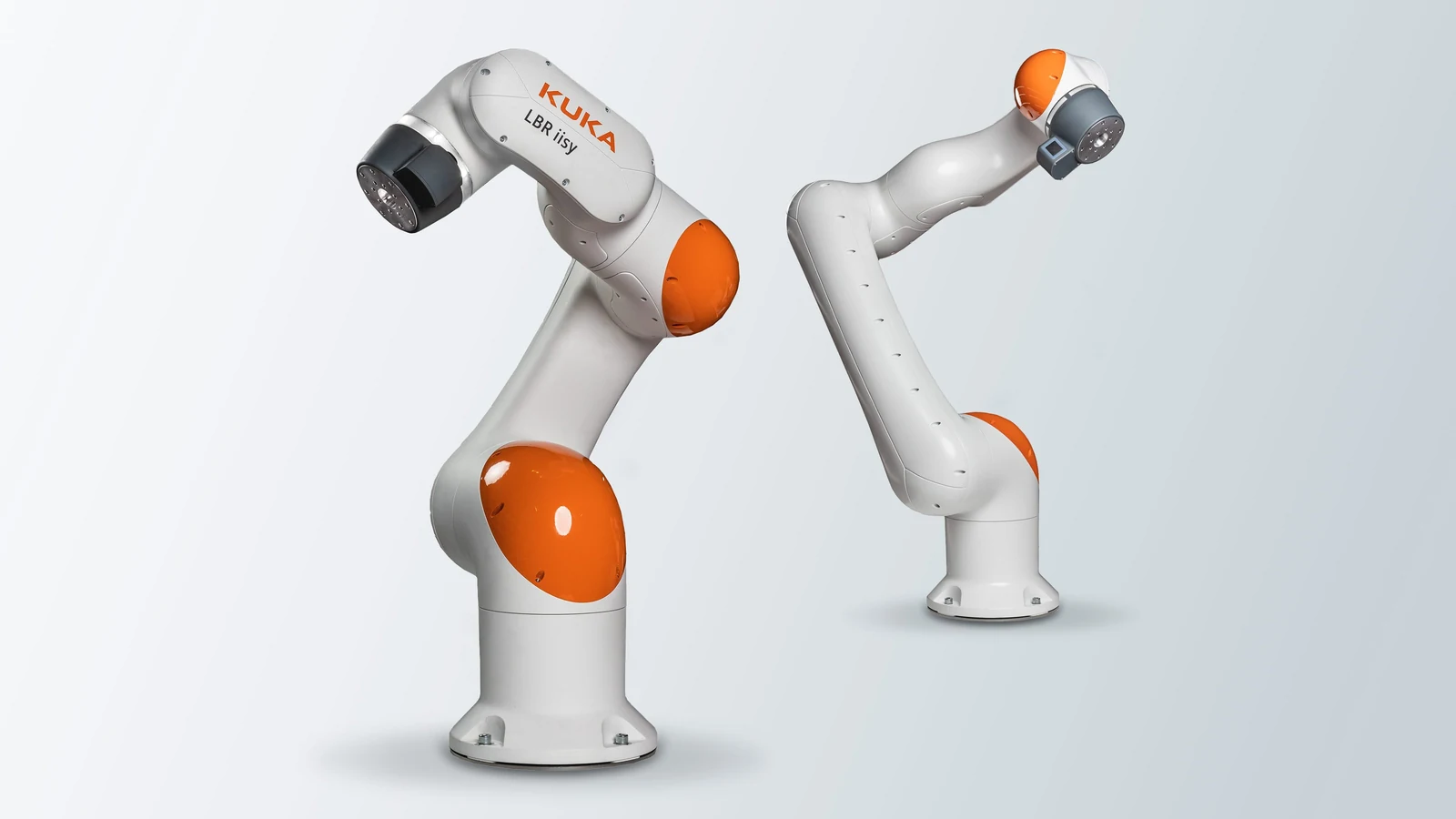
A collaborative industrial robot, or cobot, is built to share space with workers instead of sitting behind a fence. The IFR describes two groups: collaborative robots designed to comply with ISO 10218-1, and collaborative designs that follow other national or in-house standards, which the federation stresses does not make them unsafe. Typical cobot features, per the IFR, include lightweight materials, rounded contours, padding, sensor skins and joint sensors that keep force and speed under set thresholds if contact occurs.
The core safety standard has a new edition. ISO 10218-1:2025, Part 1 of the series, entered into force in February 2025. It treats the robot as an incomplete machine and sets requirements for its inherently safe design, while ISO 10218-2:2025 covers integration into applications and robot cells. The scope excludes mobility when a manipulator is fixed to a mobile platform, and it warns that applications such as welding, laser cutting and machining add hazards of their own. The IFR lists two related documents alongside it: ISO/TS 15066 and ISO 13482, the latter for service robots. For a buyer, a certified cobot arm is the start of a safety case, never the whole of it.
Payload capacity is the spec that sorts cobots into classes. The heavier UR Series from Universal Robots shows the spread:
| Model | Payload | Reach | Repeatability | Arm weight |
|---|---|---|---|---|
| UR8 Long | 8 kg | 1,750 mm | ±0.08 mm | 44.7 kg |
| UR15 | 15 kg | 1,300 mm | ±0.05 mm | 40.7 kg |
| UR20 | 20 kg | 1,750 mm | ±0.1 mm | 64 kg |
| UR30 | 30 kg | 1,300 mm | ±0.1 mm | 63.5 kg |
UR says the series is IP65-rated, meets Cleanroom Class 4 and lifts up to 35 kg on the UR30 with its extended payload rating for downward-facing tools. It also says the arms are designed with certified functional safety at their core and keep power and force limiting active at all times, with configurable limits for speed, force and workspace. That is the trade a cobot makes: the limits that let it share a workstation also cap how hard and fast it can move while people are close.
What Makes a Humanoid Robot Different
A humanoid robot is designed, in the IFR's wording, to resemble humans and operate in human-centric environments, while an industrial robot is designed around a task. That difference drives everything else. A humanoid robot has to balance, walk, perceive a cluttered room and handle objects with two hands, all while carrying its own battery.
Software is where humanoids depart most from factory arms. NVIDIA describes its Isaac GR00T models as open foundation models for humanoids that take three inputs: video from onboard cameras, a natural-language command and the robot's current joint positions. The output is a chunk of predicted joint motions. NVIDIA says the models learn from internet-scale human video, real-world teleoperation and synthetic data, then get post-trained for a specific robot, and that Jetson AGX Thor runs them on board with integrated functional safety. Teleoperation also shows up after deployment: the IFR notes that most current humanoid applications remain specialized and often require human teleoperation.
Vendor specs show how differently the leading designs are pitched:
| Robot | Height | Weight | Payload | Stated runtime or extra |
|---|---|---|---|---|
| Boston Dynamics Atlas | 1.9 m | 90 kg | 50 kg instant, 30 kg sustained | 4 hours, swaps its own battery |
| Agility Robotics Digit 5 | 1.81 m | 129 kg | 22.7 kg repeated lifts | 90-minute battery, 9-minute charge |
| Figure 03 | 5 ft 8 in | 61 kg | 20 kg | 5 hours |
| Unitree G1 | 1.32 m | About 35 kg | About 2 kg per arm | 23 degrees of freedom |
Boston Dynamics says Atlas has 56 degrees of freedom, an IP67 rating and the ability to share a skill learned by one robot across a fleet. Agility says Digit 5 adds cycloidal actuators in a new leg design, swappable grippers on ISO-standard flanges and a safety architecture built on NVIDIA IGX Thor, with general availability expected by the end of 2027. Figure markets Figure 03 for household tasks such as laundry, cleaning and dishes, and has also sent it to a car plant, as the maker list below shows. The numbers say less about raw strength than about intent: Atlas and Digit are built to carry factory and warehouse loads, while Figure pitches one design at both the home and the factory.
Where Industrial and Humanoid Robots Work
Industrial robot demand is concentrated in a handful of countries. China installed 354,000 units in 2025, 59% of global deployments, and the United States passed Japan to become the second-largest market with almost 38,500 installations, according to the IFR. Germany is Europe's largest market, and the federation notes that the automotive industry is still its biggest robot user even as that share shrinks.
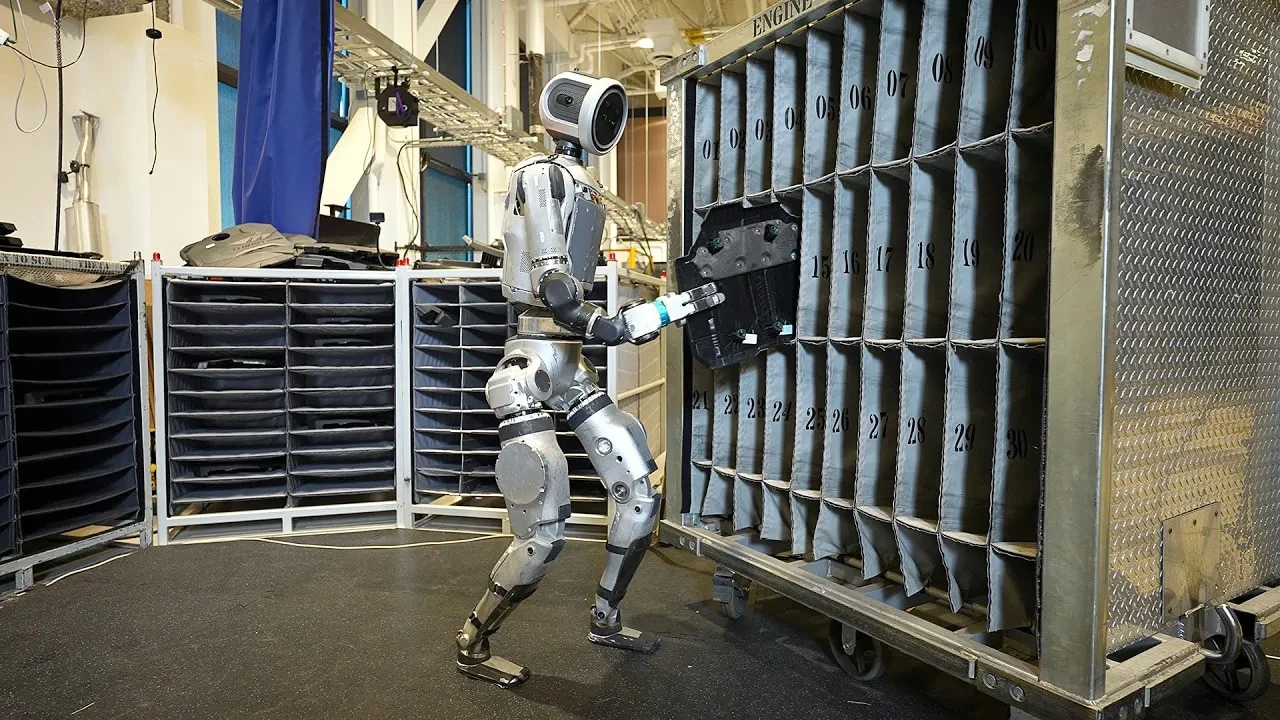
Service robots, which work outside the classic factory cell, form a separate market. The IFR counted almost 250,000 professional service robots sold in 2025. Transport and logistics robots led with 117,500 units, 47% of the total, followed by hospitality and professional cleaning robots. Here is where each type turns up:
- Car, electronics and food plants: articulated arms for welding and assembly, plus SCARA and delta robots for fast pick-and-place of small parts such as phone cover glass.
- Machine tending and palletizing: cobots such as the UR Series, which Universal Robots positions for machine tending, material handling and palletizing.
- Warehouses and logistics: mobile robots and early humanoid fleets. Agility says Digit 4 has logged more than 65,000 operating hours at sites including GXO, Schaeffler, Amazon and Toyota Motor Manufacturing Canada, and passed 100,000 totes at a GXO facility near Atlanta.
- Automotive pilots: Boston Dynamics says Atlas has been field testing sequencing tasks in a Hyundai facility.
- Homes: consumer service robots, mostly domestic machines for the mass market, sold almost 34.2 million units in 2025 by the IFR's count. Figure pitches its Figure 03 humanoid at the same household chores.
Who Builds Industrial and Humanoid Robots
The industrial robot market is served by long-established arm makers, and the supplier map is shifting. In China, the largest market, domestic manufacturers supplied 195,000 of the robots installed in 2025, a 55% share of their home market, according to the IFR's World Robotics release. Four makers with full catalogs of industrial arms show the range on offer:
- FANUC: heavy arms such as the M-2000iA/2300 described above, with a quote request in place of a list price.
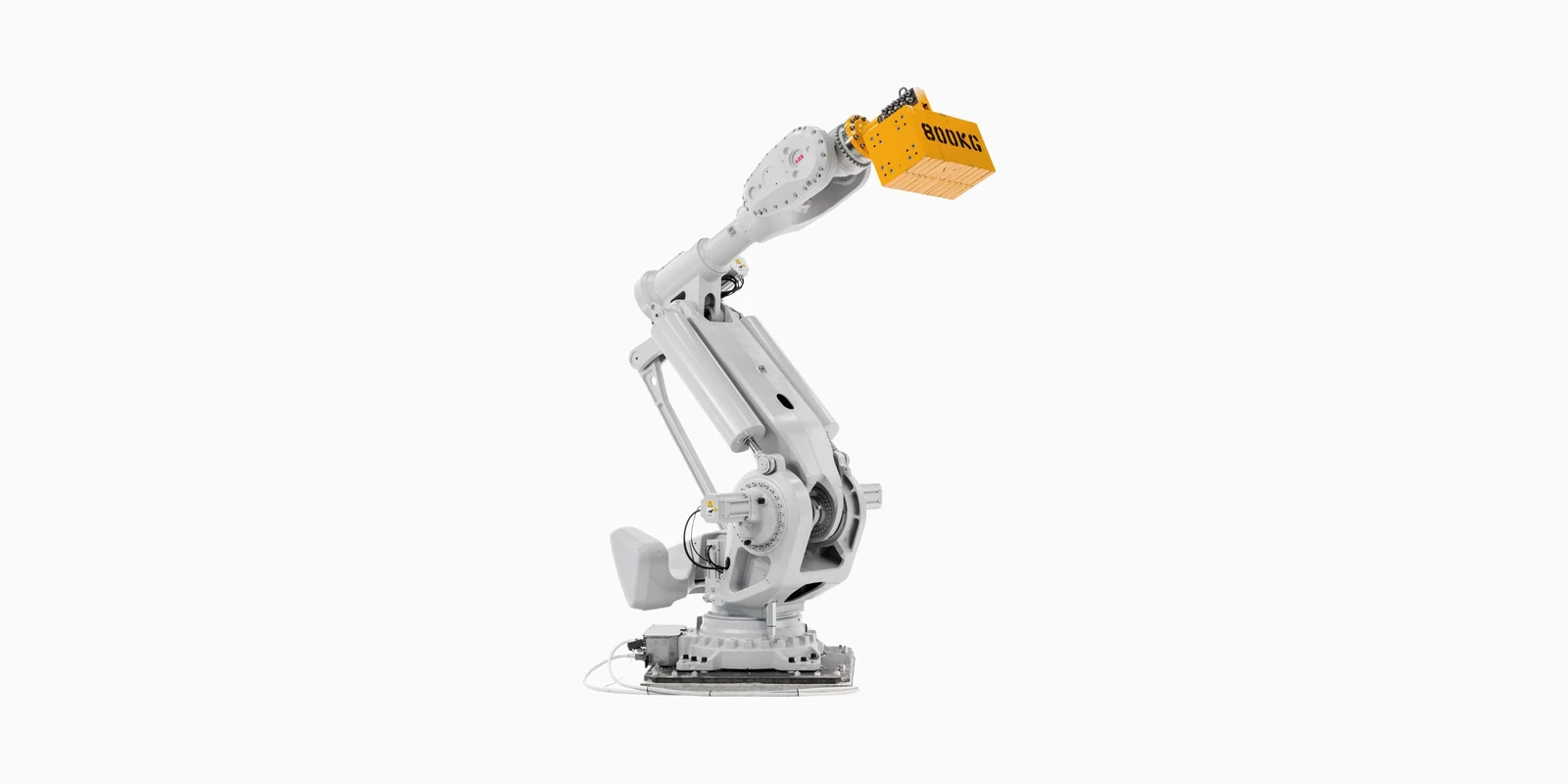
- ABB: its eighth-generation heavy-payload arm handles up to 800 kg, or up to 1,000 kg with the wrist pointing down, and reaches up to 4.2 m.
- KUKA: classic arms plus the LBR iisy, an industrial cobot with joint torque sensors in every axis.
- Yaskawa: a Motoman robot lineup grouped into assembly and handling, painting and dispensing, and welding and cutting, with filters for applications such as arc welding, spot welding and palletizing.
The industrial humanoid robot field is younger, and the details below come from the makers themselves. Each one describes a different stage of factory work:
| Maker | Robot | Industrial work the maker reports |
|---|---|---|
| Agility Robotics | Digit | Built at RoboFab in Salem, Oregon, a 70,000-square-foot plant designed for up to 10,000 robots a year; Digit passed an independent field evaluation on a customer production line for safety standards administered by OSHA |
| Boston Dynamics | Atlas | Billed as an enterprise-grade industrial humanoid; Orbit software is set to link it to MES, WMS and other systems of record |
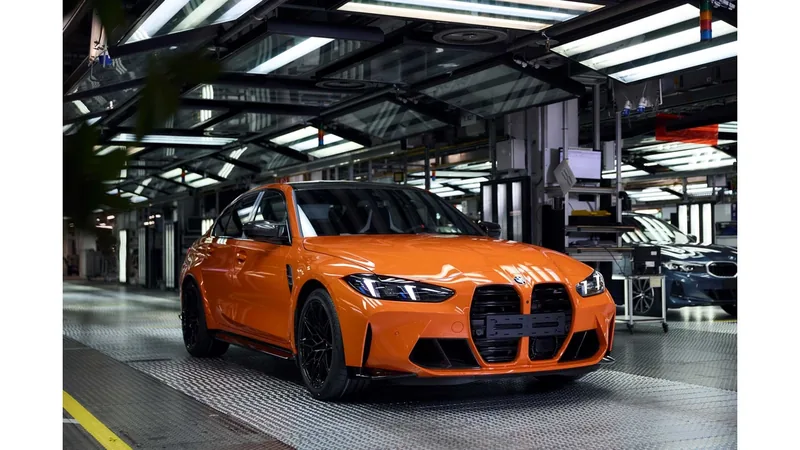
| Figure | Figure 03 | Its predecessor contributed to the assembly of 30,000 cars at BMW Group Plant Spartanburg; Figure 03 has arrived there for a parts-sequencing workflow |
| UBTECH | Walker S2 | Mass production and delivery began in November 2025 for automotive plants, smart factories and logistics, with partners including BYD, Foxconn and Geely Auto |
| Apptronik | Apollo 2 | Bipedal and wheeled versions collect task data at its Robot Park in Austin and at customer sites, feeding Google DeepMind's Gemini Robotics models |
Wheels are part of that picture. Apptronik says Apollo 2 comes in bipedal and wheeled configurations, so a humanoid upper body does not always mean a walking robot, and it says the Apollo 2 platform is directly powering development of its next commercial product, Apollo 3.
Strengths and Limits of Each Approach
An industrial robot wins wherever the task can be fixed in advance. The IFR's list of reasons to invest includes faster cycle times, higher yield with less scrap, better product quality, improved worker safety and the flexibility to handle smaller batch sizes. Its weak point is the cell around it: fixtures, guarding and integration work that assume the product and the layout stay put.
Humanoids flip that trade. Their case rests on fitting existing aisles, shelves and workstations, and the IFR names the obstacles plainly: safety standards, high training and maintenance costs, and the lack of a strong business case, particularly in industrial settings. In its robotics trends report, the federation adds that humanoids competing with traditional automation must match its cycle times, energy consumption and maintenance costs. Measurement is catching up as well. NIST is developing a baseline performance benchmark of locomotion and manipulation tasks meant to represent the minimum a commercially available humanoid should manage, and plans to give test apparatus to participating U.S. manufacturers.
Choosing Between an Arm, a Cobot and a Humanoid
Picking an industrial robot, a cobot or a humanoid starts with the task rather than the machine. A practical order of questions:
- Can the task be fixed? If the part, the motion and the station never change, a traditional arm in a robot cell is the proven choice. The IFR notes that standard work cells now let even small-volume production automate welding, assembly, packaging and palletizing.
- What are the load and reach? Payload capacity rules out options fast. A 25 kg box is within the extended rating of a UR20, while an entry humanoid such as the Unitree G1 carries about 2 kg per arm.
- Who shares the space? Fencing, a collaborative robot with power and force limiting, or a humanoid built for cooperative safety are three different answers. Agility says Digit 5 is engineered for cooperative safety, detecting people and avoiding, stopping or sitting down.
- What does integration cost? Budget for grippers, fixtures, the safety assessment and links to warehouse or manufacturing software, not only for the robot.
- What will the pilot measure? Uptime, throughput and interventions per shift. Agility's Arc fleet software reports metrics such as Mean Time Between Incidents, the kind of number a pilot should produce before a fleet order.
The software side is converging with mainstream AI. Robot foundation models take the same mix of images and language covered in the multimodal AI explainer, and running them inside a walking machine is the on-device and edge inference problem with a battery and two legs attached. For work that never leaves a screen, no physical robot is needed at all, and the comparison of AI agents and RPA covers that software alternative.
Read against the IFR's findings, a sensible rule of thumb is to consider a humanoid where the building cannot change and the tasks keep changing, and to start with a conventional arm or a cobot wherever either one can be fixed.
Further reading
Frequently Asked Questions
Can a humanoid robot replace an industrial robot on a production line?
Rarely for high-volume work, because a humanoid has to match the cycle times, energy use and maintenance costs of the fixed automation it replaces. The IFR sets out that bar in its robotics trends report, and its service robots report lists the lack of a strong business case, particularly in industrial settings, among the barriers to humanoid adoption. Humanoids fit best where the layout cannot change and the tasks vary, such as moving totes between stations built for people.
Are humanoid robots already working in factories?
Yes, in early commercial deployments rather than at industrial-robot scale. Agility Robotics says Digit 4 has logged more than 65,000 operating hours at customer sites including GXO, Schaeffler and Amazon, and Figure says its previous robot contributed to the assembly of 30,000 cars at BMW Group Plant Spartanburg. For scale, the IFR estimates that about 7,000 full-size humanoids were sold in 2025.
How much does an industrial or humanoid robot cost?
Most makers quote rather than publish prices. FANUC, KUKA, Universal Robots and Yaskawa route buyers to a quote or sales request, and the arm is only part of the bill once grippers, fixtures and the safety assessment are added. Among humanoids, Unitree lists its G1 from US$13.5K, excluding tax and shipping, while Boston Dynamics routes Atlas buyers to its sales team and Agility Robotics reports more than $300 million in multi-year orders for Digit 5 without giving a unit price.
Who are the big four in industrial robotics?
"Big four" is an informal label with no official ranking behind it, and the IFR's World Robotics release reports installations by country and industry rather than vendor by vendor. In common shorthand it names FANUC, ABB, KUKA and Yaskawa, four makers with full lines of industrial arms, which is a grouping of convenience rather than a ranked list. The IFR figures do show the field widening: Chinese manufacturers supplied 55% of the robots installed in China in 2025.
Does a cobot still need a safety fence?
Sometimes, because the risk assessment covers the whole application, not only the arm. ISO 10218-1:2025 notes that applications such as welding, laser cutting and machining create extra hazards that have to be handled when the cell is designed. Universal Robots says its configurable limits and always-active power and force limiting streamline that assessment, but the application's own hazards, such as a welding torch, still have to be assessed.
Is there a safety standard written for humanoid robots?
Not a published one yet; ISO 25785-1, which covers dynamically stable industrial mobile robots such as bipeds, is still a committee draft. The ISO project page lists it as under development. For the U.S. and Canada, ANSI/A3 TR R15.108 is a technical report under development for the same class of robots, and Agility Robotics says it is a project leader on that report and a contributor to the ISO work. Meanwhile, the 2025 edition of ISO 10218-1 leaves out mobility when a manipulator is mounted on a mobile platform, so it does not address how a mobile platform moves.