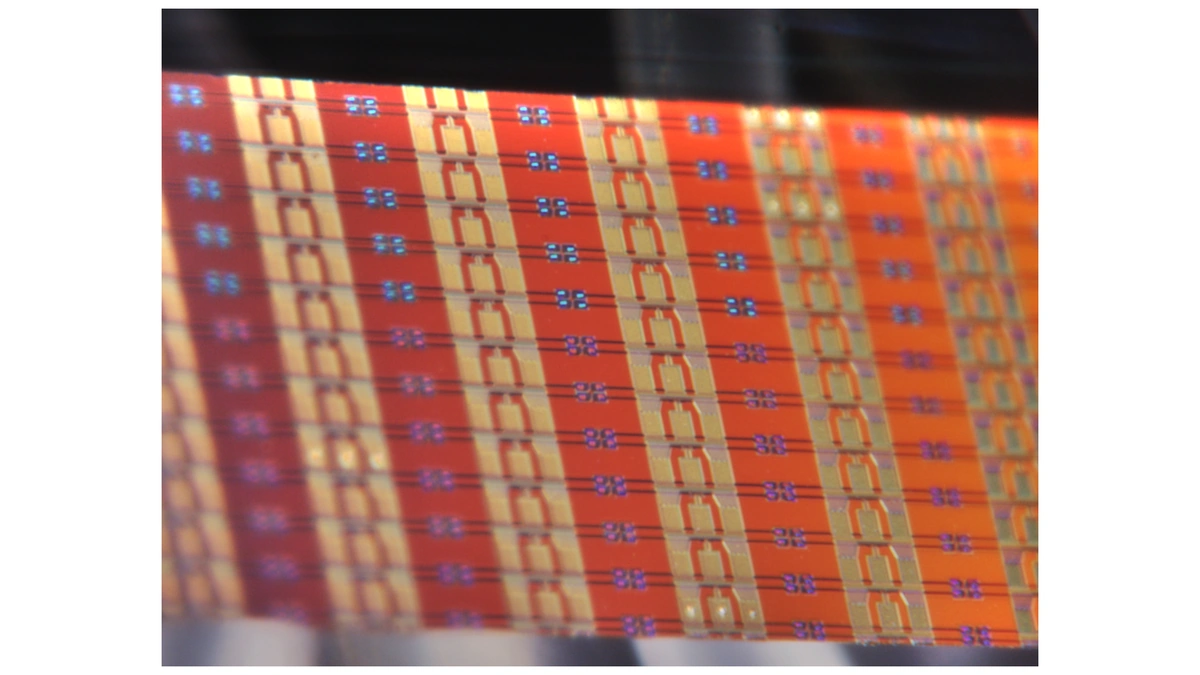
Imec's researchers demonstrated a germanium-on-silicon avalanche photodiode (APD) that combines 100 GHz of bandwidth with 5-volt operation, a pairing the Leuven-based chip research center says no device of this type has achieved together before. Imec presented the device at the European Conference on Optical Communications (ECOC) in Belgium.
According to imec, the photodiode reached a responsivity of 1.8 A/W across both the O-band and C-band optical windows. The company attributes the jump to a reworked SACM (separate absorption, charge and multiplication) architecture: researchers narrowed the multiplication layer to under 100 nanometers and eliminated the charge layer entirely, using a deeply recessed germanium-in-silicon structure to get there.
Paired with a beyond-110 GHz C-band Ge/Si electro-absorption modulator imec showed at last year's ECOC, the new APD was used to demonstrate what imec calls the first net 400 Gbps optical link built around an APD receiver, with a 3 dB improvement in receiver sensitivity over a conventional photodiode. Joris Van Campenhout, VP R&D Optical Interconnects at imec, credited the narrowed multiplication layer, the recessed germanium structure and the dropped charge layer for hitting all three targets at once, giving the device what he called "approximately a twofold internal gain."
imec is aiming the device at optical interconnects for AI data centers, where the added sensitivity margin can go toward cutting laser power or tolerating higher optical losses in the scale-up links that move data between racks and blade servers. The APD was fabricated on imec's 300 mm silicon photonics platform (iSiPP300), the same production line imec uses to move its photonic device research toward manufacturing. Per imec, the team's next steps are testing the APD's reliability across a wider range of temperatures and optical input power, then integrating it with high-speed receiver electronics; the full results go up at ECOC on September 24.