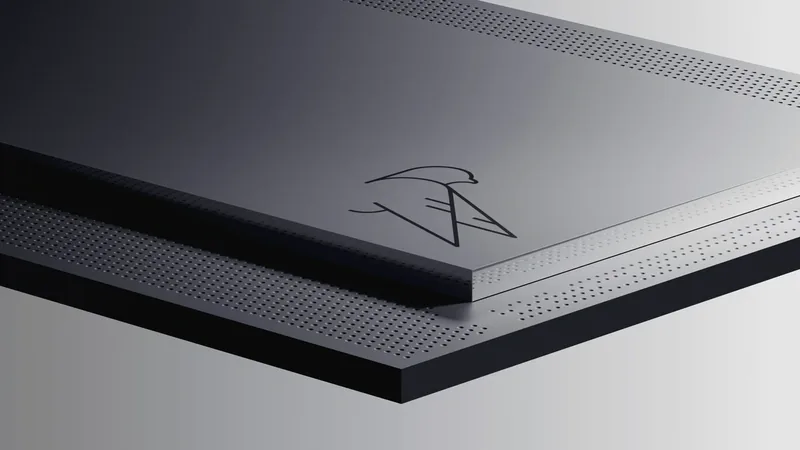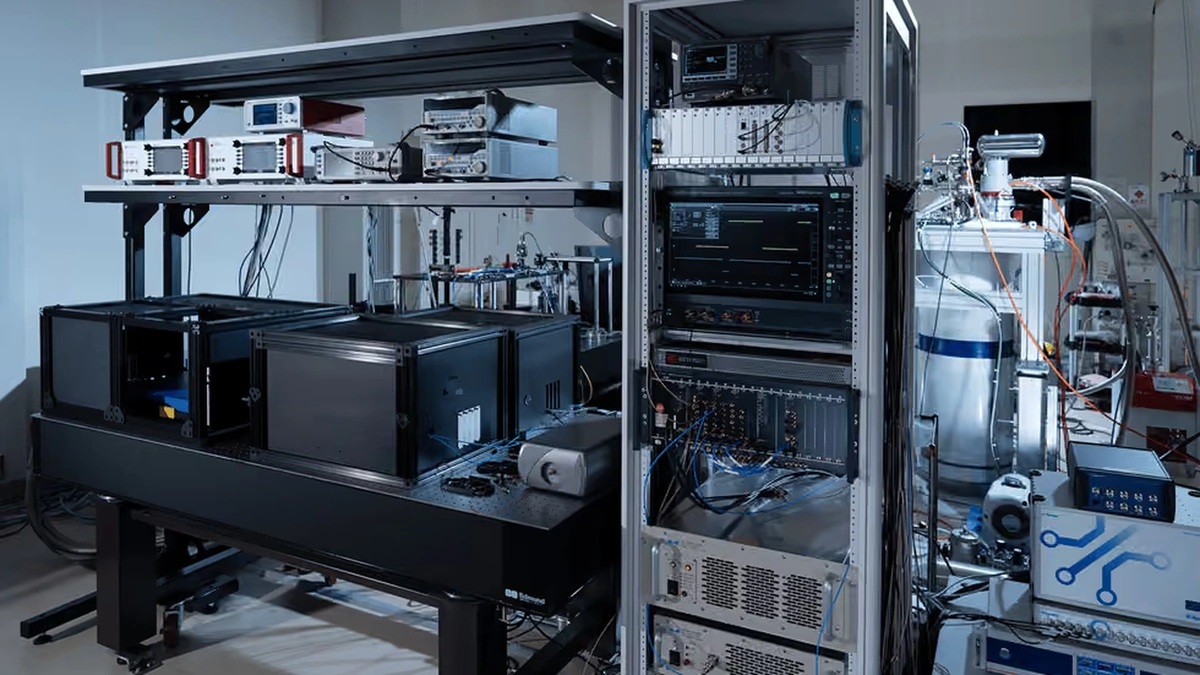
Fujitsu has built a working prototype of a diamond-spin quantum computer that reads its qubits with light, using photonic circuits patterned onto the chip that holds the qubits. The company calls it the first machine to pair tin-vacancy defects in diamond with integrated photonics for readout, and it is pitching the design as a way to wire many small quantum modules into one larger processor.
The qubits are tin-vacancy centers, each a single tin atom lodged in a pair of gaps in the diamond lattice. Most diamond-qubit work uses nitrogen-vacancy centers instead. Fujitsu says it chose tin because the structure is more symmetric and resists electrical noise better, which should produce a cleaner, brighter stream of photons when a qubit is read out.
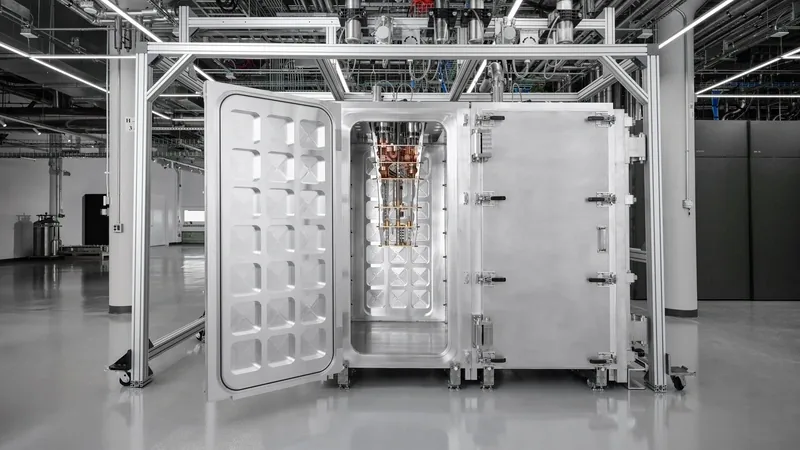
Fujitsu says the prototype operates at minus 271.6 degrees Celsius, a shade warmer than the roughly minus 273.13 degrees a superconducting processor needs, though both still sit inside a dilution refrigerator. In a test environment, the company ran the device through the Fujitsu Hybrid Quantum Computing Platform, the same front end it uses for its superconducting hardware, and says an operator needed no special knowledge to drive it.
The prototype comes out of a partnership that Fujitsu, Delft University of Technology and the university's QuTech institute began in 2020, with diamond-processing work done separately with the University of Tokyo. Building it meant bonding tin-implanted diamond to a carrier wafer, thinning that diamond from hundreds of micrometers to hundreds of nanometers, and forming alumina waveguides to carry single photons off the chip.
Vivek Mahajan, Fujitsu's chief technology officer, said the diamond-spin approach could later be joined to superconducting quantum computers for larger calculations. Fujitsu wants a multi-module version around 2027, part of a wider company goal of 250 logical qubits by its 2030 fiscal year and 1,000 by fiscal 2035. Kees Eijkel, QuTech's general director, called the result a milestone but was candid that proving diamond-spin systems scale "remains a long and challenging journey."
For now the prototype handles control and readout on a single module. In this approach each module carries two kinds of qubit, one held in an electron spin and one in a carbon-13 nucleus. The optical links that would connect modules, photons entangling qubits on separate chips, have worked in earlier Delft and Fujitsu experiments published in Nature Communications, but not in this integrated form yet.