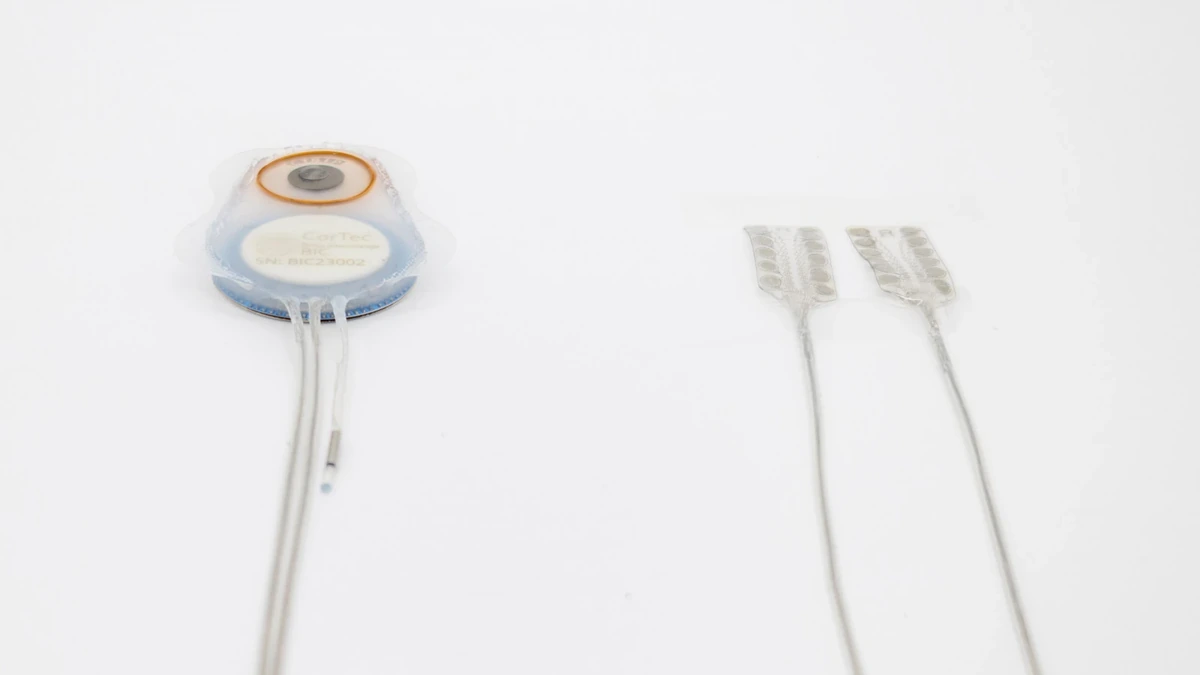
CorTec's Brain Interchange implant now carries a second U.S. Food and Drug Administration Breakthrough Device Designation, adding a communication use to a device the FDA had already designated for stroke rehabilitation.
CorTec said the FDA granted the new designation for an assistive use: software that reads movement intent from recorded brain signals and turns it into cursor control for people with non-progressive quadriplegia, a stable paralysis of all four limbs. The first designation, from April 2026, covered stroke motor rehabilitation, a therapeutic use in which the same implant delivers electrical stimulation. CorTec said the pair puts Brain Interchange among a small group of brain-computer interface systems with more than one FDA breakthrough designation, and, by its own account, makes it the only one designated for stroke motor rehabilitation.
A Breakthrough Device Designation speeds a submission through the FDA; it does not put a product on the market. The Breakthrough Devices Program gives a company faster, more frequent access to agency reviewers and priority handling of its filings, on the reasoning that devices for serious or irreversible conditions should not wait in a queue. Brain Interchange still has to clear the FDA's normal premarket review and prove it is safe and effective, which it has not yet done. The system runs only under an Investigational Device Exemption, in a chronic-stroke trial at the University of Washington, and cannot be prescribed or bought outside a study.
The stronger signal is strategic. CorTec builds one implant that accepts different electrode types, from cortical grids to nerve cuffs, and can be aimed at different targets in the nervous system, rather than hardware fixed to a single job. Two designations covering two unrelated indications on the same device is the regulatory form of that argument. Better-known programs, Neuralink's N1 and Synchron's Stentrode among them, have so far kept their human trials on one assistive task: giving a paralyzed person control of a computer.
The designation does not shorten the clinical evidence CorTec still owes the FDA. The company has not said when either use might reach a marketing application, and a dedicated communication trial has not begun. For now, the second designation changes which FDA staff take the call, not what any patient can obtain.