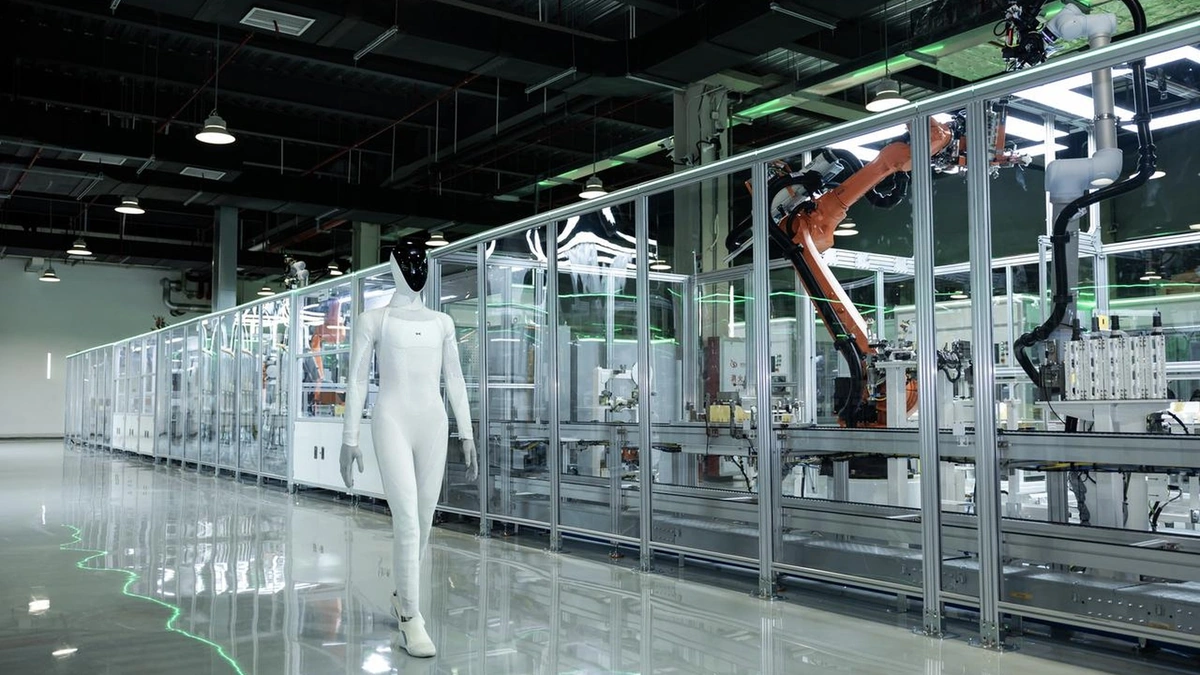
XPENG has begun operating dedicated production lines for its IRON humanoid robot, and the company says the first unit walked off the line on its own after assembly. The carmaker, based in Guangzhou, calls it the point where its robot program crosses from prototypes to repeatable manufacturing.
XPENG says the lines run with more than 80% of their core processes automated, built on the automotive-grade quality systems from its electric-vehicle plants. It calls the setup the world's first automated production line for advanced humanoid robots, a claim that is hard to check because rivals have said little about how they build their machines.
IRON is a full-size bipedal robot that XPENG lists with 76 degrees of freedom in the body and 21 in each hand. XPENG says it runs on three of the company's in-house Turing chips, rated together at up to 2,250 TOPS, or trillion operations per second, so the robot can run XPENG's Physical AI model on board instead of depending on a remote server. It joins XPENG's electric cars and Robotaxi as a third product line built on the same platform.
XPENG plans to reach mass production by the end of 2026, first with robots working in its own stores and campuses, and to sell IRON in China and abroad the following year. Its robotics arm raised more than $900 million from outside investors in August at a post-money valuation above $6.3 billion. XPENG, which is listed in New York and Hong Kong, treats robotics as its second growth curve after cars, and says it expects each robot to carry a gross margin well above its vehicles.
He Xiaopeng, XPENG's chairman and chief executive, said the robot lines were "created from scratch with no precedent to follow" and called the current pace a small step. The announcement does not give a production rate, a unit price, or how many robots the lines can build in a year.