Commercial space launch is a service that sells rides to orbit on privately operated rockets, so satellite operators can buy a dedicated flight or a slot on a shared one. The business has split into three markets that are easy to blur: small launchers that fly one customer to a chosen orbit, rideshare flights that carry many small satellites on one large rocket, and constellation operators that buy launches in bulk. NASA counted 4,577 spacecraft launched in 2025, nearly 60% more than in 2024, and Starlink alone accounted for about 70% of them, according to the agency's annual small spacecraft technology report.
For anyone building a satellite, the choice between those paths is a trade between price, schedule and how close the rocket leaves the spacecraft to the orbit it actually needs. The rocket, the launch site and the satellite each answer to their own rules as well.
How a Commercial Space Launch Comes Together
Every commercial space launch involves more parties than the rocket company. The FAA counts a launch as commercial when it is FAA-licensed, when the primary payload's launch contract was open to international competition, or when it was privately financed without government support. The customer books a ride, licenses the satellite, hands over safety data, integrates the hardware and flies.
NASA's Small Spacecraft Technology report lists the launch service provider, the spacecraft manufacturer, the customer, the launch range and sometimes a launch broker or launch integrator. A launch broker matches a spacecraft with a seat; a launch integrator provides additional services related to multi-mission manifesting and integration. The usual sequence runs like this:
- Book the ride. The customer signs directly with the launch provider or goes through a launch broker or launch integrator, an option NASA highlights for rideshare flights.
- Secure the licenses. NASA notes that the satellite owner, not the integrator, must obtain radio frequency licensing, remote sensing licensing and laser usage approval, and the provider asks for proof before integration.
- Hand over the safety file. Providers typically require orbital debris information, materials and venting data, and spacecraft models before launch.
- Integrate the hardware. The spacecraft is bolted to an adapter, loaded into a dispenser or fitted with a separation system.
- Fly, separate and settle. The rocket releases the spacecraft, and on a shared flight a transfer vehicle may carry it the rest of the way.
The rocket itself carries a separate approval, and government buyers rely on it: NASA's venture-class launch contract buys FAA-licensed commercial launch services. The FAA Office of Commercial Space Transportation authorizes launch and reentry operations and spaceports, and its vehicle operator license under 14 CFR Part 450 has replaced the older Parts 415, 417, 431 and 435 for every new application, according to the FAA licensing page. The agency logged its 1,000th licensed or permitted operation on August 14, 2025.
Who Sells Commercial Launch Services
The commercial space launch market runs from small rockets that lift a few hundred kilograms to heavy-lift vehicles that carry large satellites or whole constellation batches. The larger providers and the vehicles their own pages or U.S. agencies describe:
| Provider | Vehicles | What the source says |
|---|---|---|
| SpaceX | Falcon 9 and Falcon Heavy; Starship/Super Heavy in development | The first stage returns to a landing zone or a drone ship, while the second stage delivers the payload, per the FAA Falcon program page |
| United Launch Alliance (ULA) | Vulcan and Atlas V | RapidLaunch offers launch in as little as three months from contract signing, and rideshare slots fly on either rocket, per ULA |
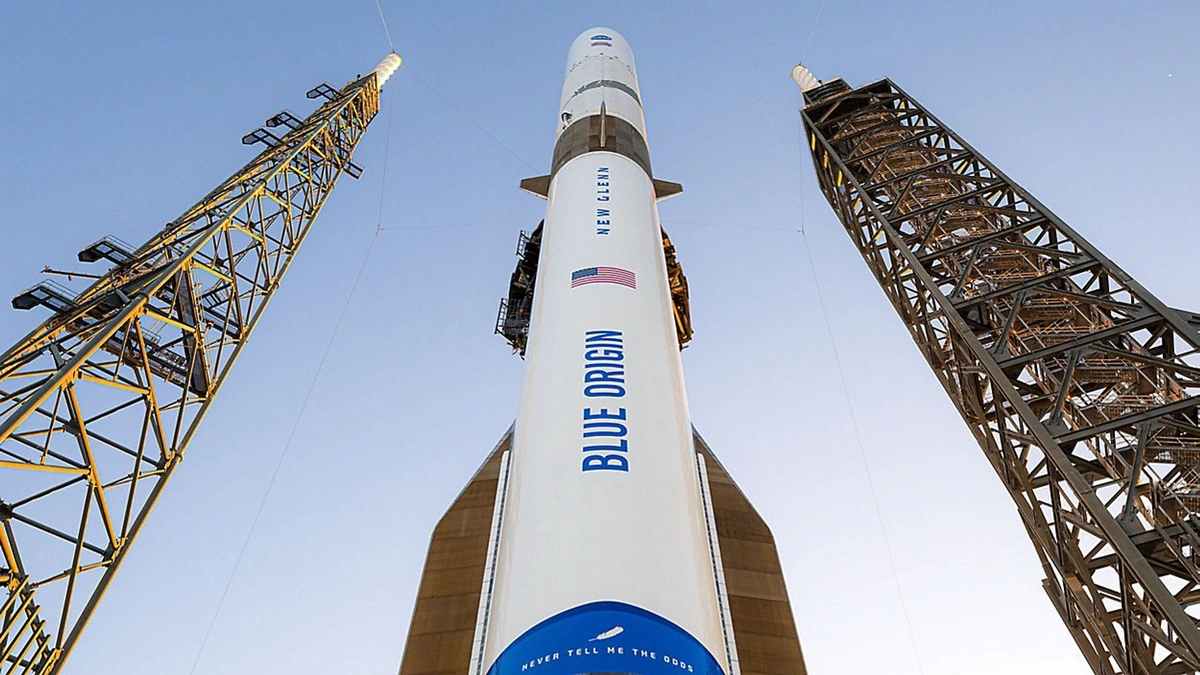
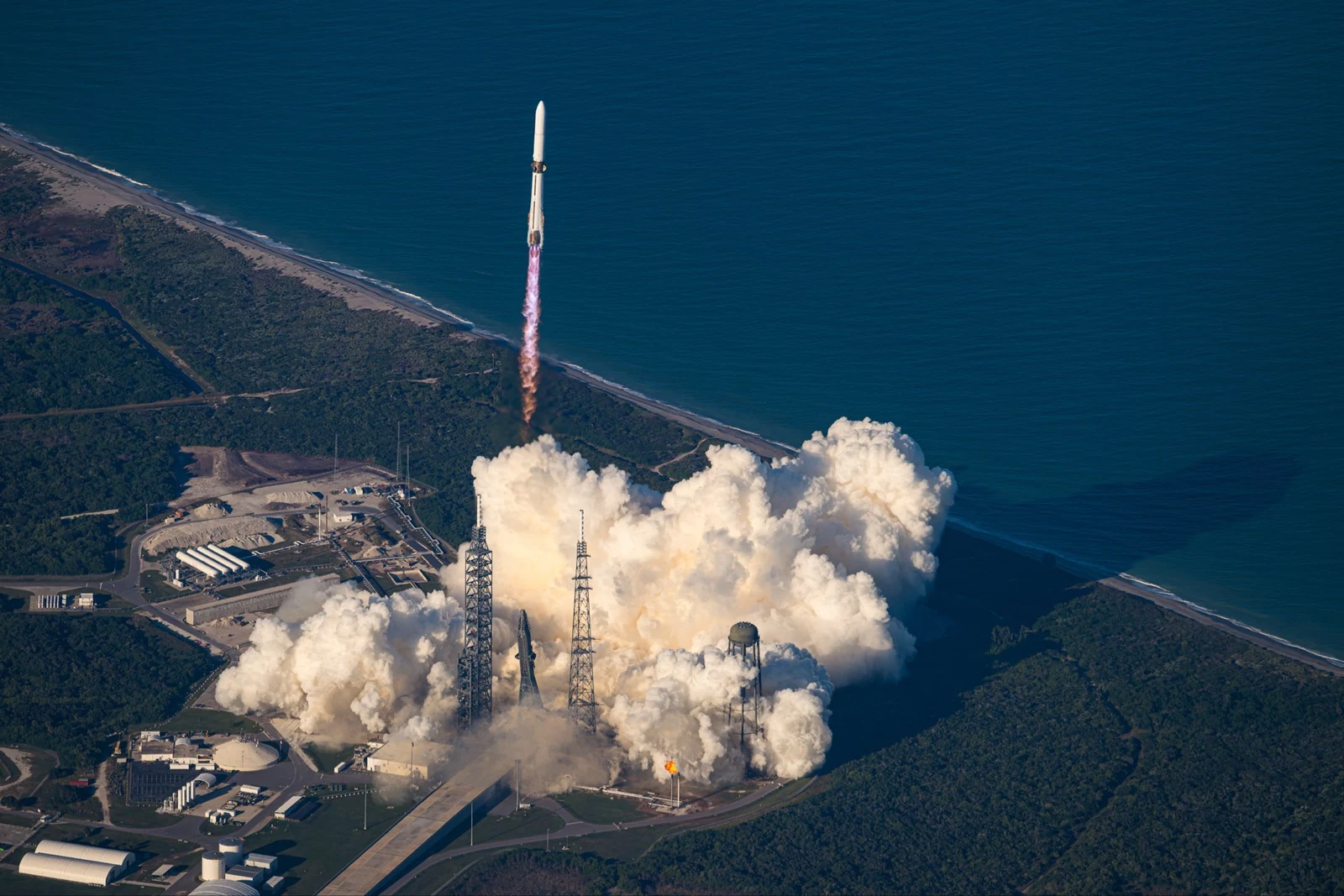
| Blue Origin | New Glenn | Its second flight launched NASA's twin ESCAPADE Mars spacecraft on November 13, 2025, from Launch Complex 36 at Cape Canaveral, per NASA |
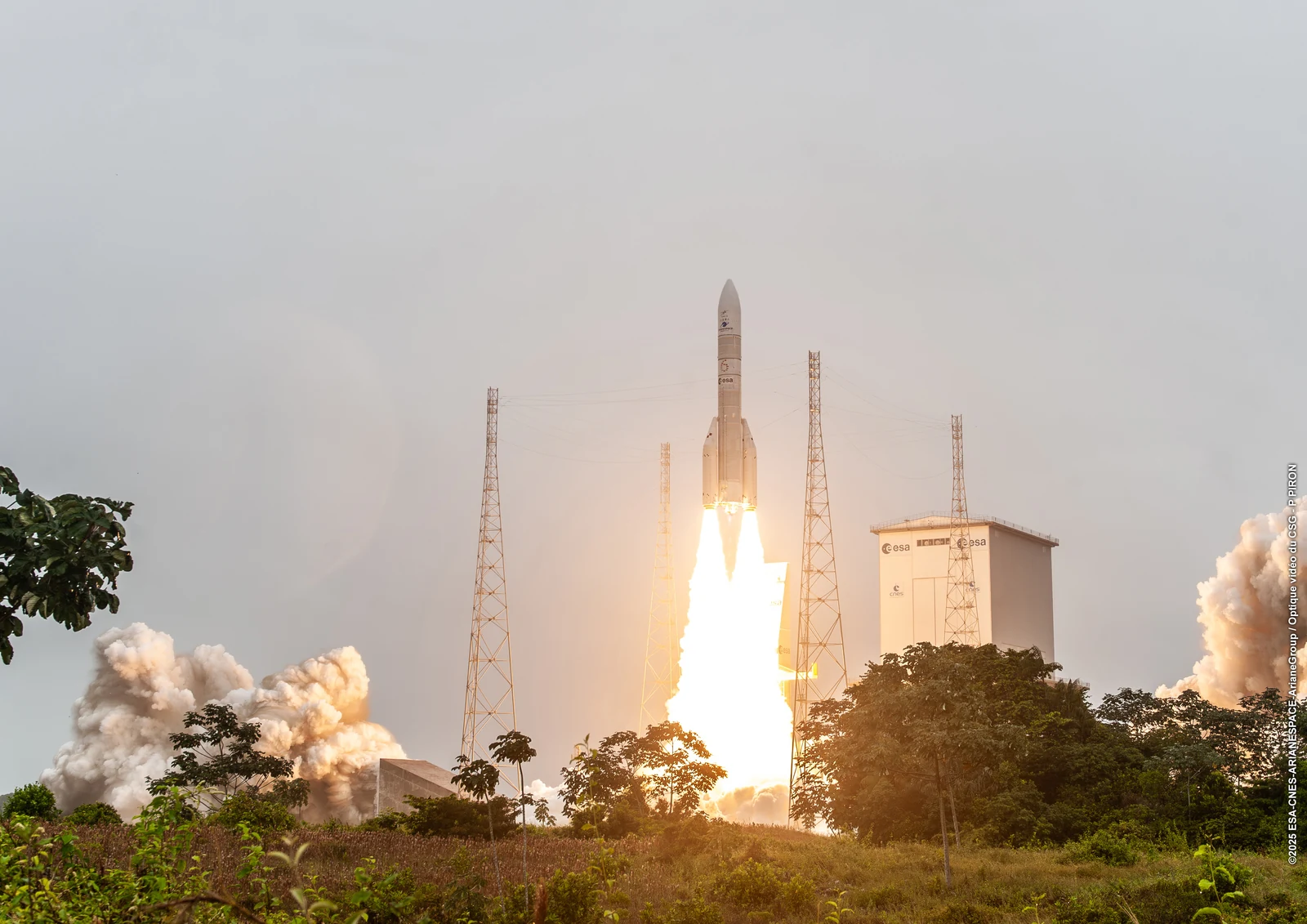
| Arianespace | Ariane 6 and Vega C | Ariane 6 was developed with ESA, ArianeGroup and the French space agency CNES and is commercialized and operated by Arianespace, per Arianespace |
Government missions buy from the same providers. NASA's Launch Services Program picked Blue Origin for ESCAPADE through its VADR contract, the venture-class route covered in the last section. Nationality is less of a limit than many buyers assume: the FAA says U.S. satellite owners can fly on foreign rockets and non-U.S. owners can fly on U.S. vehicles.
Dedicated Small Launchers
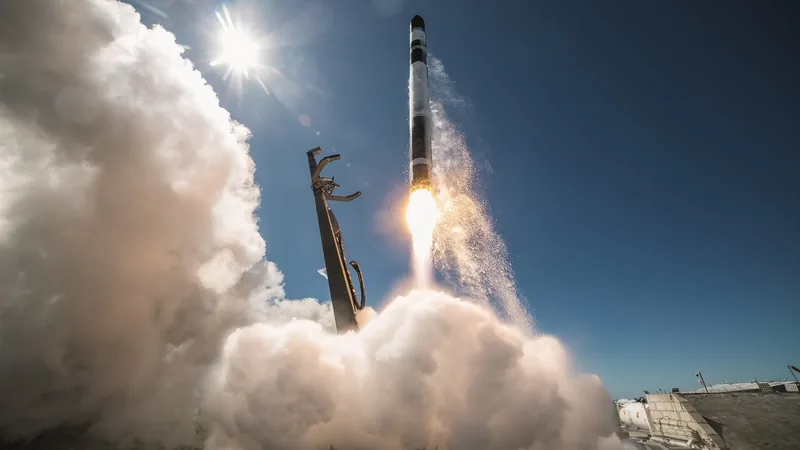
A dedicated small launch vehicle gives a commercial space launch customer the whole rocket. NASA says these rides can be scheduled faster, can serve several destinations with a multi-ignition upper stage, and allow accommodations such as a nitrogen purge or a late battery charge that rideshare flights rarely offer. The trade-off, in NASA's words, is smaller manifests, lower launch frequency and significantly higher prices than rideshare. NASA calls Rocket Lab's Electron the most widely used small vehicle as of April 2026. The table lists vendor-reported payload to low Earth orbit (LEO), which NASA republishes without independent verification.
| Maker | Vehicle | Payload to LEO | Stages | Listed by NASA as |
|---|---|---|---|---|
| Rocket Lab (USA) | Electron | 200 kg | 2 | Current vehicle |
| Galactic Energy (China) | Ceres-1 | 420 kg | 4 | Current vehicle |
| ISRO (India) | SSLV | 500 kg | 3 | Current vehicle |
| Northrop Grumman (USA) | Minotaur-1 | 580 kg | 4 | Current vehicle |
| Firefly Aerospace (USA) | Alpha | 630 kg | 2 | Current vehicle |
| Isar Aerospace (Germany) | Spectrum | 1,000 kg | 2 | In development |
| Gilmour Space (Australia) | Eris | 215 kg | 3 | In development |
NASA says flying as a dedicated payload is the strongest option for missions that need a specific orbit, near-full use of the vehicle's performance, an interplanetary trajectory, a precisely timed rendezvous or special environmental handling.
Rideshare Missions and Dispensers
Rideshare is the lower-cost form of commercial space launch. NASA describes two basic versions, and government programs add a third route:
- Secondary payload rides: a large primary spacecraft sets the orbit, schedule and concept of operations, and smaller satellites use the rocket's spare mass and volume.
- Dedicated rideshare: the entire rocket carries small satellites, so no single customer dictates the mission.
- Government-placed rides: NASA's CubeSat Launch Initiative and its Science Mission Directorate Rideshare Office find seats for school, nonprofit and agency payloads, and ESA's Fly Your Satellite program does the same for university CubeSat teams from ESA Member States, Canada and Slovenia.
NASA puts a number on the low end. It reports that the SpaceX Transporter rideshare program sells Falcon 9 rides starting at $350,000 for about 50 kg, on a high launch cadence, and that Rocket Lab completed 10 Electron rideshare missions in 2025. Sharing has rules. Many rideshare missions impose "do no harm" requirements that usually restrict transmitters, mechanical deployments after separation and hazardous materials; the NASA report points to its Rideshare User Guide for the typical list.
Integration hardware makes the stacking possible. The ESPA ring, a multi-payload adapter originally developed by Moog, has six 15-inch ports that can each carry up to 257 kg, and ESA's Small Spacecraft Mission Service dispenser for Vega follows the same modular idea, per NASA. CubeSats ride in rail-type or tab-type dispensers built to the CubeSat Design Specification that Cal Poly San Luis Obispo maintains, which is why one CubeSat can fit many rockets.
Orbital Transfer Vehicles and the Last Mile
The weak point of rideshare commercial space launch is the drop-off. NASA lists the inability to launch into the desired orbit as one of the main disadvantages, because the primary mission or the shared manifest picks the destination. An orbital transfer vehicle (OTV) closes that gap: NASA defines OTVs and orbital maneuvering vehicles as systems with onboard propulsion that launch to an approximate orbit and then fly to one or more target orbits, changing altitude, inclination or both. NASA also calls the market nascent, with many planned systems and few that have flight heritage. Examples from the same report:
- D-Orbit ION: first used in 2020 to deploy Planet satellites, flown 21 times as of December 2025, most recently with two ION carriers delivering eight missions to a sun-synchronous orbit (SSO) near 510 km.
- Rocket Lab Photon: derived from the Electron kick stage, flown seven times as of March 2026, including two modified Photons for the ESCAPADE Mars mission.
- Impulse Space Mira: first launched in November 2023, with a larger Helios kick stage advertised to move more than 4,000 kg from LEO to geostationary orbit in under 24 hours.
- Momentus Vigoride: flown three times, with a maximum payload of 750 kg, and able to ride an ESPA Grande ring (a larger ESPA ring), a SpaceX rideshare plate or a dedicated rocket.
- Firefly Elytra: offered by Firefly now that its SHERPA vehicle is retired, and, NASA says, appears built for compatibility with Firefly's small and medium-lift rockets.
An orbital transfer vehicle adds a second contract, a second integration campaign and a second vehicle that has to work. For a sun-synchronous orbit at a common altitude, a standard rideshare drop may already be close enough; for an unusual inclination, a transfer leg may be the only way to make rideshare work.
Constellations Drive the Volume
Satellite constellations are the main reason commercial space launch volumes keep climbing. NASA reports that Starlink made up 65% of launched spacecraft in 2020 and kept that trend through 2025, while its satellites grew from under 300 kg to about 800 kg in four years. The agency defines a mega-constellation by behavior rather than headcount: numerous satellites in close proximity with rapid separation velocities, which raises collision risk in LEO. It also notes that the FAA's annual commercial space compendium raised its small spacecraft mass limit from 600 kg to 1,200 kg in 2023, according to the NASA report.
| Constellation | Scale on record | Orbits | Deadlines and launch supply |
|---|---|---|---|
| SpaceX Starlink Gen2 | 15,000 satellites authorized in the FCC Space Bureau order of January 9, 2026 | Shells from 340 km to 485 km, plus continued 525 km operations | Half launched and operating by December 1, 2028; the rest by December 1, 2031 |
| Amazon Leo (formerly Project Kuiper) | 396 satellites deployed over 14 missions as of July 2, 2026, per Amazon | The LA-08 batch was released near 465 km and raised to 630 km | Launches bought from ULA, Arianespace and SpaceX |
The Starlink deadlines come from the FCC order, which ties the license to launching and operating satellites on schedule, so for a mega-constellation the license plan is also a launch-procurement plan. Amazon spreads its risk across rockets: its low Earth orbit network, formerly Project Kuiper, has flown satellites on Atlas V, Ariane 64 and Falcon 9, the next ULA mission moves to Vulcan, and the company says it has secured more than 100 launches, according to its mission updates.
For rural connectivity, LEO broadband enters a policy debate that already includes the Universal Service Fund and E-Rate programs set out in the digital divide policy overview and the build-versus-buy arguments in the municipal broadband and private ISP comparison.
Where Commercial Rockets Launch
A commercial space launch site is picked for the orbits it can reach and the public it has to protect. The FAA explains that launch sites sit as far as possible from major cities and usually near water, and it names Cape Canaveral in Florida and Vandenberg in California, both government-owned ranges, as the two U.S. sites used most often for commercial launches. Its spaceport list shows who licenses each site and what it can host:
| Launch site | State | License | Launch type |
|---|---|---|---|
| Cape Canaveral Space Force Station | Florida | Federal | Vertical and horizontal |
| Kennedy Space Center (NASA) | Florida | Federal | Vertical and horizontal |
| Space Florida Launch Complex 46 | Florida | FAA | Vertical |
| Vandenberg Space Force Base | California | FAA and federal | Vertical and horizontal |
| Mojave Air & Space Port | California | FAA | Horizontal |
| Mid-Atlantic Regional Spaceport (at NASA Wallops) | Virginia | FAA | Vertical |
| Pacific Spaceport Complex | Alaska | FAA | Vertical |
| Spaceport America | New Mexico | FAA | Horizontal and vertical |
| Boca Chica (SpaceX) | Texas | Private exclusive use | Starship site |
| Huntsville International Air and Space Port | Alabama | FAA | Orbital reentry |
Geography sets which orbits a site serves. Arianespace says the Guiana Space Center in French Guiana sits near the equator, a location that reduces propellant consumption and maximizes payload capacity. At the other end, the operator of Alaska's Pacific Spaceport Complex tells the FAA it can reach high-inclination and polar orbits between 59° and 110° inclination. SpaceX flies Falcon 9 and Falcon Heavy from Launch Complex 39A at Kennedy, Falcon 9 from Space Launch Complex 40 at Cape Canaveral, and Falcon 9 from Space Launch Complex 4E at Vandenberg, according to the FAA.
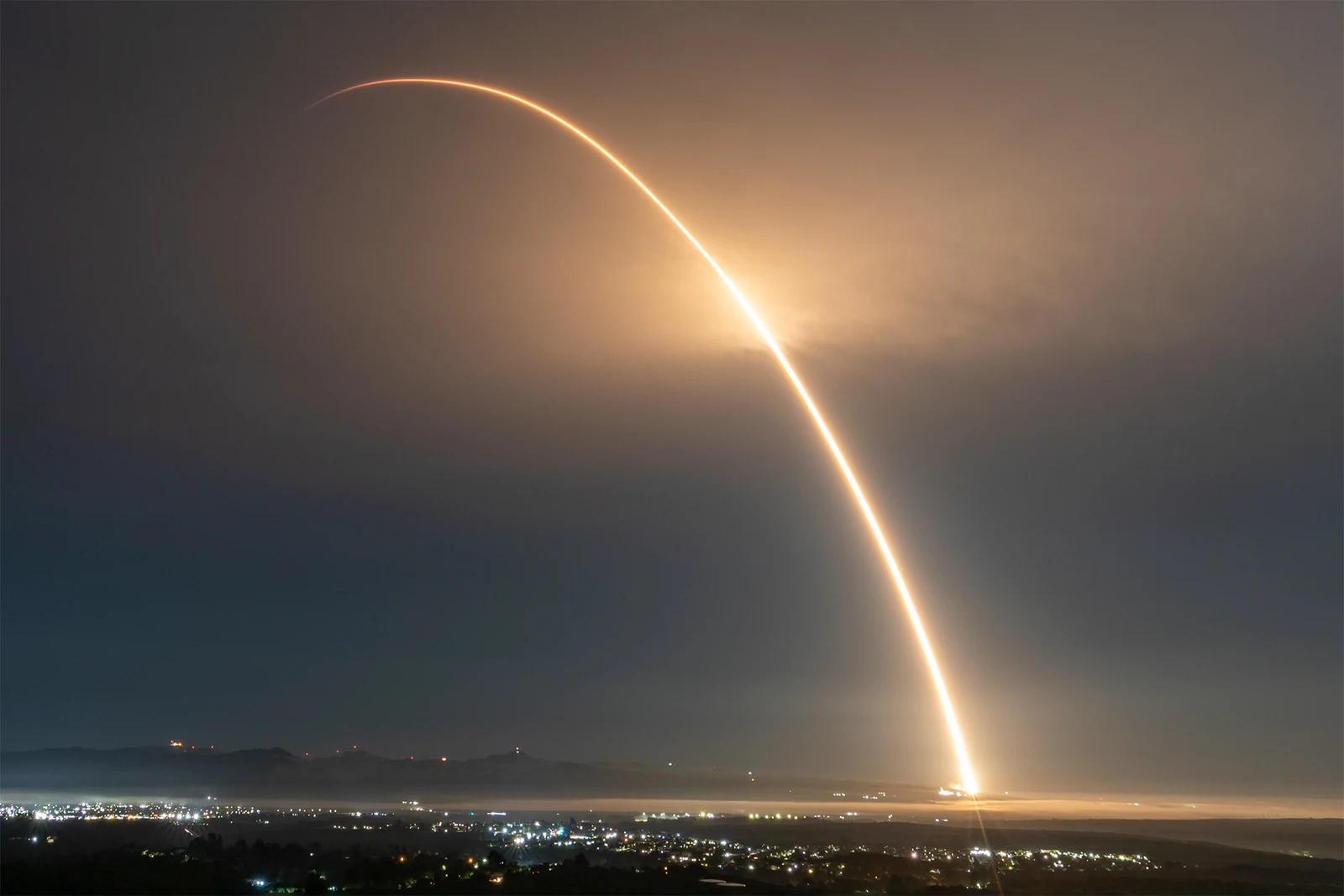
Launch rates also run through environmental reviews. In October 2025 the Department of the Air Force finalized an environmental impact statement on raising Falcon launches at Vandenberg from 50 to 100 a year, and the FAA, a cooperating agency, issued its record of decision that month, per the FAA Falcon program page.
Every rocket also shares the sky with airliners. The FAA drafts an Airspace Management Plan for each space operation and says it has cut airspace closures from an average of more than four hours per launch to just over two hours since 2018, according to its airspace integration page. Air traffic limits can also narrow launch windows: during the 2025 federal funding lapse, an FAA emergency order allowed commercial space launches and reentries only between 10:00 p.m. and 6:00 a.m. local time from November 10, 2025, and a later cancellation order, effective November 17, 2025, ended the prohibition on commercial space launches and reentries during peak hours.
The U.S. Law Behind Commercial Launches
U.S. commercial space launch law starts with the Commercial Space Launch Act of 1984. As amended and codified at 51 U.S.C. sections 50901 to 50923, it lets the Secretary of Transportation license and regulate commercial launches, reentries and launch sites in the United States and by U.S. citizens abroad, a power delegated to the FAA, according to the agency's Starship project page. The law asks for two things at once: protecting public health, property, national security and foreign policy interests, and encouraging private launches. The main layers:
| Law or rule | What it does |
|---|---|
| Commercial Space Launch Act of 1984, as amended (51 U.S.C. chapter 509) | Gives the Department of Transportation, through the FAA, licensing authority over commercial launch, reentry and launch sites, per the FAA |
| Human spaceflight moratorium (2004) | Bars the FAA from regulating the safety of people on board; extended several times, it now expires January 1, 2028, and crew and spaceflight participants fly under informed consent, per the FAA |
| U.S. Commercial Space Launch Competitiveness Act (2015) | Public Law 114-90 of November 25, 2015 called for an updated maximum probable loss method, extended the federal launch liability provision, renamed the Office of Space Commercialization as the Office of Space Commerce, and gave U.S. citizens rights to space resources they recover, per the enacted text |
| 14 CFR Parts 400 to 460 | The FAA's commercial space regulations; its streamlined launch and reentry licensing rule was published September 30, 2020, per the FAA |
| Outer Space Treaty (1967), Liability Convention (1972), Registration Convention (1976) | International treaties the United States has ratified, listed by the FAA |
The license reaches further than U.S. soil. The FAA requires a license or permit for commercial launches inside the United States and for launches abroad by U.S. entities, and in general it does not license launches carried out by and for the U.S. government. Its license review covers public safety, including overflight and payload contents, national security and foreign policy, the operator's insurance and environmental impact.
Insurance is set by formula. Each license holder must show funds equal to a maximum probable loss (MPL), a probabilistic assessment of third-party damage to life and property and of damage to government property, and the FAA says buying liability insurance is the most common way to meet it, with escrow or set-aside reserves as alternatives. The operator, its customer and their contractors also sign reciprocal waivers of claims, and the U.S. government may cover losses above the MPL for licensed operations, a protection permits do not get, according to the FAA's financial responsibility page.
Licensing, Spectrum and Ground Stations
A commercial space launch contract does not license the satellite riding on it. AWS describes the order in its Ground Station FAQ: the operator completes the ITU filing and FCC filing as appropriate and obtains the satellite license, then AWS applies for the ground station licenses at each antenna site. The main items:
- Launch license: held by the rocket operator, from the FAA for United States launches.
- Spectrum: the ITU filing and, as appropriate, the FCC filing that AWS expects before it onboards a satellite.
- Payload-specific approvals: remote sensing and laser usage approvals where the mission needs them, as NASA notes.
- Ground station licenses: per country and per antenna; AWS estimates three or more months in the United States, 45 days in Ireland and nine or more months in Australia, and calls those timelines non-binding.
Ground stations have become a rented service as well. AWS Ground Station lets operators schedule an antenna by the minute and pay for the time used, then deliver satellite data to Amazon EC2 for processing. Where that processing should run raises the same latency and bandwidth questions covered in the edge computing versus cloud computing breakdown.
Orbital Debris Rules Shape Every Mission
Orbital debris is now a design input for every commercial space launch customer. The ESA Space Environment Report 2026, based on data through the end of 2025, counts more than 300 launches and over 4,000 new payloads in that year, and says rideshare missions and large constellations mean more satellites per launch, with single-payload missions becoming rarer. ESA counts about ten new payloads launched and more than three intact objects reentering every day. Its Space Environment Health Index jumped from about 4 to 50 in one year, and the agency now argues that active debris removal must become part of the solution.
Regulators and agencies are tightening the end-of-life side. ESA links the rise in planned reentries to the shift from a 25-year to a 5-year disposal target in LEO. The FCC Gen2 order makes SpaceX file a semi-annual report on conjunction events, disposals, reentries and disposal failures, and bars further deployments if failed satellites pass 100 post-failure object years until a revised debris plan is approved. What that means for a satellite program:
- Plan disposal early: orbital debris information is already part of the safety file a launch provider asks for, and the disposal plan should fit the 5-year disposal target.
- Design for demise: ESA says design-for-demise technologies, which make satellites burn up as completely as possible on reentry, might reduce the on-ground casualty risk it now tracks.
- Share deployment data: ESA says constellations are shifting altitude year to year, which makes shared deployment plans and traffic coordination more important.
- Expect stricter partners: ESA's updated debris mitigation requirements apply to any company working on its missions, and the Zero Debris Charter it facilitated in 2023 was drafted with dozens of key actors across the space community.
Choosing a Launch Path for a Satellite Program
Choosing a commercial space launch option starts with the orbit, not the price list. A practical order of questions:
- How exact is the orbit? A specific inclination, altitude or launch time points to a dedicated small launch vehicle. A common sun-synchronous orbit points to rideshare.
- How heavy is the spacecraft? Rideshare pricing starts from a minimum mass block, and a small payload can go through a launch broker, whose job NASA describes as filling excess capacity on a launch.
- How firm is the date? A secondary payload follows the primary mission's schedule; a dedicated flight can be scheduled around the customer.
- Does the satellite need special handling? Purges, late battery charges and unusual environments favor a dedicated rocket.
- Is a transfer leg worth it? An orbital transfer vehicle can rescue a rideshare plan, at the cost of another vehicle with limited flight history.
- Are the licenses on track? Ground station licenses alone run from 45 days to nine months or more in AWS estimates, so filings belong at the start of the schedule.
NASA-sponsored missions have one more route. The VADR contract, managed by the Launch Services Program at Kennedy Space Center, buys dedicated launches plus traditional and dedicated rideshare slots for risk-tolerant Class D payloads with less agency oversight, and it lets rocket configurations without prior flight history fly after NASA certification. NASA selected 13 companies in 2022 and three more in 2024; the contracts carry an ordering period through February 3, 2027 and a combined maximum value of $300 million, per the NASA announcement. For small launchers that count on NASA as an early customer, that ordering deadline is the date to watch.
Further reading
Frequently Asked Questions
How does a commercial space launch work?
The customer books a dedicated rocket or a rideshare seat, either directly or through a launch broker or launch integrator. The satellite owner secures its radio frequency and other licenses, hands the provider a safety file with orbital debris and materials data, and the spacecraft is fitted to an adapter or dispenser. The rocket operator holds its own FAA license, and after separation a transfer vehicle may finish the trip.
What was the first commercial space launch?
The FAA dates the first licensed U.S. commercial launch to 1989, when a Starfire suborbital rocket carried the Consort-1 payload from White Sands Missile Range in New Mexico. Commercial satellites had flown on the Space Shuttle between 1981 and 1985, but the FAA notes that U.S. policy after the 1986 Challenger accident generally banned non-government payloads from the Shuttle.
Which companies sell commercial launches?
SpaceX, United Launch Alliance, Blue Origin and Arianespace sell medium and heavy launches, and NASA calls Rocket Lab's Electron the most widely used small launch vehicle. Rideshare seats can also be bought through launch brokers and integrators. Government buyers use the same companies: NASA bought the New Glenn launch of its ESCAPADE mission through its venture-class launch contract.
Where do commercial rockets launch from?
In the United States the FAA names Cape Canaveral in Florida and Vandenberg in California as the sites used most often for commercial launches. FAA-licensed spaceports include the Pacific Spaceport Complex in Alaska, the Mid-Atlantic Regional Spaceport in Virginia and Spaceport America in New Mexico. Arianespace launches from the Guiana Space Center near the equator in French Guiana.
How much does a rideshare launch cost?
The published entry point is low: NASA reports that the SpaceX Transporter program sells rides starting at $350,000 for about 50 kg. NASA describes dedicated small launches as carrying significantly higher prices than rideshare. The seat is only part of the budget, since integration hardware, a launch broker or integrator, an orbital transfer vehicle and licensing can all add cost.
Who needs a license for a commercial satellite launch?
Both the rocket and the satellite need their own approvals, from different regulators. In the United States the FAA licenses the launch, while the satellite owner handles radio frequency, remote sensing and laser approvals. AWS adds that ITU and FCC filings come before it will license ground stations for a satellite, which can take three or more months in the United States.