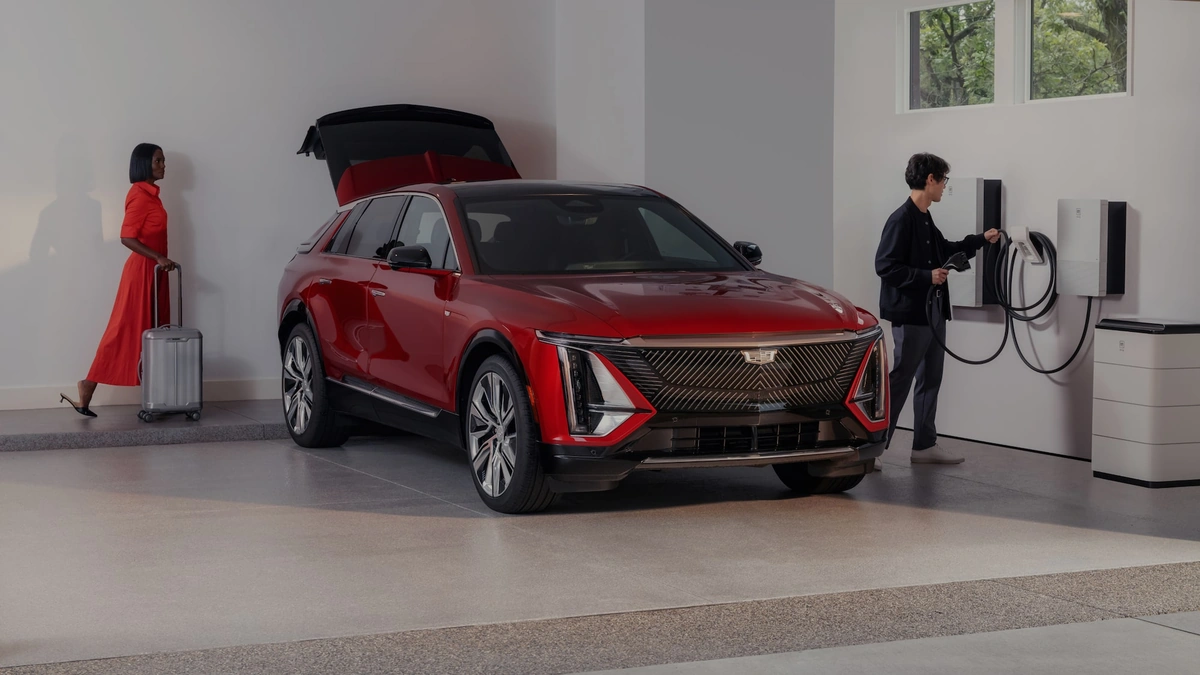
A software-defined vehicle is a car whose features are controlled by central computers and updatable software that can change after the sale, and vehicle-to-grid is the charging capability that lets that same car send stored battery energy back to the power grid. The two ideas are usually covered separately, yet they meet in the same hardware. The International Energy Agency (IEA) notes that bidirectional charging changes how a car's battery management system, power electronics and communication protocols behave, and that more models could gain vehicle-to-grid (V2G) through over-the-air software updates, as Volkswagen did when it switched on vehicle-to-home for some models in 2024, according to its vehicle-to-grid analysis.
That is the real link between the two topics. Software decides what a car can do on the road, and increasingly it also decides whether a parked EV is only a load on the grid or a battery the grid can draw on.
How a Software-Defined Vehicle Is Built
A software-defined vehicle architecture moves a car's functions out of many single-purpose controllers and into a few central computers running updatable code. The automaker can then fix defects, deploy security patches and add features through over-the-air (OTA) updates after the sale, without a dealer visit, according to the IEA.
In a software-defined vehicle, software determines a growing share of what the car does, and the IEA traces the change to the electronics underneath. A conventional car gives each function, such as lighting, braking or climate control, its own electronic control unit (ECU). A software-defined design replaces that sprawl with a domain or zonal architecture: fewer ECUs, coordinated by central computers. The IEA says the shift reduces wiring complexity and lets functions such as advanced driver assistance systems (ADAS) and the battery management system improve through OTA updates.
| Aspect | Distributed architecture | Zonal architecture |
|---|---|---|
| Control | One electronic control unit per function | Zonal controllers under a few central computers |
| Wiring | Complex harnesses | Less wiring and lower material needs |
| Software updates | A smaller share of functions defined and updated in software | A greater share, defined and updated over the air, including ADAS and the battery management system |
OTA updates are older than the label. The IEA credits Tesla with introducing them in 2012 and with moving to a centralized, software-defined architecture in 2017. It also notes that every model on sale with a zonal architecture and extensive OTA capability is battery electric, mostly from pure-play EV makers. Many other automakers sit in between, with intermediate designs that merge some functions into shared computers but keep dedicated controllers for safety-critical or legacy systems.
Inside the Software-Defined Vehicle Stack
One practical way to read the software-defined vehicle stack is as four layers, each with its own suppliers:
- Central compute: NVIDIA's DRIVE AGX Thor developer kit lists a Blackwell-class GPU with up to 1,000 INT8 TOPS, an Arm Neoverse V3AE CPU, 64 GB of LPDDR5X memory and up to 273 GB/s of memory bandwidth, running the NVIDIA DriveOS stack.
- Operating system: Google describes Android Automotive OS as an Android-based infotainment system built into the vehicle, a standalone device that runs apps directly. Android Auto, by contrast, runs from the driver's phone.
- Middleware and open source: Eclipse SDV describes itself as an open source automotive ecosystem of automakers, suppliers and technology companies, and its Safe Open Vehicle Core project builds a core software stack for high-performance ECUs. COVESA's Vehicle Signal Specification, introduced in 2016, is an open data model that normalizes vehicle data.
- Cloud and fleet services: the back end that ships each update to the fleet. AWS, for one, pitches its automotive services around continuous software delivery.
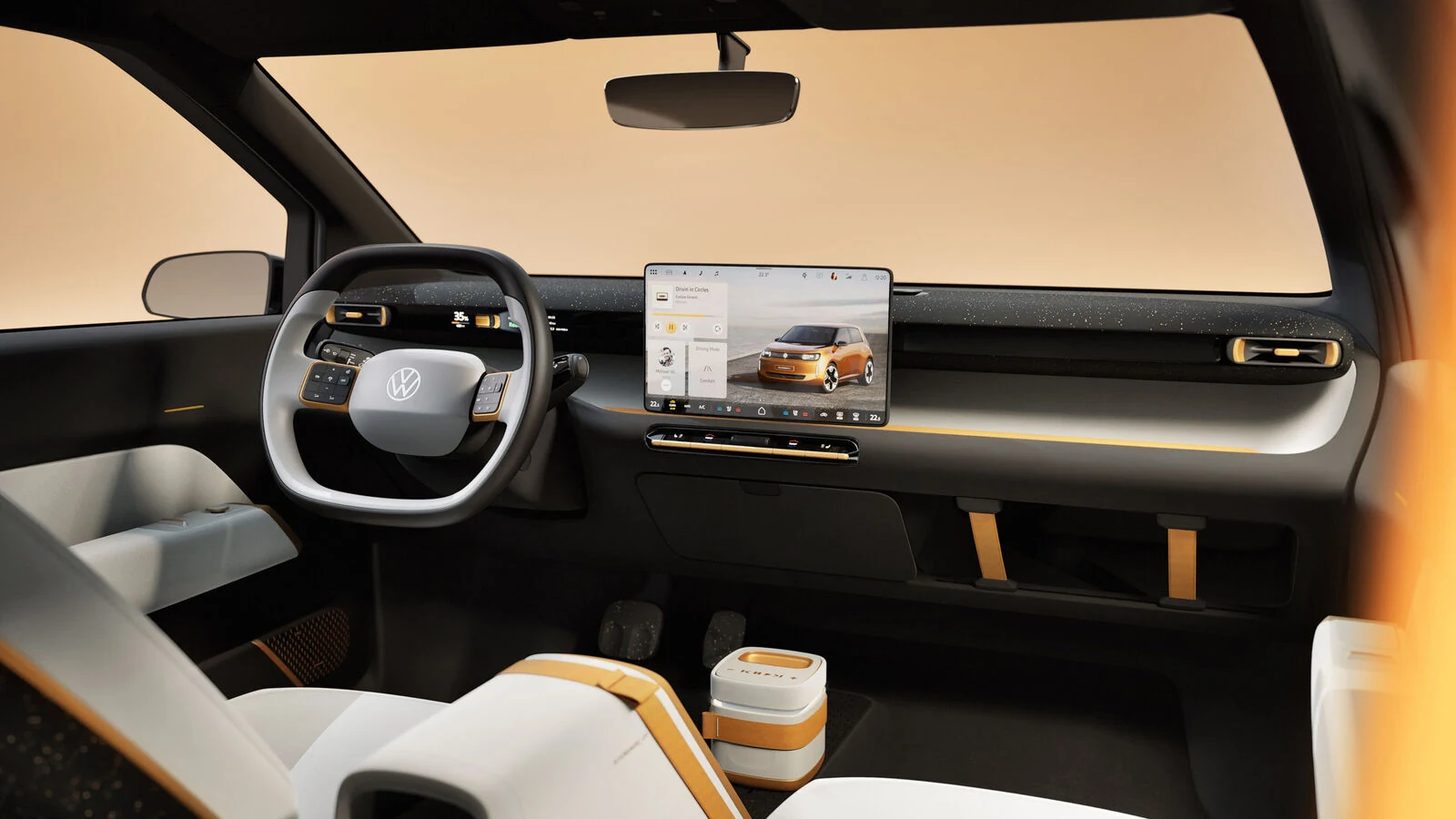
The IEA flags a trade-off in the operating system layer. Platforms derived from consumer technology, such as Android Automotive OS, can lower development costs and speed up new features, but they raise questions about dependence on large technology providers, data governance and long-term control of the in-car interface. A car that takes OTA updates is also a connected device with an attack surface, and the firmware-update discipline in the guide to securing IoT devices applies to it as much as to a smart camera.
How Automakers Approach Software-Defined Vehicles
Moving from hardware-centered engineering to the software-defined vehicle is neither quick nor cheap, in the IEA's assessment. Software relies on iterative release cycles, while car specifications are traditionally fixed early in the design process. Automakers have split into three broad approaches:
- In-house development: Tesla, Toyota and BYD emphasize their own software to keep control of key vehicle functions and data.
- Partnerships: General Motors works with NVIDIA and Renault with Google. Volkswagen scaled back its plan to write core software entirely in-house through CARIAD in 2023 and formed a joint venture with Rivian.
- Software units and platforms: BMW runs the subsidiary BMW Car IT, and General Motors has its in-house Ultifi platform.
Not every effort survives: Ford abandoned its fully networked vehicle project in 2025, the IEA notes. The Rivian partnership shows what the engineering involves. Volkswagen Group says the joint venture, RV Tech, completed winter tests of its production-intent zonal architecture in Phoenix and Arjeplog, Sweden, using Volkswagen ID.EVERY1, Audi and Scout reference vehicles. The program checked how hardware and software handle all-wheel drive, traction control and driving performance, and it validated OTA functions along the way.
Benefits and Trade-offs of a Software-Defined Vehicle
A software-defined vehicle keeps changing after the sale, which helps owners and automakers in some ways and costs them in others. The IEA's assessment sets out both sides:
| Gain | What it can cost |
|---|---|
| Software defects fixed and cybersecurity patches deployed over the air, without a visit to a dealership or service center | A car that takes OTA updates is a connected device, so the update channel itself needs securing |
| Performance improvements, tuned functions and new features after the initial sale | Feature-as-a-service pricing through one-off payments, subscriptions or pay-per-use, which may raise lifetime costs |
| Less wiring and lower material needs, which can reduce EV production costs when volumes are high enough | More features in base models and greater reliance on subscriptions could also raise costs for users |
| A car that stays up to date for longer, which supports affordability | A shift the IEA calls neither quick nor cheap for automakers rooted in hardware |
For buyers, that makes the update policy and the list of paid features part of the price. The same OTA channel can also switch on charging functions: the IEA's vehicle-to-grid analysis says more models could gain V2G through over-the-air software updates, which is where the second half of this topic begins.
How Vehicle-to-Grid Works
Vehicle-to-grid turns the battery of a software-defined vehicle into a grid resource through bidirectional power flow, and the IEA describes it as the top rung of a ladder of charging modes:
| Mode | What the EV does | Main use |
|---|---|---|
| V1G (smart charging) | Charges at a modulated rate, never exports | Match demand to generation, ease congestion |
| V2H or V2B (vehicle-to-home or building) | Discharges into a home or building | Backup power, lower bills, more rooftop solar use |
| V2G (vehicle-to-grid) | Pushes energy into the grid | Grid stabilization and cost optimization |
| V2L (vehicle-to-load) | Powers devices through an AC outlet | Tools, appliances and electronics |
Where the power conversion happens matters. In AC V2G, the car inverts the battery's direct current to alternating current, so its onboard power electronics carry the grid-compliance burden, including grid-frequency measurement. In DC V2G, the external charger does that job. Either way, the battery management system has to enforce state of charge and temperature limits to curb degradation, and the car has to tell the charger its discharge limits as well as its charging needs.
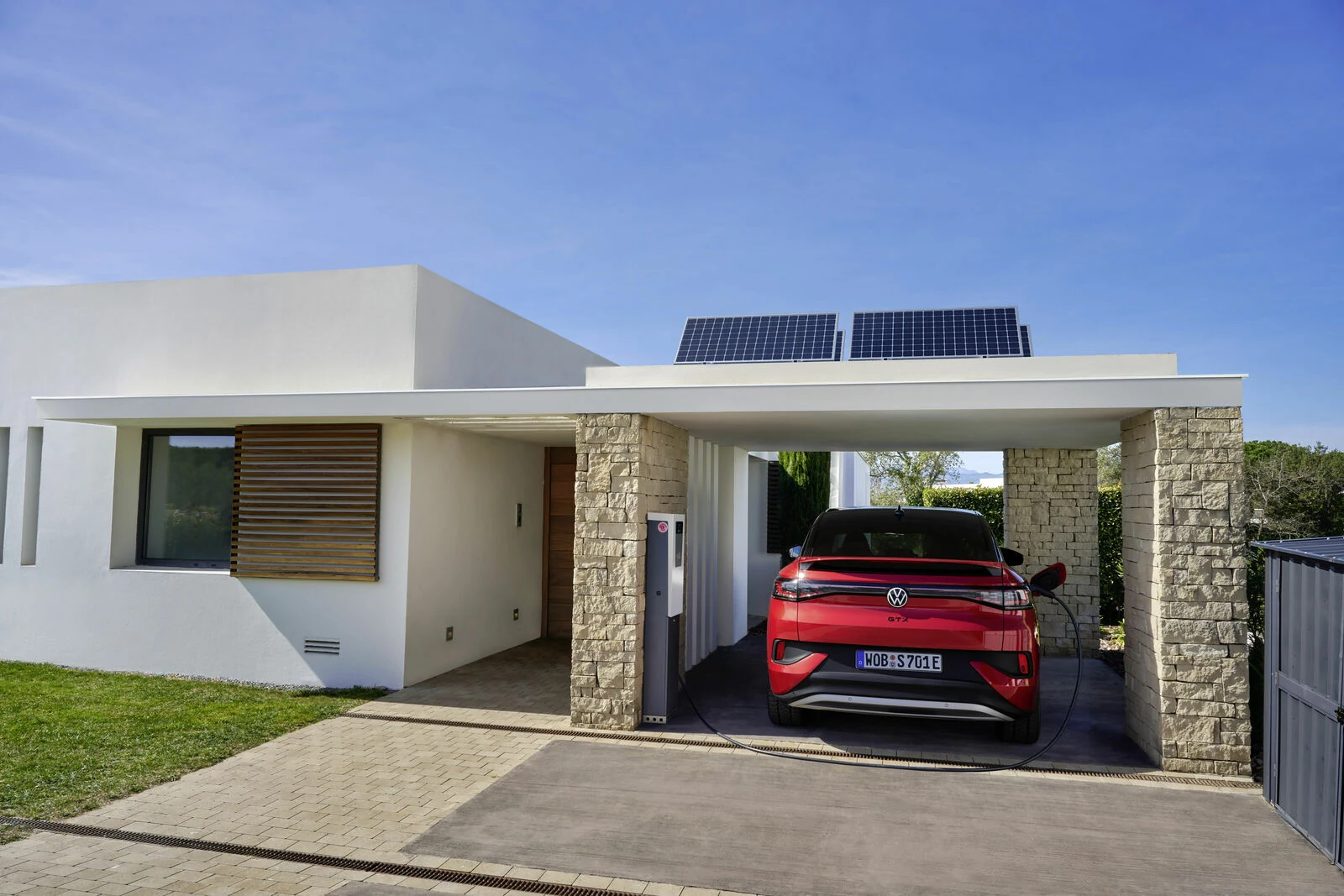
The coordination runs in software. The IEA describes the charging station management system (CSMS), also called the backend, as the interface between charger and grid. It takes grid-side signals such as capacity constraints, time-of-use tariffs and load-shift requests, combines them with the car's state-of-charge limits and expected departure time, and sends charging schedules back to the charger. In current commercial approaches, aggregators mostly run these backends as part of a packaged service to the owner.
The Standards That Link Cars, Chargers and the Grid
A software-defined vehicle can only export power when every link in the chain speaks a common protocol, and each link has its own standard:
- Car to charger. ISO 15118-20 defines the communication messages and sequence requirements for bidirectional power transfer between an EV and its charging equipment. The IEA notes that the earlier ISO 15118-2:2014 had no V2G support, which partly explains why few automakers have specified models as V2G-capable.
- Charger to backend. The Open Charge Alliance says OCPP version 2.1, released in 2025, adds support for ISO 15118-20 with bidirectional power transfer, a new functional block for bidirectional charging (V2X) and another for control of distributed energy resources.
- Backend to grid. Aggregators and utilities translate market and network signals into charging schedules. The IEA points to standardization gaps on this link and says harmonized grid codes, as proposed by UNECE, could help cars and chargers work across borders.
- Connector ecosystem. CHAdeMO enabled the first commercial bidirectional systems but is declining outside Japan, China's GB/T supports V2G mainly through partial implementations, and V2G is not yet fully specified for the North American Charging Standard (NACS). Only the Combined Charging System (CCS) defines a fully standardized V2G pathway, per the IEA.
Interoperability is the weak point. The IEA calls interoperability between chargers and EVs extremely low because automakers implement ISO 15118-20 differently, so every commercial offer bundles specific car models, specific chargers and one utility's tariff. Regulation is pushing from the other side: the IEA reports that the European Union has set minimum requirements for all new chargers from 2027, including bidirectional capability and support for the same standard.
What Vehicle-to-Grid Pays and What It Costs
For the owner of a software-defined vehicle, vehicle-to-grid income depends on market access, and the IEA puts revenue estimates between several hundred dollars and more than $1,000 a year. The money comes from three grid services: energy arbitrage (charging when power is cheap and exporting when it is expensive), ancillary services such as frequency regulation, and distribution-level services that relieve local congestion. The IEA expects ancillary revenues to drive near-term profits and to decline as more V2G capacity arrives.
| Item | Figure | Source |
|---|---|---|
| Owner revenue estimates | Several hundred to over $1,000 a year | IEA |
| Benefit promised by commercial offers | Up to $770 | IEA |
| Bidirectional AC charger | Under $1,500 | IEA |
| Bidirectional DC charger | $5,000 and up | IEA |
| Charger payback at about $500 a year in benefits | Roughly two years (AC) to ten years (DC) | IEA |
| PG&E residential V2X incentive | $2,500 upfront ($3,000 in disadvantaged communities), plus $1,500 for the first 250 enrollees | PG&E |
California shows what a program looks like in practice. PG&E says its Vehicle-to-Everything program accepts pairs such as the Nissan Leaf, the Volvo EX90 and a Polestar SUV with a dcbel Ara charger, and the Kia EV9 and EV6 with the second-generation Wallbox Quasar, on top of Ford, Tesla, Chevrolet, GMC and Cadillac models. It adds that some of the new pairs qualify for up to $13,000 in further incentives from California Energy Commission grant funding, and that customers can enroll through June 30, 2027. Households already shifting loads with smart thermostats and plugs will recognize the logic from IoT devices for home energy efficiency; the car is a much larger battery.
Battery wear is one of the main concerns customers and automakers raise, and the IEA addresses it directly. It says typical warranties guarantee 70% capacity retention after 8 to 10 years or 160,000 km, that automakers limit their risk by requiring approved chargers and capping energy throughput, and that well-managed V2G can even reduce capacity loss compared with unmanaged charging, because the average state of charge stays lower. Choice is still thin: the IEA counts 22 models with V2G capability, under 1.5% of all EV models, priced from under $25,000 to over $70,000. It finds that France, the Netherlands and the United Kingdom meet all the conditions for commercial V2G, and that Germany removed double grid fees for bidirectional charging points at the end of 2025.
When Each Technology Makes Sense
A software-defined vehicle suits buyers who keep a car for years and want it to keep improving, while vehicle-to-grid suits owners who park for long stretches at a compatible home charger in an area where a utility pays for flexibility. A practical way to sort the options:
- For long-term updates: ask whether the model has near-full OTA capability, which the IEA defines as remote updates to almost all software, including powertrain control, the battery management system and ADAS, and which features are sold separately.
- For backup power only: vehicle-to-home covers it, powering a house during outages without exporting to the grid, and the IEA notes that battery cycling is normally more limited than with V2G.
- For grid income: confirm that the car, the charger and the utility program are approved as a set; PG&E, for example, publishes an Eligible Products List of approved combinations.
- For warranty peace of mind: check what the automaker allows, since many models permit V2L or V2H but not V2G, and some cap the energy that can be cycled.
Both technologies push computing into the car. Deciding what runs on the vehicle and what runs in the automaker's cloud is the same split laid out in edge computing vs cloud computing, and the TOPS ratings quoted for car computers measure the kind of accelerators described in NPU vs GPU vs TPU.
For vehicle-to-grid in particular, the deciding question is local. Income exists only where a utility or aggregator will pay for flexibility, so the first thing to check is which programs a given car and charger pair is approved for.
Further reading
Frequently Asked Questions
What is an example of a software-defined vehicle?
Tesla is one example: the IEA credits the company with introducing OTA updates in 2012 and moving to a centralized, software-defined architecture in 2017. A newer case is the zonal architecture from RV Tech, the Volkswagen and Rivian joint venture, which Volkswagen Group says completed winter testing in Volkswagen ID.EVERY1, Audi and Scout reference vehicles. The IEA notes that every model now on sale with a zonal architecture and extensive OTA capability is battery electric.
Does a software-defined vehicle still need dealer visits for updates?
Not when the update can be delivered over the air. The IEA says OTA updates deliver software and firmware upgrades over a wireless connection without a visit to a dealership or service center, and can fix defects, deploy cybersecurity patches and add features. How far that reach goes varies by model: the IEA's near-full OTA category covers almost all vehicle software, including powertrain control, the battery management system and ADAS.
Do software-defined vehicles mean paying subscriptions for features?
Not by definition, but the architecture makes paid add-ons easy to sell after purchase. The IEA describes feature-as-a-service models built on one-off payments, subscriptions or pay-per-use, and warns that they can raise lifetime costs depending on automaker strategy. The same OTA capability also delivers bug fixes and security patches, which can keep a car current for longer.
Does vehicle-to-grid wear out an EV battery faster?
Not necessarily: the IEA says well-managed V2G can limit degradation and can even reduce capacity loss compared with unmanaged charging. The reason is that smart scheduling keeps the average state of charge lower, which slows calendar aging, according to the IEA's vehicle-to-grid analysis. The practical risk sits in the warranty, since automakers that enable V2G often require approved chargers or cap energy throughput.
Can any electric car send power back to the grid?
No; the car, the charger and the utility program all have to support bidirectional charging and be approved together. The IEA counts 22 models with V2G capability, under 1.5% of EV models, and notes that commercial offers pair specific cars with specific chargers. Utility programs such as PG&E's publish eligible combinations, for example a Kia EV9 with a Wallbox charger.
What does vehicle-to-everything (V2X) mean?
In EV charging, vehicle-to-everything (V2X) is the umbrella label for bidirectional modes that send a car's battery energy somewhere else. Those places are the grid (V2G), a home or building (V2H), or plugged-in tools and appliances through an AC outlet (V2L). The Open Charge Alliance uses the label for the bidirectional charging block in OCPP version 2.1, and PG&E runs its program under the Vehicle-to-Everything name. Many models support V2L or V2H but not V2G, the IEA notes.