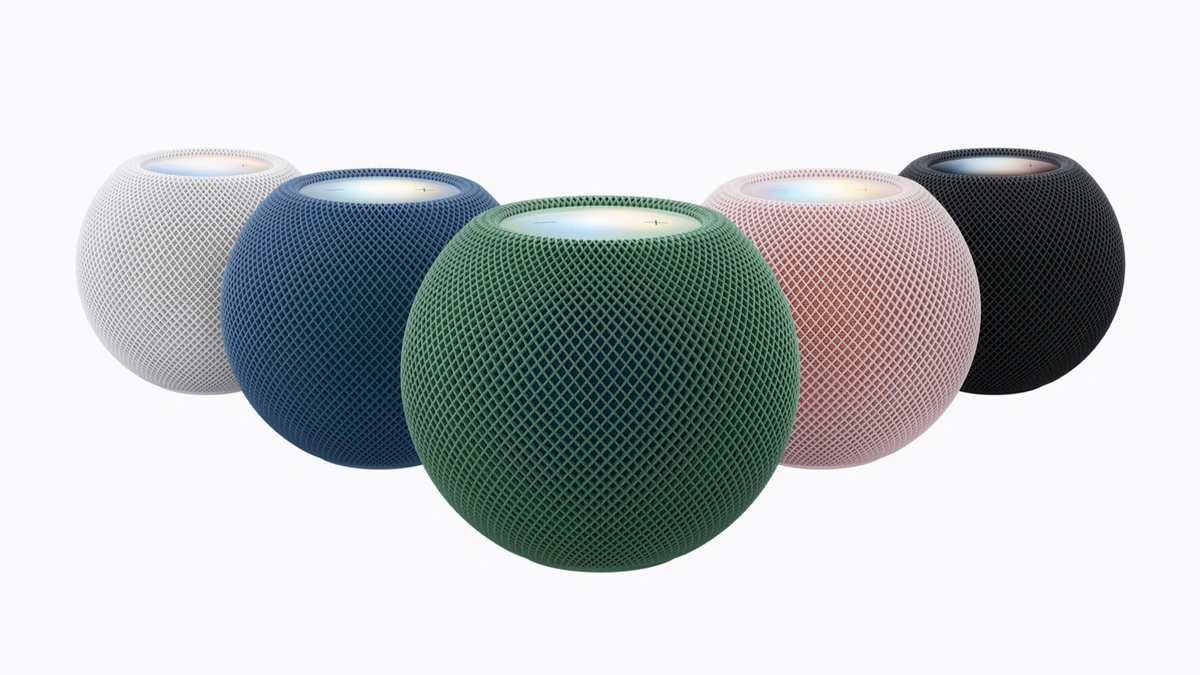
HomePod mini 2 is open for pre-order at $149 in the U.S., and stores start selling it on Friday, October 30. The speaker runs on Apple's S10 chip and comes in pink, green, blue, white and midnight. Siri AI, the rebuilt version of the assistant that the product is marketed around, is not on board at launch.
According to Apple, Siri AI reaches HomePod mini 2 in a future software update, and the company gave no date. Pre-orders cover the U.S. and more than 23 other countries and regions through apple.com and the Apple Store app. When the update lands, Siri AI will be English only, in the U.S., Australia, Canada, India, New Zealand, Singapore, South Africa and the UK. The speaker is compatible with HomePod software 27.2.
The assistant has two tiers. Paired with an iPhone or iPad that supports Apple Intelligence, a HomePod mini can draw on personal context, such as finding a song a friend recommended in a text, setting a reminder tied to a calendar event finding a recipe in an email or adding ingredients to a grocery list. It can recognize up to six voices in a household. Without such a phone, Siri AI still offers web-sourced answers, longer back-and-forth conversation and better music discovery. Requests run on the device or in Private Cloud Compute, where Apple says data is neither stored nor made accessible to the company or anyone else.
Audio is where the hardware changes show. Apple says the S10 chip and its computational audio analyze music in real time to tune dynamic range, loudness and acoustics, and the speaker can play alone, as a stereo pair or in a multiroom group. For the first time, four HomePod mini 2 units can also form a surround system with the new Apple TV 4K (4th generation), which detects each speaker's position and sets timing and levels automatically. A HomePod mini 2 can serve as the default speaker for a Mac, too. Sound Glow turns the top of the speaker into a light surface that pulses with the music, takes its colors from the current album art and can show animations for soundscapes such as rain.
The home-hub role carries over. Sound Recognition listens for smoke and carbon monoxide alarms and sends a notification to an iPhone, iPad and Apple Watch, and the Home app lets someone listen and talk through the speaker to check on a house. With Apple Home Collection video doorbells and cameras, Face Recognition can announce who is at the door.
For a buyer, the sequence is hardware first and assistant later. Anyone ordering for October 30 gets the new chip, the colors and the surround option, and waits on an undated update for the feature Apple leads with.