Net neutrality is an internet governance principle that prohibits internet service providers from throttling, blocking, or creating paid fast lanes for specific categories of data traffic. The term "internet service provider" (ISP) covers any broadband access provider delivering residential or commercial connectivity, whether via cable, fiber, or mobile networks. The practical question the debate raises is not philosophical: when an ISP can selectively slow a competitor's video stream or charge a startup for equal delivery speed, the architecture of the commercial internet shifts in ways that affect every content producer and end user on it.
What Net Neutrality Actually Prohibits
Net neutrality regulation draws a line between lawful network management practice and prohibited ISP traffic management. Understanding that boundary requires defining the three core behaviors the rules target. Traffic throttling, for instance, differs from routine congestion management in one specific way: throttling singles out an application type or content category for degradation below what network capacity would otherwise allow, rather than applying uniform rate-limiting to all traffic during a peak-load event. ISP traffic management that meets a neutrality standard must be application-agnostic. The key distinction is whether a broadband access provider's intervention is capacity-driven and non-discriminatory or commercially motivated and selective. When those ISP actions intersect with data sovereignty questions, the same broadband infrastructure decisions that govern neutrality also shape cross-border data flow constraints examined in data localization laws and cloud services.
Net neutrality regulation prohibits three categories of ISP traffic management conduct:
- Blocking: an ISP drops packets from a competitor's service or an unwanted content category entirely, preventing users from accessing it even when network capacity is available.
- Traffic throttling: an ISP deliberately degrades throughput for specific application types, such as video streaming or VoIP, below what capacity would allow, making those applications functionally degraded without formally blocking them.
- Paid prioritization: a content provider pays the ISP to deliver its traffic at a higher throughput rate than competitors receive, creating a structural speed advantage tied to commercial arrangement rather than technical merit. This form of data traffic discrimination directly disadvantages services that cannot or will not pay the access fee.
Zero-rating practices, where a broadband access provider exempts certain content from a subscriber's data cap while metering all other traffic, occupy a gray zone in both FCC and TSM frameworks. They are not categorically banned but face case-by-case scrutiny, discussed in a later section. The technical framing for how traffic classification works at the packet level is documented in IETF RFC 2475, which defines differentiated services architecture for IP networks.
The FCC's Regulatory Cycle: Title II, Rollbacks, and Reinstatement Attempts
Net neutrality in the United States has never been a settled administrative question. Each FCC rulemaking cycle has reflected which party holds the commission's three-to-two majority, and each reversal has required broadband access providers to rewrite their network management practice policies. The result is a four-phase regulatory record with no stable terminal point.
- 2010 Open Internet Order: the FCC established open internet rule requirements, including no blocking and no unreasonable discrimination, but did so without Title II reclassification. The D.C. Circuit vacated the order in 2014 in Verizon v. FCC, ruling the commission lacked authority to impose common carrier classification obligations on a service it had classified as an information service.
- 2015 Open Internet Order: the FCC reclassified broadband access providers as telecommunications carriers under Title II of the Communications Act, establishing net neutrality regulation on firm legal footing. The order prohibited blocking, traffic throttling, and paid prioritization explicitly. The D.C. Circuit upheld the order in 2016. The FCC's 2015 Open Internet Order (FCC 15-24) remains the benchmark text for the Title II reclassification approach.
- 2017 Restoring Internet Freedom Order: FCC under Chairman Pai repealed Title II reclassification, replacing the open internet rule framework with a transparency-disclosure regime. ISPs were required to publish their network management practice policies but faced no substantive prohibition on throttling or paid prioritization. The D.C. Circuit in Mozilla v. FCC (2019) partially upheld the repeal but vacated the order's provision pre-empting state-level net neutrality laws.
- 2024 reinstatement attempt: the FCC under Chairwoman Rosenworcel voted to restore Title II reclassification and net neutrality regulation in April 2024. Implementation remained legally contested and subsequent judicial and administrative developments kept enforcement status uncertain.
Each FCC rulemaking reversal demonstrates that common carrier classification for broadband is not a technical question but a political one, resolved differently depending on commission composition.
EU EU EU TSM Regulation: How Europe Enforces Open Internet Rules
Net neutrality in Europe operates under a stable statutory framework rather than a recurring rulemaking cycle. EU Regulation 2015/2120 (the Telecoms Single Market Regulation, referred to hereafter as the EU TSM Regulation) has applied across all EU member states since April 2016. The Body of European Regulators for Electronic Communications (BEREC) published binding implementation guidelines in 2016, updated them in 2020 and 2022, giving national regulators a consistent enforcement template. Where the EU regulatory philosophy governing net neutrality extends into youth data protection and broader digital rights, those connections are examined in COPPA compliance and social media regulation.
The three structural areas of the TSM Regulation that matter most for ISP traffic management practice are compared below against their FCC 2015 counterparts:
- Prohibition on blocking, throttling, and paid prioritization
- TSM Regulation (Article 3): ISPs are prohibited from blocking or slowing specific content, applications, or services, and from offering paid prioritization of any traffic over the open internet connection. The prohibition is statutory and applies uniformly across all EU member states without requiring periodic rulemaking. FCC 2015 equivalent: the Open Internet Order under Title II classification imposed the same three behavioral prohibitions on broadband access providers, grounded in common carrier classification rather than a sector-specific statute.
- Zero-rating enforcement
- TSM Regulation: zero-rating practice is not categorically banned but is assessed case by case. BEREC guidelines direct national regulators to examine whether a specific zero-rating offer significantly limits end-user rights. Several national regulators, including Austria and the Netherlands, found specific zero-rating offers in violation following the Court of Justice of the European Union ruling in the Telenor cases (C-807/18, C-39/19). FCC 2015 equivalent: the 2015 order did not categorically ban zero-rating; the FCC opened an inquiry into T-Mobile's Binge On zero-rating offer in 2016 but issued no violation finding before the 2017 repeal mooted enforcement.
- specialized services exception
- TSM Regulation (Article 3(5)): ISPs may offer differentiated quality of service for non-internet services, such as managed IPTV or remote surgery networks operating on reserved capacity, provided those services do not degrade the general open internet connection. Any ISP traffic management that impairs the quality of the open internet fails this test. FCC 2015 equivalent: the 2015 order recognized a narrow managed services exception for services that are not "provided over the public internet," subject to similar non-degradation conditions.
The full text of EU Regulation 2015/2120 and the BEREC 2022 updated guidelines form the primary reference documents for TSM Regulation compliance across EU jurisdictions.
Arguments For and Against Net Neutrality Rules
Net neutrality regulation draws structured opposition from both sides of the economic argument, and the strongest version of each position rests on empirical claims about market structure rather than political preference. The debate is also connected to broader questions about who controls content delivery: Section 230 and platform liability frameworks govern what platforms can host, while net neutrality open internet rules govern how ISPs deliver it.
| Argument axis | Pro-neutrality position | Anti-neutrality position |
|---|---|---|
| Market access | Paid prioritization creates a two-tier internet where startups without ISP deals face a structural delivery disadvantage against incumbents who can afford access fees. | Market competition among broadband providers, where it exists, can discipline ISP traffic management behavior without FCC rulemaking imposing costs on all carriers including those with no market power. |
| Vertical integration | A ISP that also owns a streaming service has a direct economic incentive to apply traffic throttling against competing streaming services, harming consumers without any explicit disclosure requirement catching it in time. | Transparency-disclosure regimes give subscribers and regulators sufficient visibility to detect and respond to anticompetitive ISP-side traffic management without the blunt instrument of common carrier classification. |
| Innovation model | The internet's productivity gains historically came from permissionless innovation at the application layer. Open internet rule frameworks preserve that model by ensuring any service reaches any subscriber at the same delivery quality. | Network management practice restrictions limit ISPs' ability to invest in congestion-relief infrastructure and offer differentiated services, particularly for latency-sensitive applications that could benefit from quality-of-service tiers. |
| Investment and infrastructure | Title II shift in 2015 did not demonstrably suppress broadband investment; ISP capital expenditure held steady or grew in the years after the 2015 Open Internet Order. | Common-carrier reclassification creates regulatory uncertainty that ISPs cite as a deterrent to long-term capital expenditure commitments, particularly for rural broadband buildout where return timelines are longer. |
Zero-Rating and Specialized Services: The Gray-Zone Practices
Net neutrality's most contested enforcement territory involves zero-rating practice, where a broadband carrier exempts certain content from a subscriber's data cap while metering all other traffic, and the specialized services exception that permits managed networks running alongside (not substituting for) the open internet. Algorithmic Carrier traffic management decisions in this gray zone also connect to Algorithmic Accountability in AI Systems, where automated classification of data packets raises accountability questions beyond the net neutrality framework. Three cases define the enforcement record in both jurisdictions:
- T-Mobile Binge On (FCC, 2016): T-Mobile's zero-rating practice exempted selected video streaming services from subscribers' data caps while metering all other video traffic. The FCC under Chairman Wheeler opened an inquiry and found the practice inconsistent with open internet rule principles, but issued no formal violation order before the 2017 Restoring Internet Freedom Order ended the enforcement posture. T-Mobile discontinued the differential treatment after public pressure, not regulatory mandate. This case illustrated the enforcement ceiling of disclosure-only regimes: ISP throttling practices that falls into gray zones may go unsanctioned even when regulators find it troubling.
- CJEU Telenor rulings (C-807/18 and C-39/19, 2020): the Court of Justice of the European Union ruled that Telenor's zero-rating, which throttled all non-zero-rated traffic once a subscriber activated zero-rated data, constituted data traffic discrimination under TSM Regulation Article 3(3). This ruling is the most concrete judicial clarification on zero-rating in either jurisdiction: a zero-rating offer that imposes traffic throttling on non-exempt services fails the TSM Regulation test regardless of how the ISP characterizes the behavior as network management.
- TSM Regulation specialized services exception (Article 3(5)): managed IPTV services, hospital telemetry networks, and remote surgery systems that operate on reserved capacity running alongside the public internet qualify for differentiated quality of service under the TSM Regulation. The condition is non-substitution: the reserved-capacity service must not degrade the open internet connection available to the same subscriber. Any ISP traffic shaping that impairs the general-purpose broadband connection in order to serve the managed service fails the test, regardless of the commercial arrangement between the ISP and the service operator.
What the FCC-vs-EU Divergence Means for Global Platforms and Users
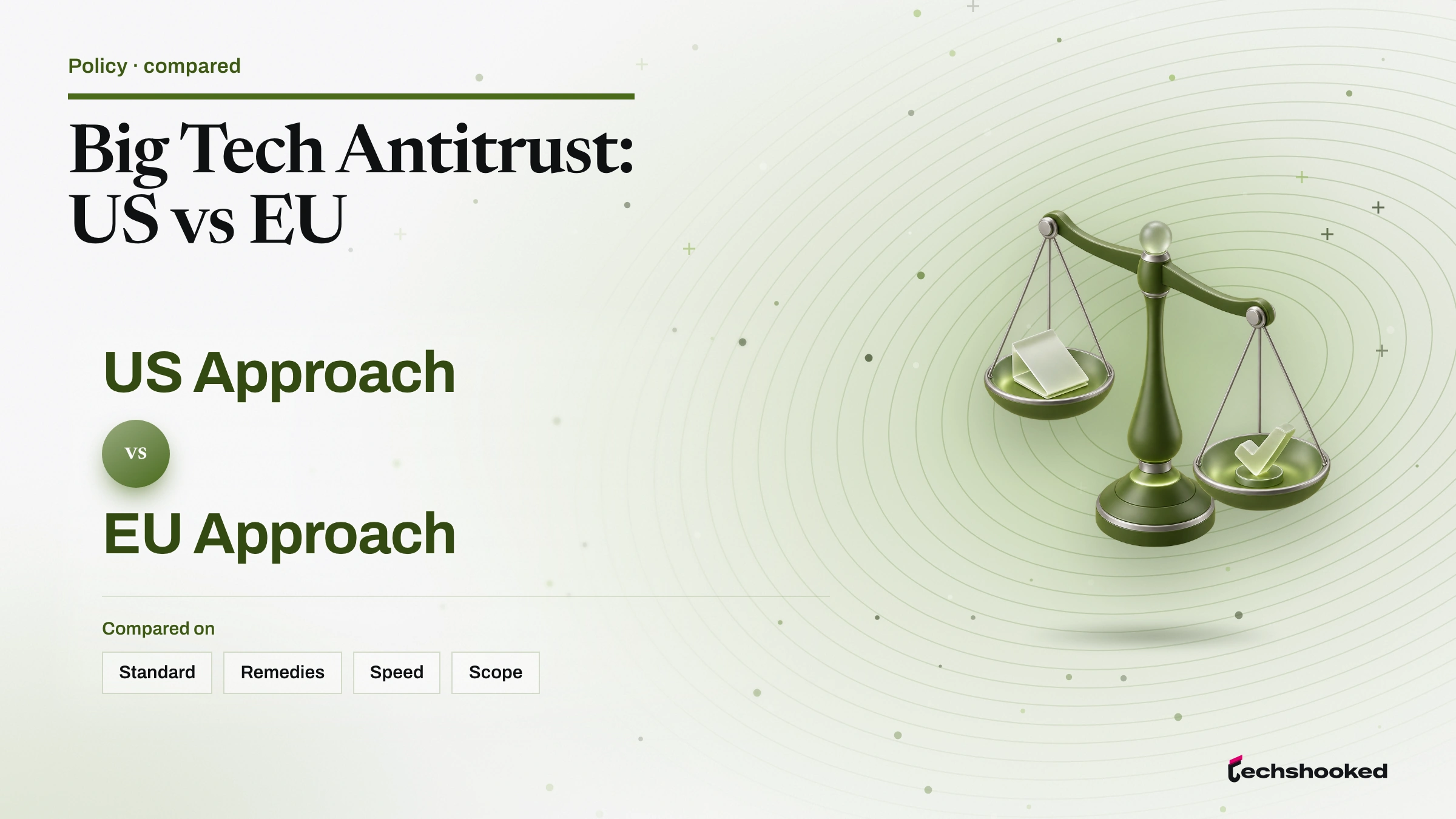
Net neutrality regulation diverges between the FCC and TSM Regulation frameworks along more than procedural lines. The divergence produces concrete operational differences for three distinct audiences:
- Global content platforms: a streaming service, application provider, or content delivery network operating in both jurisdictions faces asymmetric compliance obligations. TSM Regulation zero-rating constraints require that no EU ISP partner can offer preferential data-cap treatment for the platform's content without risking a BEREC enforcement finding. In periods when US FCC rulemaking produces a disclosure-only regime, the same platform faces no equivalent prohibition on paid fast lane arrangements with US access providers. That asymmetry shapes content-delivery investment decisions: prioritization deals available in one market are foreclosed in the other.
- Broadband service providers: US ISPs face recurring legal uncertainty because each FCC rule reversal requires traffic management policy rewrites, legal exposure reassessment, and potential infrastructure planning revisions. EU ISPs operate under a stable TSM Regulation framework where rule changes flow through BEREC guideline updates rather than partisan commission votes. The operational planning horizon for an EU broadband ISP is materially longer and more predictable than for a US counterpart navigating the FCC order cycle.
- End users: subscribers in TSM Regulation jurisdictions hold an enforceable statutory right to an unimpaired open internet connection. A national regulator can act on a complaint that a specific ISP routing practice practice violates Article 3 without waiting for a new FCC action. Users in US periods governed by a disclosure-only regime have no equivalent substantive right, only a right to see the ISP's published NMP policy. Whether an ISP actually throttles a competing video service in a disclosure-only period is an enforcement gap that the open-internet provision framework was designed to close.
The practical stakes of FCC-TSM Regulation divergence are captured in a single regulatory test: whether a broadband-access carrier can legally apply traffic throttling to a competing video service or exempt a partner's content from data caps depends entirely on which jurisdiction's framework applies and which political cycle the FCC occupies. For further analysis of the policy instruments shaping digital rights globally, the EFF's net neutrality policy record tracks enforcement developments and advocacy positions across both jurisdictions.
Further reading
- Impact of Data Localization Laws on Cloud Services , how ISP-level traffic decisions intersect with data sovereignty and cross-border data flow constraints
- COPPA Compliance and Social Media , EU digital regulation philosophy extending beyond net neutrality into youth data protection
- Economics of Privacy: ROPI Framework and Cost-Benefit Analysis
- ICANN vs Domain Registrars: How DNS Governance Actually Works
Standards refs: IETF RFC 8404 effects of pervasive encryption; NIST Cybersecurity Framework.