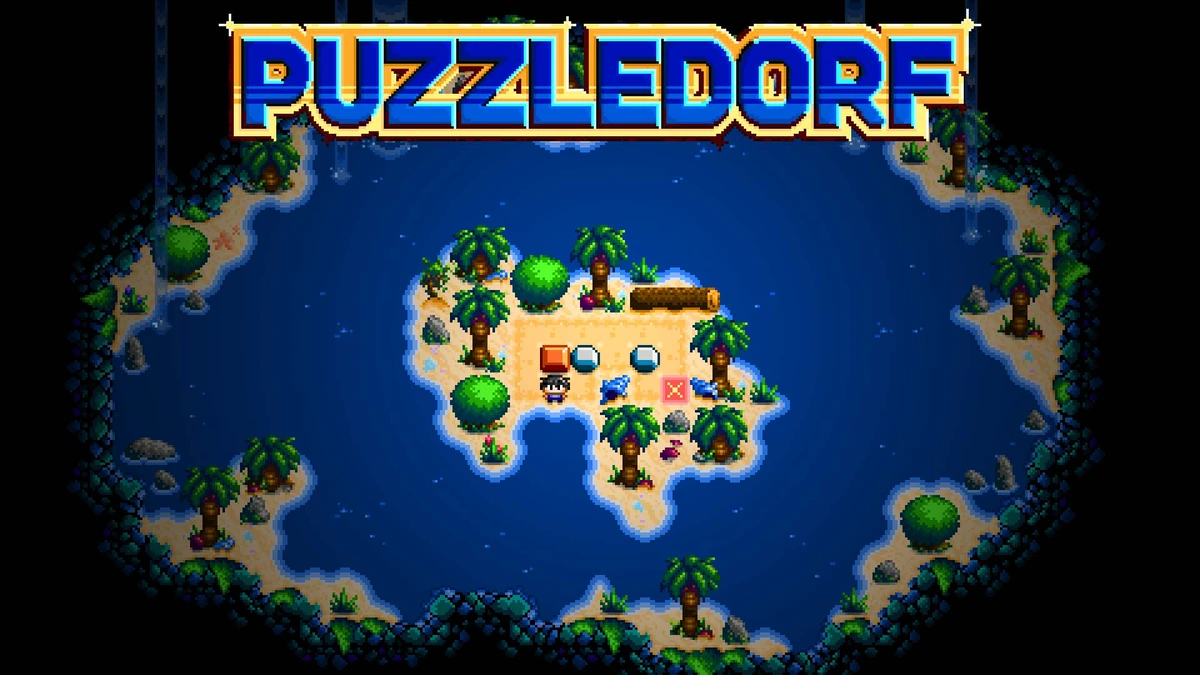
Puzzledorf, Stuart Burfield's indie puzzle game, arrives on Xbox on August 31 with new mechanics exclusive to the platform for the first two weeks before reaching other platforms. Burfield shared the release details, confirming the game ships at $9.99 through the ID@Xbox program with Play Anywhere support, so purchases transfer across Xbox consoles and Windows PC.
The Xbox-exclusive content introduces "Ruins" puzzles that graft Match 3 mechanics onto classic block-pushing. Push a jewel and it slides until it hits an obstacle (rather than stopping in place), then clear three of the same color to remove them from the grid. That sliding dynamic forces spatial thinking in sequences rather than fixed positions, distinguishing the Ruins levels from the base game's colored-block puzzles. New Xbox achievements accompany the Ruins content at launch.
Puzzledorf has been available on PC since 2019 under Burfield's indie label, Stuart's Pixel Games. The Xbox version also arrives on ROG Xbox Ally, with cloud saves carrying across devices.
Six languages launch with the game: German, French, Spanish, Portuguese (Brazil), Japanese, and more to follow. Accessibility features include no time limit, unlimited undos, and a colorblind mode. A demo is live on the Xbox Store now; preorders are open ahead of the August 31 date.
That two-week window gives Xbox players an early look at Ruins before the same content reaches other platforms, while Play Anywhere keeps the purchase tied to the player's account across supported devices.