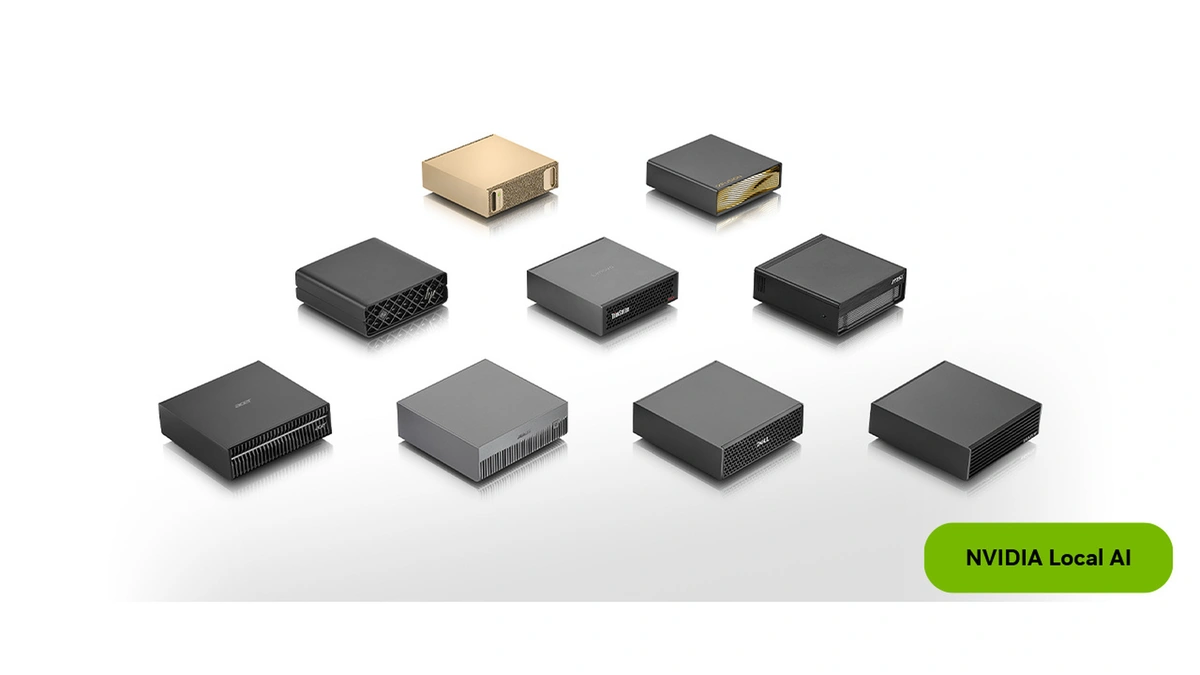
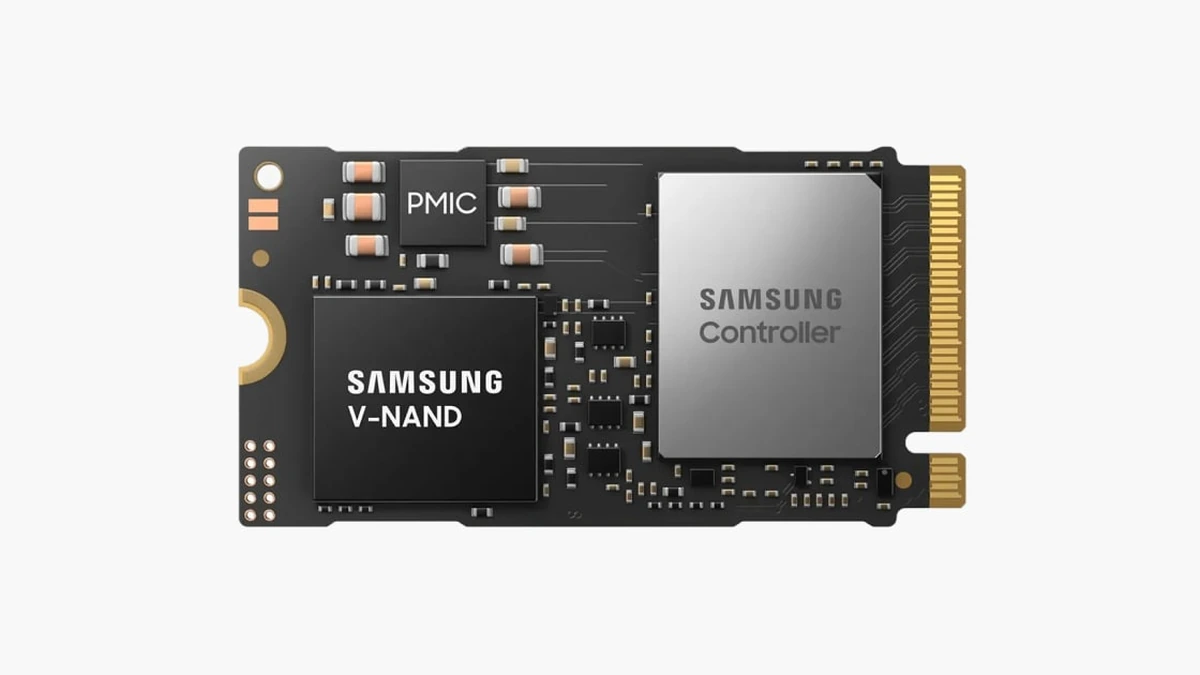
Samsung has built a 4TB PCIe Gen5 SSD that fits inside an M.2 22x42 card, less than half the length of the 2280-size drives that dominate desktop PCs. The PM9E1 hits sequential read speeds up to 14,500MB/s and writes up to 12,600MB/s, and Samsung says it is qualified and already in mass production for NVIDIA's DGX Spark, the compact desktop AI system Nvidia positions as a developer's on-ramp to running large models locally.
The drive runs on Samsung's in-house "Presto" controller, built on 5-nanometer Samsung Foundry process technology, paired with the company's eighth-generation 1-terabit V-NAND in a dual-sided PCB layout that also carries onboard DRAM. Samsung frames the generational jump as roughly double the performance of its previous PM9A1a Gen4 drive, alongside a claimed 45% improvement in power efficiency, the kind of tradeoff that matters more in a small, passively-cooled system like DGX Spark than it would in a full-size desktop with a fan blowing directly on the SSD.
Samsung also built in Security Protocol and Data Model version 1.2 support, which lets a host system authenticate the drive and verify its firmware hasn't been tampered with before trusting it, a feature more associated with enterprise storage than consumer M.2 cards. Pairing that with firmware tuned specifically for DGX Spark's OS and NVIDIA's CUDA stack suggests Samsung is treating this less as a general-purpose SSD that happens to fit a small form factor and more as a component co-designed for one customer's hardware roadmap, similar to how mobile chipmakers tune memory for a specific phone generation rather than shipping something generic.
That tight coupling cuts both ways. It should make the PM9E1 a strong fit inside DGX Spark specifically, but it also means Samsung's most interesting storage engineering in early 2026 is happening in service of Nvidia's platform rather than as a standalone consumer product, which is where most of this drive's audience for the next few years is likely to sit. Whether the compact 22x42 form factor spreads into other AI mini-PCs and edge devices, or stays a DGX Spark specialty part, will say more about how much of the AI-hardware market ends up standardizing on Nvidia's exact physical footprint than it will about Samsung's SSD roadmap on its own.