Western Digital used its Innovation Day 2026 event to lay out a hard drive roadmap that stretches from a product already in customer hands to one that won't exist for another three years, a span that says as much about how far in advance data center storage now gets planned as it does about any single drive. The company, now branding itself simply as WD, says 90% of its revenue is now tied to AI and cloud customers, and the roadmap it published is essentially a bet that those customers need to see years of runway before they'll commit to a storage vendor at scale.
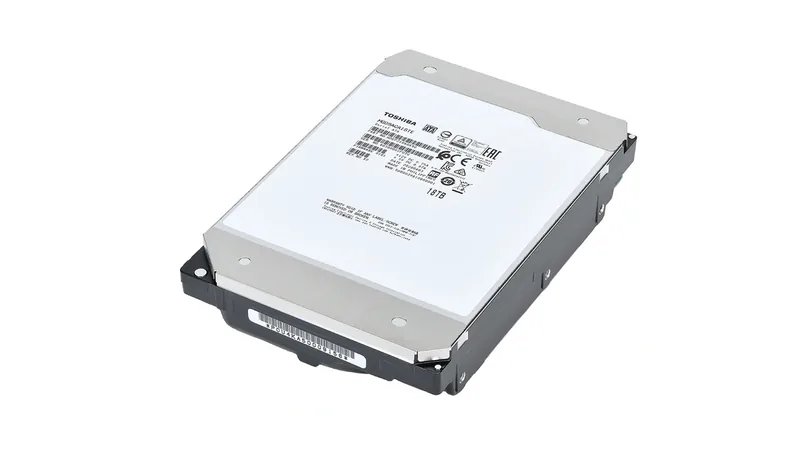
The nearest-term piece is real: a 40TB UltraSMR drive using energy-assisted perpendicular magnetic recording, in qualification with two hyperscale cloud customers as of the February 2026 announcement, with volume production planned for the second half of the year. That is WD's current answer to the capacity race, using an established recording technology rather than the heat-assisted recording (HAMR) that rival Seagate has already put into hyperscale production at similar capacities. Everything past that point, though, is roadmap rather than shipping product. WD says power-optimized drives cutting consumption by 20% enter customer qualification in 2027, a Dual Pivot Technology promising up to 2x sequential IO gains from tighter platter spacing arrives in 2028, and ePMR drives scaling to 60TB without added power draw sit somewhere in between.
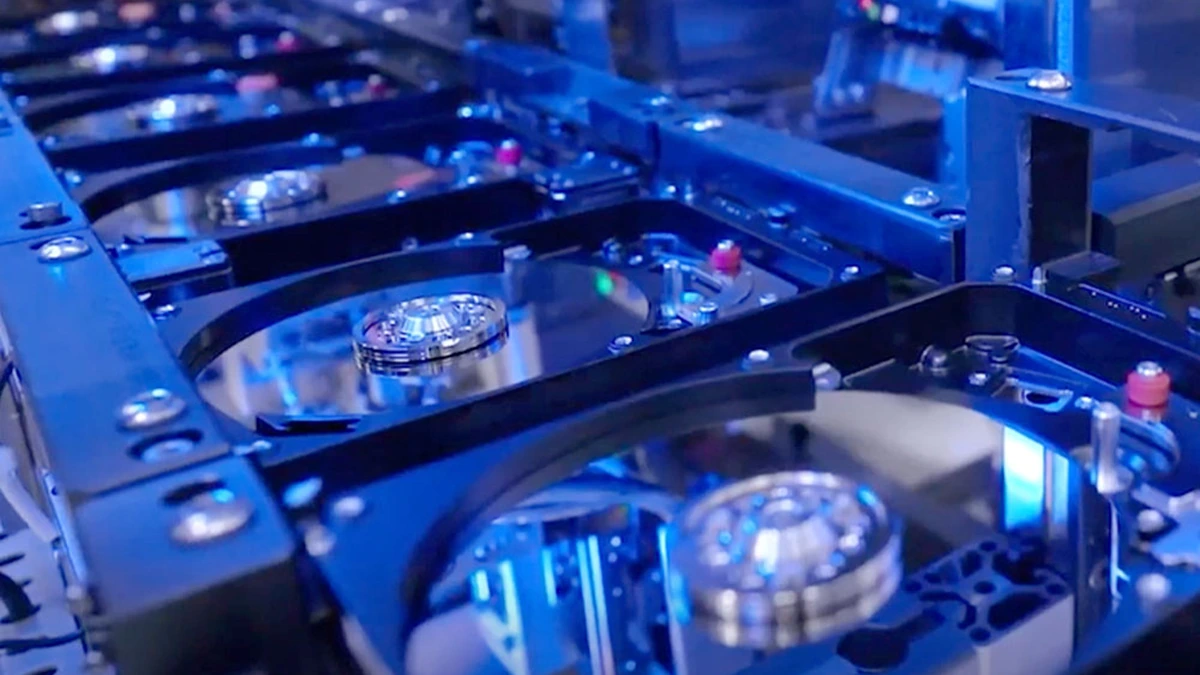
The headline number, 100TB HAMR drives by 2029, is the farthest out and the least concrete: WD says qualifications with two hyperscalers were underway as of the February 2026 event, with production ramping in 2027, which would leave roughly two years between early qualification and the 100TB milestone actually shipping. CEO Irving Tan and chief product officer Ahmed Shihab both framed the announcement around removing complexity for AI infrastructure buyers rather than around any single capacity number, which reads as WD trying to sell a philosophy of predictable execution as much as any specific drive.
Multi-year hardware roadmaps are common in the chip industry, where TSMC and Intel publish process-node timelines years ahead of production, but they are a newer habit for hard drive makers, who historically announced capacity jumps closer to launch. Publishing a 2029 target this far out is as much a signal to hyperscale customers planning their own multi-year data center buildouts as it is a product announcement, and it puts pressure on WD to hit dates that are now public rather than internal.