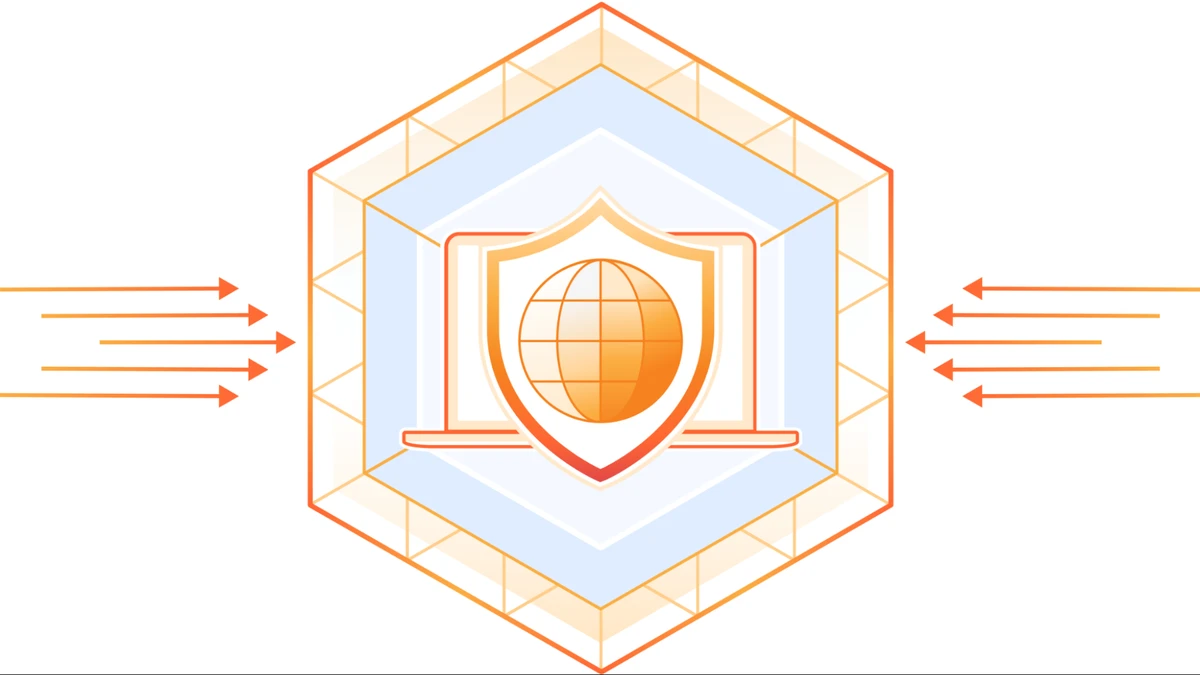
A Content Delivery Network (CDN) is a geographically distributed infrastructure layer that absorbs and neutralizes volumetric DDoS attacks by dispersing malicious traffic across hundreds of edge nodes before it can reach the origin server.
Most organizations discover this protection gap after an incident: a single data center, regardless of its upstream bandwidth, has a fixed capacity ceiling. A coordinated distributed denial of service campaign that generates even a fraction of that ceiling can take the origin offline within minutes. CDN-based defense shifts the engagement point from the origin to the network edge, where aggregate capacity dwarfs any single attack pipe.
Understanding the absorption mechanics requires separating two distinct attack classes and understanding why each demands a different mitigation layer. For broader web infrastructure context, see Web Infrastructure Security Solutions. See also: container security.
How Web Infrastructure Comes Under DDoS Attack
A Content Delivery Network (CDN) addresses two structurally different threat classes that converge on the same target: the origin server. Separating them matters because the mitigation path for each is distinct, and conflating them produces gaps in coverage.
The first class is the volumetric attack. UDP floods, DNS amplification, and NTP reflection all exploit the same physics: a small request produces a large response, and thousands of compromised hosts send those requests simultaneously, directing amplified traffic at a single IP. A 100 Gbps uplink at the origin data center is saturated within seconds by a coordinated distributed denial of service campaign generating 500 Gbps or more. The origin has no structural capacity to absorb the excess.
The second class is the protocol-layer attack. SYN floods exhaust the TCP connection table by initiating handshakes that are never completed. ICMP floods consume processing cycles. These attacks need far less raw bandwidth to succeed because they target finite OS-level resources rather than network pipes. A protocol-layer attack succeeding at 10 Gbps can offline a server that handles 100 Gbps of legitimate load.
Origin-only defenses fail at scale for a mechanical reason: bandwidth is purchased at a fixed price and cannot be provisioned on demand in seconds. Scrubbing appliances installed at the data center edge must receive attack traffic before they can inspect and drop it, meaning the ISP uplink saturates regardless. The CDN absorption model relocates the filtering decision to distributed edge infrastructure that aggregates capacity across a global footprint, before any traffic transits toward the origin.
How CDNs Absorb DDoS Traffic at the Network Layer
A Content Delivery Network (CDN) routes all inbound traffic through its edge node fleet before any packet reaches the origin server, making aggregate throughput the primary defense variable. The mechanics that enable this work at the BGP routing layer, not the application layer.
Anycast Routing and Attack Distribution
Anycast routing is the foundational mechanism. A CDN announces the same IP prefix from every Point of Presence (PoP) simultaneously using BGP. When thousands of botnet hosts send attack traffic to that IP, each host's routing protocol selects the geographically nearest PoP, splitting the total attack volume across every PoP that receives traffic. A distributed denial of service generating 1 Tbps, directed at a CDN announcing from 300 PoPs, arrives at each PoP as a fraction of the whole.
The capacity math is concrete. Cloudflare's network had crossed 321 Tbps of aggregate capacity as of its 2024 infrastructure disclosures. The largest volumetric attack recorded to that point measured approximately 5.6 Tbps. Any CDN provider with sufficient aggregate capacity absorbs that volume as a rounding error, distributed across its PoP fleet. For context on how data-layer security controls integrate with CDN infrastructure, see Difference Between Encryption And Tokenization.
BGP shortest-path selection self-distributes the attack without active human intervention. Load balancing across the PoP fleet occurs automatically as routing tables propagate, operating at sub-second timescales.
Traffic Scrubbing and Rate Limiting
After anycast routing distributes the volumetric load, traffic scrubbing centers apply packet-level inspection. Scrubbing hardware processes packets at line rate, examining headers against known signatures for amplification attacks (oversized UDP payloads, spoofed source IPs consistent with reflection patterns) and dropping malformed traffic before forwarding clean flows toward the origin.
Rate limiting operates as a secondary enforcement layer. CDN edge nodes apply per-source-IP thresholds, per-geographic-region caps, and per-endpoint request ceilings. A source IP generating 50,000 requests per second against a single endpoint gets throttled at the edge node regardless of whether the payload itself looks malicious. Rate limiting is particularly effective against low-volume, high-concurrency protocol-layer attacks that pass volumetric filters.
The ordered sequence of CDN defense layers, from network ingress to origin, runs as follows:
- BGP anycast distributes inbound traffic across all PoPs simultaneously, preventing concentration at any single point.
- Packet scrubbing at PoP ingress drops amplification signatures, spoofed-source packets, and malformed protocol headers at line rate.
- Rate limiting per source IP and per region suppresses high-concurrency protocol-layer attacks below saturation thresholds.
- Load balancing across origin health pools ensures clean traffic is forwarded to available capacity, bypassing degraded nodes.
- WAF rule enforcement inspects HTTP/HTTPS payloads for application-layer anomalies before requests reach origin application code.
CDN Security Features That Prevent DDoS Attacks
A Content Delivery Network (CDN) bundles multiple security controls into a single edge layer, with each feature addressing a distinct attack surface. The interaction between them produces defense-in-depth without requiring the organization to operate separate appliances for each function.

CDN Strategies for DDoS Mitigation
The table below maps each primary CDN security feature to the attack layer it addresses, its mechanism, and a representative vendor implementation. For a detailed WAF product comparison, see Web Application Firewall WAF Comparison: Cloudflare vs Imperva vs F5.
| CDN Security Feature | Attack Layer Addressed | How It Works | Representative Implementation |
|---|---|---|---|
| Anycast routing | L3/L4 volumetric | Distributes attack volume across global PoPs via BGP; no single PoP receives full attack capacity | Cloudflare Magic Transit, Akamai Prolexic |
| Traffic scrubbing | L3/L4 protocol | Inspects packets at line rate; drops amplification signatures, spoofed sources, malformed headers | Akamai Prolexic scrubbing centers, AWS Shield Advanced |
| Web application firewall | L7 application | Applies rule sets (OWASP CRS, managed rulesets) to HTTP/HTTPS payloads; blocks injection, bot, and abuse patterns | Cloudflare WAF, AWS WAF, Akamai App & API Protector |
| Rate limiting | L4/L7 concurrency | Enforces per-IP, per-endpoint, and per-region request thresholds; throttles high-concurrency floods | Cloudflare Rate Limiting, Fastly Rate Limiting |
| SSL offloading | L4/L7 resource exhaustion | Terminates TLS at the CDN edge node, removing cryptographic processing load from origin; prevents SSL renegotiation attacks | Available across all major CDN providers |
| IP reputation filtering | L3/L7 bot traffic | Blocks requests from known botnet IPs, Tor exit nodes, and high-risk ASNs using continuously updated threat intelligence feeds | Cloudflare IP Lists, Akamai Threat Intelligence |
SSL offloading carries an underappreciated security benefit beyond resource management. Because the CDN edge node decrypts and re-encrypts traffic, it can inspect encrypted payloads for malicious content before forwarding clean, re-encrypted requests to the origin. NIST SP 800-53 Rev 5 control families SC-5 (Denial of Service Protection) and SC-8 (Transmission Confidentiality and Integrity) both align with this architecture: NIST SP 800-53 Rev 5 documents these controls as foundational requirements for network-layer defense.
Choosing a CDN Provider for DDoS Protection
Selecting a CDN provider for DDoS mitigation requires evaluating four variables against your traffic profile and threat model. PoP count alone does not determine whether a given CDN's architecture holds under your specific attack scenario.
Top CDN Providers for DDoS Protection
The four evaluation criteria are: total throughput in Tbps relative to your worst-case attack volume; PoP geographic distribution as it maps to your user base (BGP PoP selection requires coverage near your attackers, not just near your users); always-on versus on-demand scrubbing mode, which trades latency overhead for cost; and the SLA guarantee for mitigation time-to-activation. See a detailed provider breakdown at Cloudflare vs AWS CloudFront Security Comparison.
| Provider | Network Capacity | PoP Count | Always-On Mitigation | L7 WAF Included | Notes |
|---|---|---|---|---|---|
| Cloudflare | 321+ Tbps | 330+ cities | Yes (all plans) | Yes | Strongest SMB-to-enterprise breadth; Magic Transit for network-layer customers; DDoS protection unmetered on paid plans |
| Akamai (Prolexic) | 20+ Tbps dedicated scrubbing | 4,100+ PoPs | Yes (Prolexic) | Yes (App & API Protector) | Purpose-built scrubbing for enterprise; Prolexic routed adds BGP diversion; strongest SLA guarantees in segment |
| AWS CloudFront + Shield Advanced | Not disclosed (global AWS backbone) | 600+ edge locations | Yes (Shield Advanced) | Yes (AWS WAF, separate cost) | Best fit for AWS-native workloads; Shield Advanced includes cost protection against billing spikes during attacks |
| Fastly | Not publicly disclosed | 90+ PoPs | On-demand (DDoS protection add-on) | Yes (Next-Gen WAF) | Strongest for latency-sensitive APIs and media delivery; smaller PoP count means PoP coverage is thinner under global attacks |
For SMB deployments with unpredictable attack exposure, Cloudflare's unmetered DDoS protection eliminates the risk of surprise invoicing during sustained volumetric attacks. Enterprise networks with strict compliance requirements and dedicated traffic filtering contracts tend to favor Akamai Prolexic's routed scrubbing architecture. AWS-native applications benefit from the tight Shield Advanced integration with CloudFront and Elastic Load Balancing, which automates DDoS mitigation without requiring BGP configuration changes. Fastly suits teams optimizing for API response latency where attack volume is lower and controlled. The CISA Cross-Sector Cybersecurity Performance Goals establish baseline network availability requirements that inform minimum capacity thresholds when drafting provider SLAs.
CDN DDoS Protection vs Traditional On-Premises Defense
A Content Delivery Network (CDN) defeats volumetric attacks before traffic reaches the origin server. Traditional defense models require the attack to arrive first, creating a structural ceiling on what scrubbing appliances and ISP controls can absorb.
Three on-premises and upstream options are typically compared against CDN-based DDoS mitigation:
- On-premises scrubbing appliances (Radware DefensePro, A10 Networks Thunder TPS): traffic must arrive at the data center uplink before appliances can inspect and drop it. The ISP transit circuit saturates regardless, making these solutions effective only for attacks below the uplink ceiling. Packet inspection at line rate requires hardware provisioned before the attack, not after.
- ISP-level black-hole routing (RTBH, remotely triggered black hole): the ISP drops all traffic to the attacked IP at the network core, stopping the attack but also stopping legitimate traffic. Black-hole routing is a last resort for origin survival, not for service continuity.
- CDN-based absorption: attack traffic self-distributes across all PoPs via BGP anycast before any volume reaches the origin. The origin server never sees attack traffic; it receives only traffic that has passed edge-layer packet inspection and rate limiting checks.
The layered defense model that most enterprise teams now run combines all three tiers: CDN for volumetric absorption at the edge, an integrated WAF layer for application-layer traffic filtering, and a SIEM for real-time anomaly detection and alerting when attack patterns emerge. See SIEM vs SOAR: Understanding Threat Detection Systems for the detection layer and How Businesses Prevent Zero Day Attacks for the broader threat prevention stack. The NIST Cybersecurity Framework 2.0 Protect and Detect function domains (PR.DS and DE.AE) map directly to this tiered architecture, treating CDN-based DDoS mitigation as a governance-level infrastructure control rather than an optional performance feature.
Further reading
- Web Infrastructure Security Solutions: DNS, SSL, and CDN as co-equal infrastructure protection layers
- Web Application Firewall WAF Comparison: Cloudflare vs Imperva vs F5: L7 filtering options that complement CDN volumetric defense
- Cloudflare vs AWS CloudFront Security Comparison: provider feature depth for security-focused CDN selection
- SIEM vs SOAR: Understanding Threat Detection Systems: detection and response layer for the post-CDN threat model
- How Businesses Prevent Zero Day Attacks: broader attack prevention context beyond volumetric threats
- Difference Between Encryption And Tokenization: data-layer security controls in the same sub-pillar
Frequently Asked Questions
What is a CDN and how does it work for security?
A Content Delivery Network (CDN) is a system of geographically distributed edge servers that cache and deliver web content from locations nearest to each user. For security, a CDN intercepts all inbound traffic at its edge nodes before it reaches the origin, applying traffic filtering, rate limiting, and WAF rules to drop malicious requests and absorb volumetric DDoS traffic across its distributed edge capacity.
How do CDNs help in preventing DDoS attacks?
CDNs prevent distributed denial of service attacks primarily through the BGP anycast model, which splits attack traffic across hundreds of global PoPs rather than concentrating it at a single origin. Each PoP contributes a fraction of the CDN's total network capacity to absorb the attack volume. Traffic scrubbing centers then inspect packets at line rate, discarding malformed headers and amplification signatures before any traffic reaches the origin server. The Cloudflare DDoS Protection documentation details how this absorption model operates at scale.
Can a CDN completely stop all DDoS attacks?
A CDN provider significantly reduces DDoS risk but cannot guarantee complete protection against all attack types. Highly sophisticated application-layer attacks targeting authenticated endpoints may bypass volumetric defenses even when combined with WAF rules, particularly when the attacker generates traffic that mimics legitimate user behavior patterns. The most resilient architecture layers CDN-based volumetric absorption with an integrated WAF layer, bot management, and a SIEM for real-time anomaly detection. CDN protections address the network and transport layers; application logic must still be hardened independently.