Web infrastructure security is a cybersecurity discipline that protects the hardware, software, and network components supporting web services from unauthorized access, disruption, and data compromise. Organizations that harden only one layer of their stack, say the application tier, while leaving DNS resolvers, TLS configurations, and server operating systems unattended, expose themselves to a class of attacks that bypass application-level controls entirely. A practitioner deciding which layer to address first needs a map of the full stack, not a guide to any single control.
What Web Infrastructure Security Protects
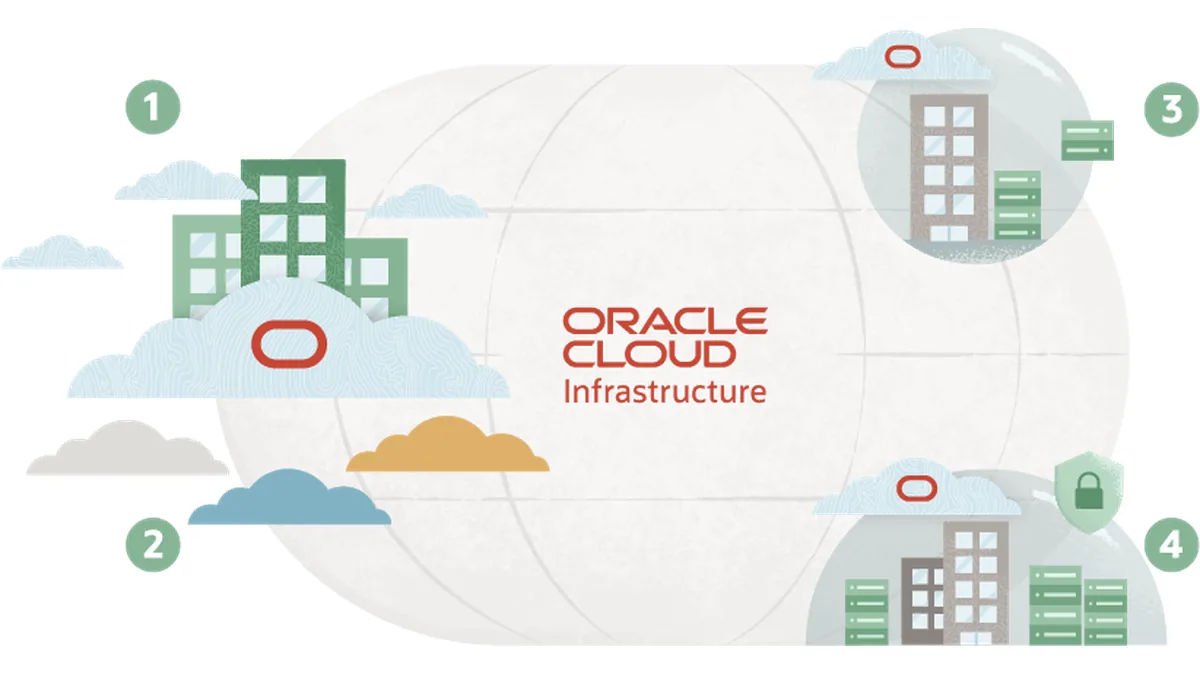
Web infrastructure security covers four discrete layers, each with its own threat model and control set. Treating them as independent silos is where most organizations develop blind spots. The network perimeter, once a clearly defined boundary, now spans cloud edge nodes, CDN points of presence, and on-premises data center segments simultaneously, making attack surface reduction a cross-layer discipline rather than a firewall rule.
The four layers that require coordinated protection are:
- DNS resolution layer. DNSSEC (Domain Name System Security Extensions) validates resolver responses cryptographically, blocking cache-poisoning attacks. Response rate limiting on authoritative servers prevents amplification abuse. Private resolvers inside the corporate network stop data exfiltration via DNS tunneling. DNS security at this layer underpins every subsequent connection the stack makes.
- Transport layer. TLS termination at the load balancer or reverse proxy enforces cipher suite selection and protocol version gating. Role Of TLS/SSL In Data Protection covers TLS 1.3 adoption in depth; the short version is that any endpoint still negotiating TLS 1.2 without disabling weak cipher suites is measurably more exposed to downgrade attacks.
- Application delivery layer. The web application firewall, CDN, and load balancer sit between public traffic and origin servers. This tier handles volumetric filtering, geographic rate limits, and OWASP Top 10 ruleset enforcement before a request reaches application code.
- Server and host layer. OS hardening, patch management cadence, and service configuration baseline the host before a single packet arrives. CIS Benchmarks provide scored configuration profiles for Linux and Windows Server that quantify the gap between a default install and a hardened one.
Skipping any of these four layers creates a coverage gap that attackers actively probe. A WAF deployed without DNSSEC, for example, cannot prevent a DNS hijack that redirects legitimate users to a fraudulent origin before the WAF even sees the traffic. For the broader cryptographic context that links these layers, see the hub article on difference between encryption and tokenization.
Core Components of a Secure Web Infrastructure
Web infrastructure security becomes concrete when mapped to six components, each defending a specific layer against a specific threat class. The defense in depth principle holds that no single control is sufficient; each layer assumes the one above it may fail.
DNS hardening includes DNSSEC signing, response rate limiting (RRL), and private recursive resolvers segregated from public DNS. Cloudflare Gateway and Cisco Umbrella are common managed options; both provide DNS filtering and query logging that feed downstream threat detection pipelines.
TLS termination and transport security centers on enforcing TLS 1.3 per IETF RFC 8446 (TLS 1.3), disabling TLS 1.0 and 1.1 at the termination point, enabling HSTS (HTTP Strict Transport Security) with a long max-age, and automating certificate rotation via the ACME protocol (Let's Encrypt or an internal CA). Certificate pinning applies to mobile clients and high-value API consumers where the certificate authority trust chain needs to be narrowed.
Web application firewall deployment at the application delivery layer filters HTTP/S traffic against managed rulesets covering the OWASP Top 10. The selection question is whether to run a managed ruleset (Cloudflare's or Imperva's cloud-native offerings), a custom ruleset tuned to the application's URL schema, or a hybrid. F5 NGINX App Protect serves organizations running on-premises NGINX with WAF capabilities co-located on the reverse proxy. Web Application Firewall WAF Comparison: Cloudflare vs Imperva vs F5 covers those trade-offs in detail.
Intrusion detection system placement at the network perimeter captures traffic that bypasses the WAF, including non-HTTP protocols and lateral movement between internal segments. Signature-based detection (matching known exploit patterns) and anomaly-based detection (baselining normal traffic and flagging deviations) are complementary; most enterprise deployments run both. IDS/IPS placement decisions interact directly with zero-trust segmentation, a topic covered in the sibling spoke on implement zero trust network architecture.
CDN edge security and DDoS mitigation absorb volumetric attacks before they reach origin infrastructure. Anycast scrubbing networks (Cloudflare Magic Transit, AWS Shield Advanced) distribute attack traffic across hundreds of edge nodes and discard malformed packets close to the source. Rate limiting at the edge handles application-layer (Layer 7) floods that volumetric scrubbing alone cannot filter.
Server and OS hardening closes the host layer. CIS Benchmark profiles for each OS version prescribe specific configuration changes: disabling unused services, restricting SSH to key-based authentication, setting kernel-level auditing, and configuring file integrity monitoring. Applying routine patches monthly and critical CVE fixes within 24-72 hours determines residual exposure time.
The table below maps each component to its primary threat class, key control, and the applicable standard a practitioner should reference:
| Infrastructure Layer | Primary Threat | Key Control | Applicable Standard |
|---|---|---|---|
| DNS resolution | Cache poisoning, DNS hijacking, amplification DDoS | DNSSEC signing, response rate limiting, private resolvers | IETF RFC 4033 (DNSSEC), NIST SP 800-81-2 |
| Transport (TLS) | Downgrade attacks, certificate spoofing, MITM interception | TLS 1.3 enforcement, HSTS, ACME certificate rotation | IETF RFC 8446 (TLS 1.3), NIST SP 800-52 Rev 2 |
| Application delivery (WAF/CDN) | SQL injection, XSS, OWASP Top 10 exploits | Managed WAF ruleset, geo-blocking, request rate limits | OWASP Application Security Verification Standard, CIS Control 13 |
| Network perimeter (IDS/IPS) | Lateral movement, protocol exploits, reconnaissance scanning | Signature + anomaly detection, inline IPS blocking | NIST SP 800-94 Rev 1, NIST SP 800-53 SI-4 |
| CDN edge (DDoS) | Volumetric floods, Layer 7 application floods | Anycast scrubbing, rate limiting, traffic baselining | NIST SP 800-189, CIS Control 13.10 |
| Server and OS | Unpatched CVE exploitation, privilege escalation, misconfiguration | CIS Benchmark hardening, patch management, file integrity monitoring | CIS Benchmarks v8, NIST SP 800-53 SI-2, SI-3 |
Common Web Infrastructure Threats and How They Exploit Gaps
Web infrastructure security failures tend to follow three patterns, each exploiting a gap between layers rather than a flaw in any single control.
Volumetric DDoS attacks target the DNS and CDN edge layers. A DNS amplification attack sends small queries with a spoofed source IP to open resolvers; the resolvers return large responses to the victim's address. Without response rate limiting on authoritative nameservers and DDoS mitigation at the edge, origin servers become unreachable within minutes. Anycast scrubbing networks discard malformed traffic before it traverses the backbone, but only if the organization has routed its IP ranges through the scrubbing provider. Many mid-market organizations have WAFs deployed but have not onboarded their IP space for edge DDoS mitigation, leaving the DNS security layer unprotected. The sibling spoke on How CDNs Prevent DDoS Attacks covers scrubbing architecture in detail.
Man-in-the-middle attacks exploit weak TLS configurations and missing HSTS. An attacker on a shared network segment can perform SSL stripping if the server accepts plaintext HTTP connections and the browser has not cached an HSTS policy. Servers that still support TLS 1.0 or expose cipher suites using RC4 or 3DES are downgrade targets. The intrusion detection system at the network perimeter can flag anomalous certificate presentations and unexpected TLS handshake failures, providing a secondary detection layer when the transport configuration itself is weak.
Server-side exploitation via unpatched CVEs remains the most common path to data compromise in web infrastructure environments. The NIST National Vulnerability Database tracks thousands of new CVEs monthly. CVEs rated CVSS 9.0 or above in web server software (Apache HTTP Server, NGINX, OpenSSL) are actively scanned for within hours of publication. Vulnerability scanning on a monthly cycle leaves a window of 30 days during which an internet-exposed service runs known-exploitable code. Continuous threat detection requires authenticated vulnerability scanning integrated with a SIEM so that new CVE disclosures trigger immediate re-scan of affected hosts. For threat intelligence workflows that feed this detection loop, see Threat Intelligence Tools Use Cases.
Best Practices for Securing Web Infrastructure
Web infrastructure security at a program level requires more than deploying controls. The five practices below operationalize security hardening across the stack, drawing on NIST SP 800-53 Rev 5 AC and SI control families and the NIST Cybersecurity Framework 2.0 Protect and Detect functions.
- Continuous vulnerability scanning with SLA-bound remediation. Authenticated scans (using service account credentials to inspect installed packages and configuration files) detect more vulnerabilities than unauthenticated scans. CVSS v3.1 scores provide a remediation priority baseline: Critical (CVSS 9.0-10.0) within 24 hours, High (7.0-8.9) within 7 days, Medium within 30 days. Patch management SLAs should be written into the security policy and tracked in a vulnerability management platform. Qualys VMDR and Tenable Nessus both support SLA tracking with dashboard reporting.
- Principle of least-privilege access control on infrastructure components. SSH access to servers should be key-only, with password authentication disabled. Bastion hosts (jump servers) centralize access logging and reduce the number of systems with direct internet-accessible SSH. Firewall default-deny rules allow only explicitly required traffic; inbound rules are reviewed quarterly. Access control at the infrastructure layer maps to NIST SP 800-53 AC-2 (Account Management) and AC-17 (Remote Access).
- TLS configuration hygiene and automated certificate management. Cipher suites should be limited to ECDHE key exchange and AES-GCM or ChaCha20-Poly1305 symmetric encryption. RC4, 3DES, and CBC-mode suites must be disabled. The ACME protocol automates certificate issuance and renewal from Let's Encrypt or an internal CA, eliminating manual rotation cycles that frequently lapse. HSTS headers with a max-age of at least 31536000 seconds (one year) and the includeSubDomains directive prevent SSL stripping on all subdomains.
- Infrastructure-as-code (IaC) security review. Terraform and AWS CloudFormation templates define firewall rules, security group policies, S3 bucket permissions, and IAM role bindings. Misconfigured IaC templates are a leading source of cloud infrastructure exposure. Tools like Checkov, Trivy, and tfsec scan templates for known misconfigurations before deployment. Integrating IaC scanning into CI/CD pipelines prevents misconfigured resources from reaching production. This practice is a core component of attack surface reduction at the infrastructure provisioning stage.
- Infrastructure log shipping to a SIEM for correlation-based threat detection. Web server access logs, WAF block events, IDS/IPS alerts, DNS query logs, and OS audit logs provide the raw data for threat detection. Without aggregation and correlation in a SIEM, these signals remain siloed and unactionable. Shipping all infrastructure log sources to a centralized SIEM enables detection of multi-stage attacks that are invisible when any single log source is examined alone. For SaaS environments where the infrastructure log surface extends into third-party platforms, the sibling spoke on secure SaaS applications at scale covers SSPM integration with infrastructure-layer controls.
For endpoint-layer controls that complement infrastructure hardening, see Best CrowdStrike Alternatives For Endpoint Detection.
Web Infrastructure Security Tools and Solutions
Web infrastructure security tooling spans four functional categories. The right selection criterion for each category depends on deployment model, throughput requirements, and the organization's operational capacity.
WAF solutions. Cloudflare WAF operates as a cloud-native reverse proxy; its managed ruleset updates propagate globally without operator intervention, making it suited to teams without dedicated WAF rule management capacity. Imperva Cloud WAF adds behavioral analysis on top of signature rules, targeting bot-driven credential stuffing. F5 NGINX App Protect runs as a module on NGINX instances, fitting organizations that run on-premises infrastructure and need WAF capabilities co-located with the web server. Selection criterion: does the organization need cloud-native scalability, advanced bot management, or on-premises deployment? For a detailed comparison, see Cloudflare vs AWS CloudFront Security Comparison.
DDoS mitigation services. Cloudflare Magic Transit provides BGP-announced IP transit with inline scrubbing, protecting entire IP address ranges. AWS Shield Standard provides automatic, always-on protection against the most common network and transport layer attacks targeting EC2 instances, Elastic Load Balancers, CloudFront distributions, and Route 53 at no added cost. AWS Shield Advanced adds 24/7 DDoS response team access, cost protection, and advanced threat detection for Route 53, CloudFront, and Elastic Load Balancing. Selection criterion: is the organization's infrastructure cloud-hosted (AWS Shield Advanced), multi-cloud or on-premises (Cloudflare Magic Transit), or a mix? Scrubbing capacity (measured in Tbps) and anycast PoP coverage determine effective DDoS mitigation ceiling.
Vulnerability scanners. Nessus Professional (Tenable) remains the reference standard for authenticated vulnerability scanning with the broadest plugin library. Qualys VMDR adds asset inventory, cloud connector integrations, and SLA tracking dashboards. OpenVAS (Greenbone Community Edition) is the open-source alternative, appropriate for resource-constrained environments willing to manage the scanner infrastructure. Selection criterion: authenticated scan coverage, CVE database update frequency, and whether cloud-native asset discovery is required.
IDS/IPS platforms. Snort (Cisco) and Suricata are the dominant open-source options; Suricata adds multi-threading and native JSON output that integrates cleanly with Elastic SIEM. Zeek (formerly Bro) focuses on network metadata extraction rather than signature alerting, making it a strong complement to Suricata in environments that prioritize threat hunting over automated blocking. Managed IDS/IPS options from vendors like Palo Alto Networks (Threat Prevention) and Check Point provide ruleset management and automated signature updates for teams that cannot maintain a custom ruleset. For identity and access monitoring that feeds these threat detection pipelines, see What Is Digital Identity? Managing Privacy.
Building a Web Infrastructure Security Program
Web infrastructure security at the program level moves organizations from ad-hoc control deployment to a structured, repeatable posture. Three phases provide the operational sequence, aligned with the NIST Cybersecurity Framework 2.0 Govern and Improve functions.
- Asset inventory and attack surface mapping. A practitioner cannot harden what is not inventoried. Start with an automated asset discovery scan covering all public-facing IP ranges and subdomains. Tools like Shodan, Censys, or the NMAP scripting engine surface externally visible services, open ports, and certificate metadata. This inventory becomes the baseline for attack surface reduction: each discovered asset gets classified by exposure level and business criticality before any remediation work begins.
- Risk-prioritized remediation. CVSS severity scores provide the initial triage signal, but internet-exposure weighting and business-criticality tiers refine the priority order. A CVSS 7.5 vulnerability on an internet-facing authentication server ranks higher than a CVSS 9.0 finding on an air-gapped internal system. Security hardening should proceed from highest-exposure, highest-criticality assets first. For compliance obligations layered on top of this prioritization, see Understanding Data Compliance: GDPR, HIPAA, CCPA and the hub article on difference between encryption and tokenization.
- Continuous monitoring and review cycles. Quarterly authenticated vulnerability scans detect configuration drift and newly published CVEs. Annual penetration tests validate that defense in depth controls hold against a skilled attacker working through the full stack. Cloud Security Posture Management (CSPM) tools detect configuration drift in cloud infrastructure between scheduled scans, providing continuous access control and patch management visibility. Log review cadence and IDS/IPS alert triage SLAs should be documented in the security operations runbook.
The concrete next action for any team starting this program: run an unauthenticated external scan of all public IP ranges this week using a free tool like Shodan or the Tenable Community edition. The result is a ranked list of exposed services that makes the first remediation sprint specific rather than theoretical.
Further reading
- NIST SP 800-53 Rev 5: Security and Privacy Controls for Information Systems and Organizations
- OWASP Application Security Verification Standard: application-layer security requirements mapped to verification levels
- IETF RFC 8446 (TLS 1.3): protocol specification for the current TLS standard
Further reading
- Best CrowdStrike Alternatives For Endpoint Detection: SentinelOne, Defender, Sophos, Elastic, Trellix
- Symantec vs Forcepoint Enterprise DLP Comparison: Architecture, UEBA, Decision Framework
- Top Identity Management Tools For Privacy: Okta, Entra ID, PingOne, OneLogin Compared
- Ivanti Sentry CVE-2026-10520 command injection