
IBM Quantum is a cloud-accessible quantum computing platform that gives researchers and developers hands-on access to real superconducting quantum processors, open-source tooling, and an expanding hardware roadmap targeting fault-tolerant systems by the late 2020s. Google Quantum AI takes a different route to the same destination, treating the full stack from cryostat to compiler as one tightly integrated research program built around its Willow chip. Choosing between the two is rarely about raw qubit count. It is about access tiers, SDK ergonomics, benchmark philosophy, and which roadmap milestones align with the research you actually need to publish.
What Quantum Supremacy Actually Means

IBM Quantum and Google Quantum AI talk past each other partly because the field uses three milestone terms that researchers routinely conflate. Pinning down the definitions is the first step in reading either company's claims accurately. Google reported in 2019 that its 53-qubit Sycamore processor sampled a random-circuit distribution faster than the best available classical computing systems at the time, a result published in Nature. That milestone was about speed on a contrived task, not utility.
- Quantum supremacy
- A quantum processor completes a specific computational task faster than any classical computing system could in reasonable time, regardless of whether the task is useful.
- Quantum advantage
- A quantum processor solves a problem of genuine practical value faster, cheaper, or more accurately than the best classical computing alternative. That is a higher bar than quantum supremacy and is the practical criterion used in this comparison.
- Fault-tolerant quantum computing (FTQC)
- Large-scale systems that run arbitrarily long quantum algorithms reliably by using quantum error correction (QEC) to suppress hardware noise below a useful threshold.
Google's 2019 result is a supremacy claim, not an advantage claim, and neither vendor has demonstrated broad quantum advantage on commercially relevant problems. Treating the three terms as interchangeable is the single most common error in vendor coverage.
IBM Quantum Platform: Hardware, Tools, and Access
IBM Quantum runs the most exposed research surface in the field. Anyone can sign up, install the SDK, and submit a quantum circuit to a real superconducting qubit processor within an afternoon. The platform combines a published hardware lineup, a mature open-source SDK, and a primitives-based runtime that hides much of the low-level pulse plumbing from algorithm developers.
- Hardware lineup. IBM's today deployed quantum hardware spans the 127-qubit Eagle, 133-qubit Heron r1, and 156-qubit Heron r2 and r3 quantum processing unit (QPU) families. Heron r2 and r3 are the production targets for new research workloads.
- Qiskit open-source SDK. Qiskit, introduced years ago, remains the most widely adopted open-source SDK for circuit construction, transpilation, and execution against IBM backends. It exposes the full instruction set down to pulse-level control on supported QPUs.
- Qiskit Runtime with primitives. The Sampler and Estimator primitives wrap repeated quantum circuit execution patterns so variational quantum algorithm developers can request expectation values without reimplementing measurement plumbing.
- Layer fidelity benchmark. IBM debuted layer fidelity as a processor-wide metric that captures circuit execution quality across the whole device, individual qubits, gates, and crosstalk in a single score. CLOPS was reworked to align with layer fidelity.
- Free access tier. The IBM Quantum Platform offers 10 free minutes of execution time per month on 100+ qubit QPUs with no research partnership required, which is unusual at this hardware tier.
IBM also asserts that its systems are the only ones capable of delivering accurate results for quantum circuit workloads with 5,000+ two-qubit gates. That is an IBM self-assertion, not an independently verified industry consensus, and should be reported as such. For deeper background on the underlying physics, see Quantum Computing: Qubits, Entanglement and Beyond.
Google Quantum AI: Hardware, Tools, and Access
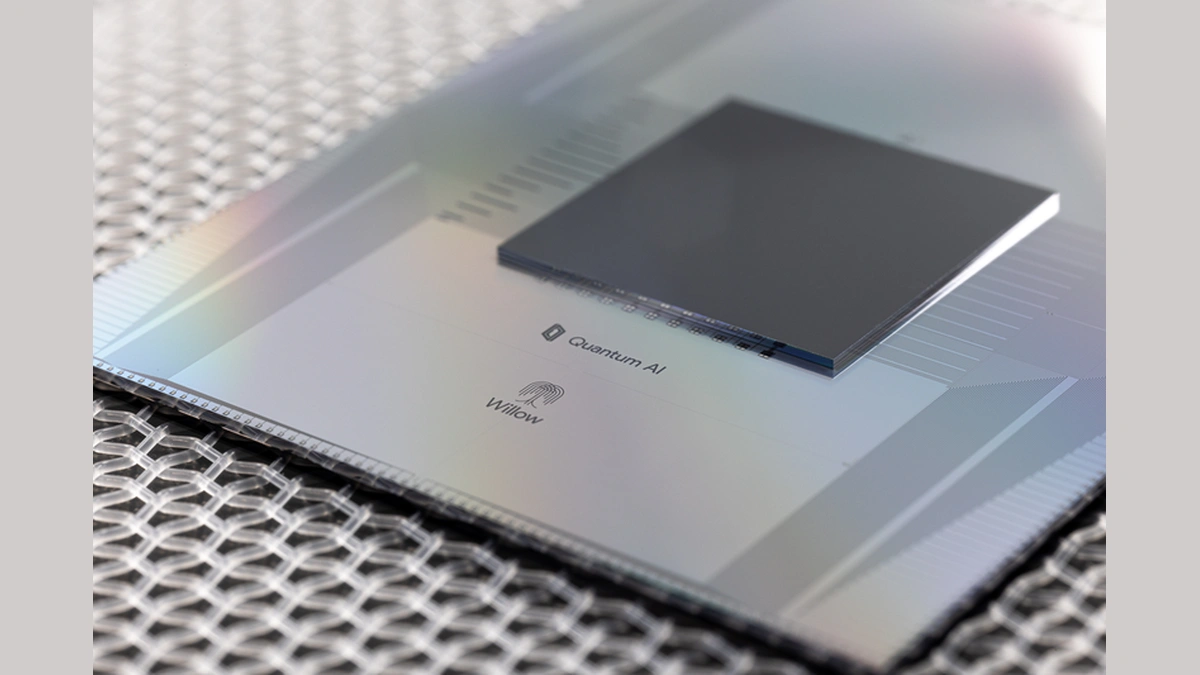
Google Quantum AI organizes its program around full-stack co-design rather than a tiered cloud product. The team controls every layer that touches a qubit, from the chip lithography in its Santa Barbara fab to the calibration software that keeps gates aligned during a quantum algorithm run. Researcher access reflects that posture: the door is narrower, and most external users reach Google's quantum hardware through formal partnerships rather than self-serve sign-up.
- Willow chip. Google's latest superconducting qubit processor is Willow, built in its Santa Barbara facility and positioned as the proof point for the company's QEC trajectory.
- Full-stack integration. Google explicitly designs the QPU, control and decoding electronics, cryostats, operating system, and user-facing software as one coupled system rather than independent layers. The argument is that QEC at scale requires this level of vertical integration.
- Cirq open-source SDK. Cirq is Google's open-source SDK for writing quantum circuit code targeting near-term quantum hardware. It exposes hardware-specific features more directly than higher-level abstractions, which suits researchers studying device characteristics.
- Calibration and QEC software. Google develops the calibration and quantum error correction software that manages the entire quantum system, with surface-code experiments on Willow as the headline research direction.
- Access model. There is no published self-serve free tier on Google's quantum hardware equivalent to IBM's 10 free minutes per month. External researcher access runs primarily through academic partnerships, the Google Quantum AI residency program, and Google Cloud arrangements for enterprise users.
For a system-stack view of how SDKs, control hardware, and QPUs interact, the ACM Communications overview of the quantum computing stack is the canonical neutral reference.
Head-to-Head Comparison
IBM Quantum and Google Quantum AI publish different metrics, ship different toolchains, and gate hardware access through different doors. The table below maps the axes that matter when picking a quantum computing platform for active research, not for a press release.
| Dimension | IBM Quantum | Google Quantum AI |
|---|---|---|
| Flagship quantum hardware | Heron r2 and r3 at 156 qubits; Eagle at 127 qubits; Heron r1 at 133 qubits | Willow, built in Santa Barbara, positioned as the QEC proof point |
| Primary open-source SDK | Qiskit, with Qiskit Runtime primitives layered on top | Cirq, oriented toward near-term hardware-aware quantum circuit work |
| Benchmark metric | Layer fidelity plus realigned CLOPS, published per device | Chip-level metrics tied to surface-code experiments and QEC results |
| Cloud access model | IBM Quantum Platform with free tier of 10 min/month on 100+ qubit QPUs | Research partnerships, residency program, and Google Cloud for enterprise |
| Stated roadmap target | Near-term quantum advantage by end of 2026; Starling FTQC by the late 2020s | Error-corrected logical qubits via Willow-generation milestones |
| Open-source posture | Qiskit fully open with broad community ecosystem | Cirq open at the circuit layer; deeper stack remains internal |
A caveat on reading this table: benchmark methods differ across the two vendors, and a 156-qubit IBM device is not directly comparable to a Willow-generation Google device on raw qubit count alone. Layer fidelity captures a different property than the surface-code logical error rates Google reports. Practitioners should compare against the workload they actually plan to run, not against the headline number.
Choosing the Right Platform for Your Research
The right quantum computing platform depends less on vendor prestige than on the specific decision criteria that match your research program. The ordered list below is the head-to-head decision framework for researchers picking where to invest their next six months of quantum algorithm work.
- Accessibility and free hardware time. IBM wins decisively for researchers who need to run a quantum circuit today with no partnership negotiation. The free tier on 100+ qubit QPUs has no equivalent on the Google side.
- SDK ecosystem depth. Qiskit has the larger community, broader educational material, and more third-party integrations. Cirq is tighter to Google's hardware-specific primitives and reads more cleanly for device-physics research.
- Algorithm class fit. Variational workflows, error mitigation studies, and Qiskit-native primitive patterns favor IBM Quantum. Gate-model circuit research probing near-term superconducting qubit architecture often fits Cirq's abstractions better.
- Error correction research. Both pursue QEC from different architectural angles. IBM's layer fidelity gives clearer circuit-level feedback for noise characterization; Google's surface-code experiments on Willow are the more visible logical-qubit demonstrations.
- Roadmap alignment. IBM has published explicit dated milestones (2026 near-term advantage, 2029 Starling FTQC). Google's published roadmap centers on Willow-generation milestones rather than dated commercial-advantage promises.
Researchers working in adjacent application domains can extend this comparison by reading on Quantum Computing in Drug Discovery and the cryptographic fallout covered in Understanding Post-Quantum Cryptography.
Hardware Roadmaps and What Comes Next
IBM Quantum and Google Quantum AI both treat fault-tolerant quantum computing (FTQC) as the central unsolved engineering problem. The roadmaps differ in how publicly they commit to dates and what counts as the next visible milestone for a superconducting qubit system.
- IBM targets near-term quantum advantage by the end of 2026, per its 2025 quantum roadmap.
- IBM Starling, slated for the late 2020s, aims for 200 logical qubits running the circuits of 100 million gates with full QEC.
- IBM frames the longer arc as a quantum-centric supercomputer that weaves QPUs, CPUs, and GPUs into one compute fabric.
- Google Quantum AI pursues error-corrected logical qubits with Willow as the current proof point and roadmap anchor.
- Both vendors treat scalable quantum error correction, not raw qubit count, as the gating constraint for any future fault-tolerant quantum system.
The contest between the two is no longer about who can stack more superconducting qubits onto a chip. It is about who first runs a logical qubit that stays coherent long enough to do useful work.
Further reading
Frequently Asked Questions
What is the difference between quantum supremacy and quantum advantage?
Quantum supremacy means a quantum computer completed a specific task faster than any classical computer could, regardless of the task's practical value. Quantum advantage is the higher bar: a quantum computer solves a problem that is useful in the real world faster or more efficiently than classical hardware. Google claimed quantum supremacy in a Nature paper with its Sycamore processor; neither company has demonstrated broad this advantage on commercially relevant problems yet.
Which quantum computing platform is better for beginners?
IBM Quantum is the more accessible starting point for most researchers and students. Qiskit, IBM's the SDK, has comprehensive documentation, a large community, and a free access tier that provides 10 minutes of quantum processor time per month with no research partnership required. Google's Cirq is well-suited for advanced users who want to work closely with near-term quantum hardware architecture, but direct hardware access is not available through a self-serve free tier.
Does IBM or Google offer free access to actual the hardware?
IBM offers 10 free minutes of execution time per month on its 100+ qubit quantum processing units through the IBM Quantum Platform, with no special application required. Google Quantum AI does not publish an equivalent self-serve free tier; researcher access to Google's the hardware is primarily through academic and research partnerships, or through Google Cloud for enterprise users.