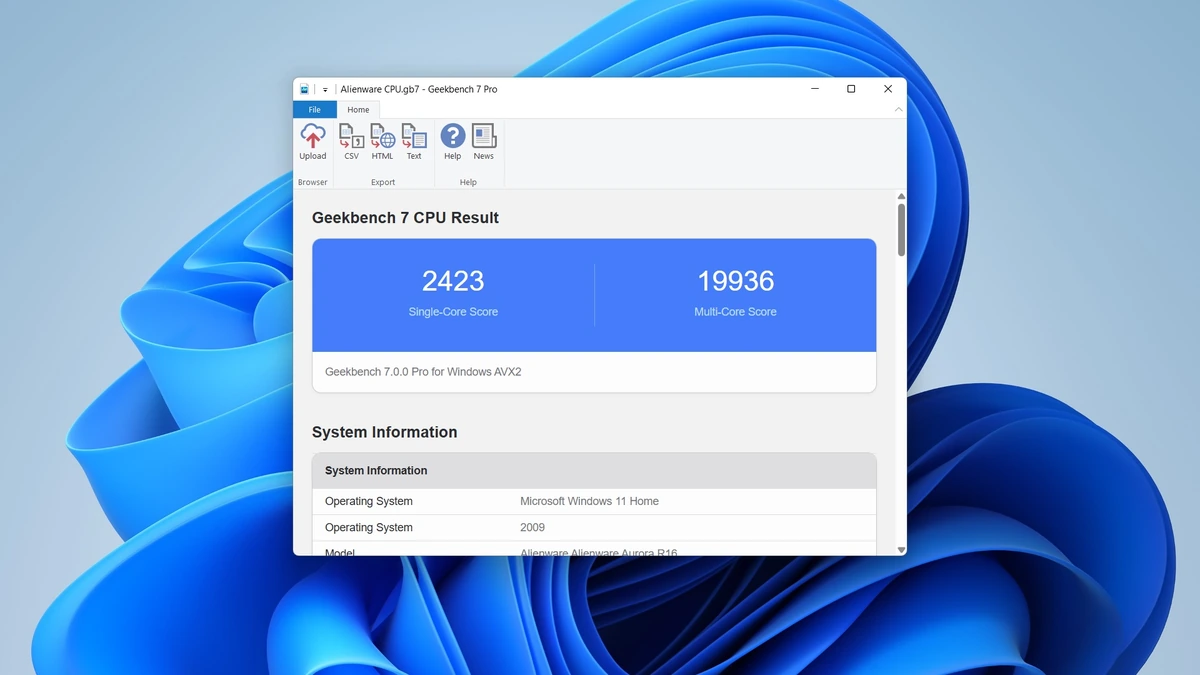
Geekbench 7 redesigned its multi-core benchmark so a workload only runs in multi-threaded mode when the task it models actually behaves that way in real software, and the new release is available now as a free download for Android, iOS, Windows, macOS, and Linux.
Per Primate Labs, the previous multi-core suite applied uniform multi-threading assumptions across every test regardless of how the software actually runs. The company points to its HTML5 Browser test as an example: it no longer counts toward the multi-threaded suite because web browsers are single-threaded or only lightly threaded, so forcing that workload into a multi-core run produced a score that did not reflect real usage. Primate Labs says the result is a multi-core number meant to track how a device handles the work people actually do, rather than a score inflated by threading every test regardless of fit.
The release also adds media workloads modeled on video conferencing and everyday content consumption: AV1 encoding for screen-sharing video, Opus compression for voice memos and podcasts, and video and audio decoding paired with live captions generated by the Whisper speech-recognition model. A new Game Physics workload runs on the Jolt Physics engine used in commercial games, the Photo Editor workload gained a wider set of real-world edits, and the Photo Library workload now handles modern formats including JPEG XL and DNG.
Geekbench 7's GPU benchmark shifts toward machine learning and content-creation tasks: real-time face tracking with filter effects, machine-learning image upscaling, and background blur for video calls, alongside new image editing and synthesis tests covering RAW processing, LUT-based color grading, path tracing, and fluid simulation. CUDA joins OpenCL, Vulkan, and Metal as a supported API, so Geekbench 7 can measure NVIDIA GPUs through the same interface their most demanding applications use. Primate Labs also expanded the data sets behind the File Compression and PDF Viewer workloads with more varied source files, documents, and image formats.
Geekbench 7 remains free for personal use, and Primate Labs is discounting Geekbench 7 Pro by 20 percent through August 6. Because the multi-core methodology changed rather than just the workload mix, a device's Geekbench 7 multi-core score is not directly comparable to its score on the last release, even on identical hardware.