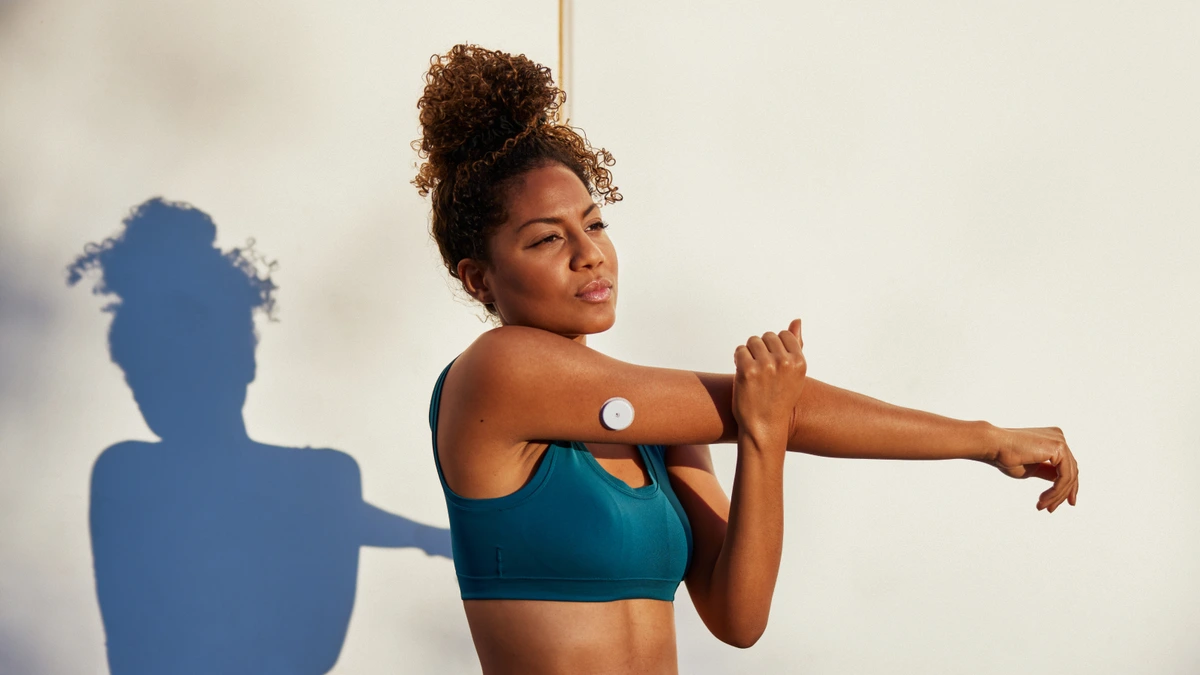
Ultrahuman launched M2 Live, a prescription-free metabolic health platform built on Abbott's Lingo continuous glucose monitor, in the US this week. No physician referral is needed to use it; sensors start at $99 a month on subscription or $129 as a one-time purchase, per Ultrahuman.
The core output is a Metabolic Score, a daily 0-to-100 rating of glucose regulation validated in a multi-site study across nine clinical centers, with results published in Nature. M2 Live supports Abbott's Libre 3 Plus sensor as an alternative biosensor alongside the primary Lingo device, giving users a hardware choice without changing the platform layer. Each biosensor lasts up to 14 days and is not reusable.
What sets M2 Live apart from using Abbott's own Libre app is Jade AI Biointelligence, Ultrahuman's real-time health inference layer. Jade cross-references glucose patterns with sleep quality, HRV, activity load, recovery, and skin temperature from the Ultrahuman Ring AIR or Ring Pro, revealing the metabolic effect of lifestyle choices that a glucose graph alone cannot explain. "By combining M2 Live with glucose data from Abbott's Lingo people can better understand how to make healthy change and improve their metabolic health," said Mohit Kumar, Founder and CEO of Ultrahuman.
Alongside the core Metabolic Score, M2 Live ships a Food Score (a one-to-ten personalized rating of how individual foods affect a user's glucose curve) and a Fueling Score (optimizing exercise output based on glucose availability in real time). Ultrahuman points to three clinical partnerships as the research underpinning the platform: the Metabolic Score validation published in Nature, a Stanford sleep-metabolism study analyzing 227,860 nights, and an ongoing Mayo Clinic trial on GLP-1 medications.
Metabolic health is a crowded market, but Ultrahuman's angle is ecosystem depth: the Ring already gives it a biometric baseline most standalone CGM apps lack. At $99 to $129 per sensor cycle, M2 Live undercuts most clinical CGM programs on cost, though it remains a significant wellness purchase. Ultrahuman's own data notes that roughly 23% of sensors may fall short of the rated 14-day wear period.