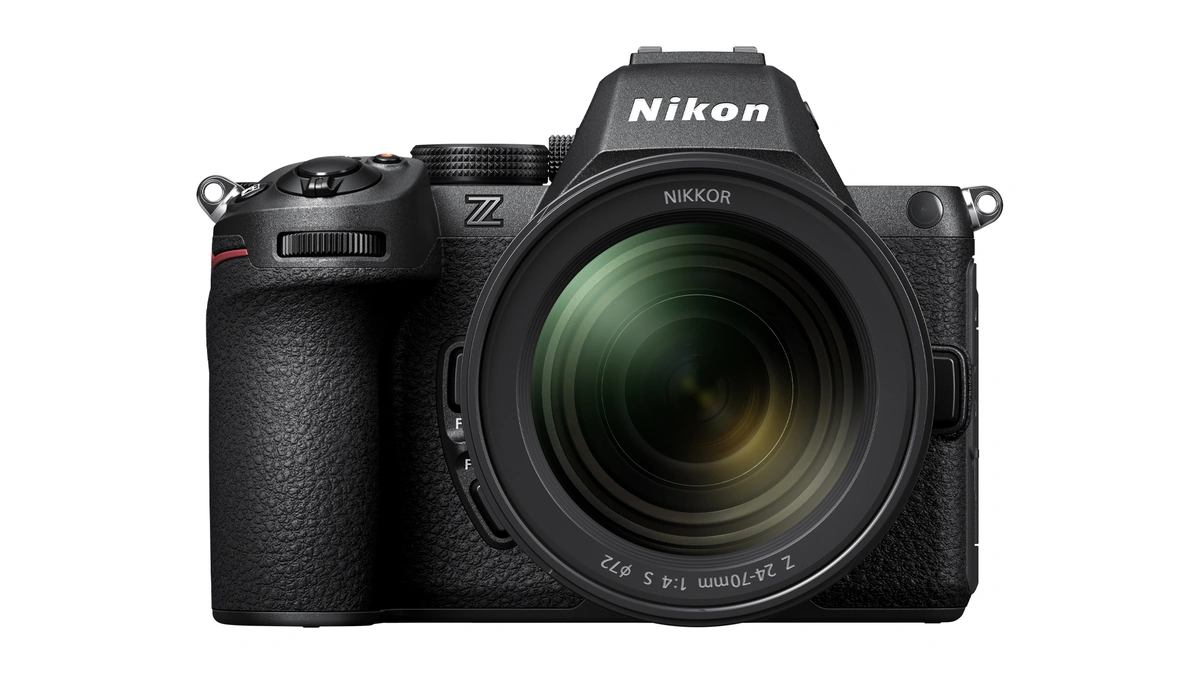
A mirrorless camera is an interchangeable-lens camera that sends light straight from the lens to an always-on image sensor and shows the picture on an electronic viewfinder or rear screen instead of through a mirror box. Nikon describes it the same way: the main sensor stays active whenever the camera is on and feeds a live view of the scene, so framing and exposure are previewed in real time. Choosing one comes down to three linked decisions, and the order matters. The sensor size sets the look and the price, the lens mount decides which lenses you can buy for years, and the lenses do more for image quality than most of the specs printed on the box.
How a Mirrorless Camera Differs From a DSLR and a Compact
A mirrorless camera drops the mirror box that a DSLR uses to bounce light up into an optical viewfinder. Nikon's mirrorless and DSLR explainer describes the DSLR path: light reflects off a mirror into the viewfinder, and the mirror flips up when the shutter fires. In a mirrorless body, light passes straight through the lens to the sensor, which feeds an electronic viewfinder (EVF) or the rear screen. Nikon sets out the practical differences like this:
| Trait | Mirrorless camera | DSLR |
|---|---|---|
| Viewfinder | Electronic viewfinder and/or rear screen fed by the sensor | Optical viewfinder fed by a mirror |
| Exposure preview | Shows white balance, Picture Controls and exposure before you shoot | Shows the scene as the lens sees it |
| Size and weight | Generally more compact | Tends to be heavier and bulkier |
| Autofocus and bursts | Select Nikon Z models detect up to 9 subject types; little to no blackout between shots | Historically ahead on phase-detection autofocus |
| Battery life | Shorter, because the displays run constantly | Still has the edge, though Nikon says the gap has narrowed |
| Lenses | Newer native lineups; Nikon's FTZ II adapter takes up to 360 DSLR lenses with full or limited compatibility | Decades of existing lenses |
A compact camera is the other comparison shoppers meet, and the dividing line is the lens. Fujifilm's X100VI pairs a 40.2-megapixel sensor with a 23mmF2 lens of fixed focal length, which Fujifilm's add-on conversion lenses change to 28mm or 50mm equivalent, so it is a premium compact rather than an interchangeable-lens camera. Anyone searching for a compact mirrorless camera wants the opposite trade: a small body whose lenses still swap. Fujifilm lists its X-M5 at 355g as the lightest model in its X Series and says it fits in a jacket pocket.
What to Look For in a Mirrorless Camera
A mirrorless camera is a system purchase, not a single gadget. Nikon's own mirrorless overview lists the factors buyers should weigh: sensor size, autofocus performance, video features, lens options, size, weight and budget. Ranked by how hard they are to change later, the criteria look like this:
- Lens mount: the hardest choice to undo, because every lens you buy is tied to it.
- Sensor size: full-frame, APS-C, Micro Four Thirds or large format, each with its own lens sizes and prices.
- Autofocus: subject detection for people, animals and vehicles now separates good bodies from dated ones.
- Stabilization: in-body image stabilization, lens stabilization, or both.
- Video: resolution, frame rate, crop and recording formats if you film as much as you photograph.
- Handling: grip, electronic viewfinder, screen, weight and battery life.
The common pitfall is shopping in the reverse order: picking the body with the longest feature list and discovering later that the lenses you want are expensive, heavy or missing in that mount. The second is treating the kit lens as the final lens. Much of what a buyer notices in sharpness, background blur and low-light ability comes from the glass.
Sensor Size Sets the Ground Rules
Sensor size is the first fork in mirrorless camera buying because it fixes the field of view each lens gives you and the size of the lenses themselves. Full-frame sensors measure about 36 x 24mm, the size of a 35mm film frame, and Nikon's FX and DX explainer puts its APS-C (DX) sensor at 24 x 16mm with a 1.5x crop factor, so a 24mm lens on DX gives roughly the view of a 36mm lens on full-frame. Canon's APS-C crop is slightly tighter: its RF-S18-45mm product page describes a 1.6x crop mode.
| Format | Crop factor vs full-frame | Example systems | Trade-off (our summary) |
|---|---|---|---|
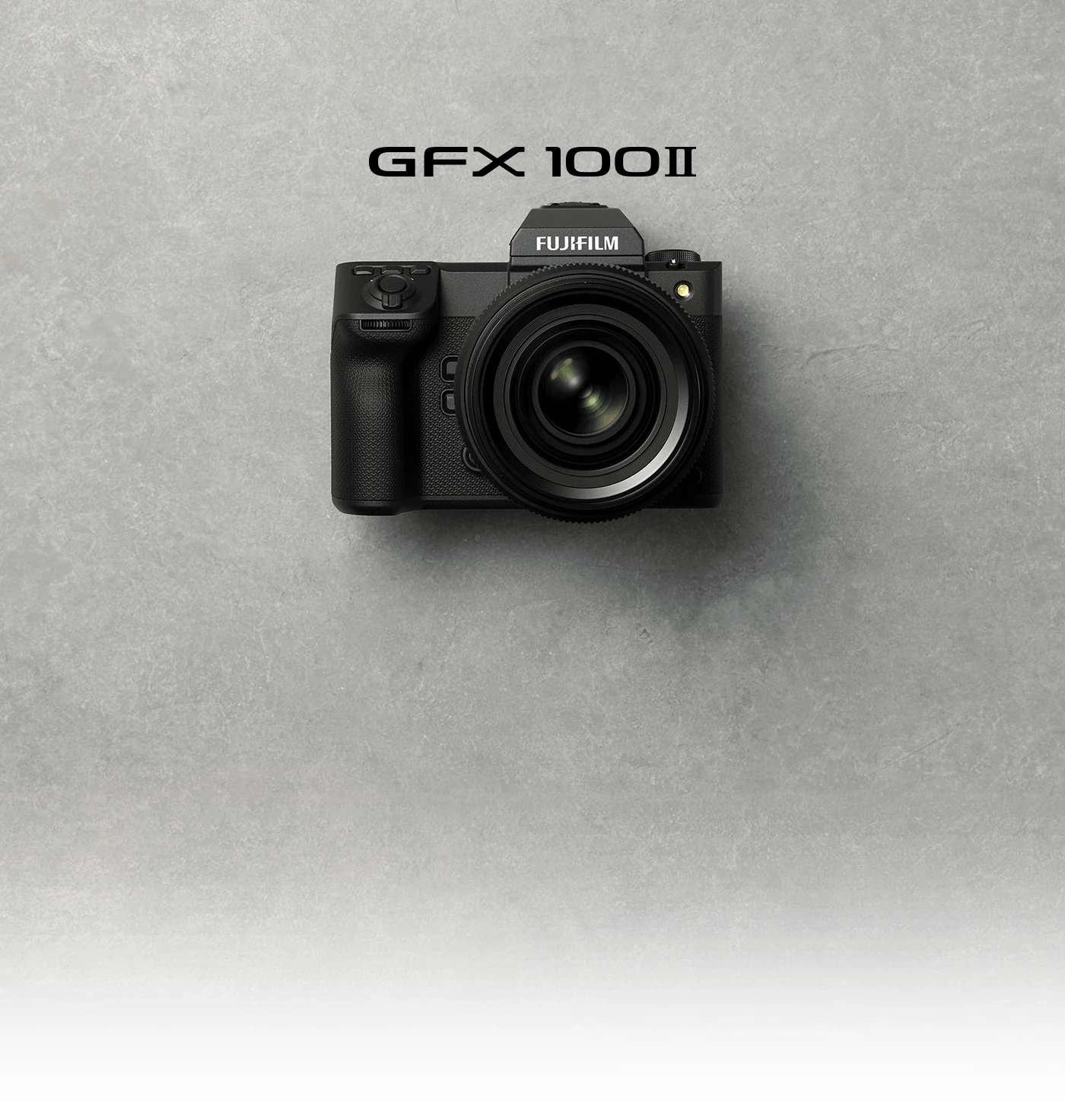
| Large format (Fujifilm GFX) | Below 1x; the sensor is larger than full-frame | Fujifilm GFX | Most detail and shallowest depth of field; largest, priciest lenses |
| Full-frame | 1x (36 x 24mm) | Canon RF, Nikon Z (FX), Sony E (FE), L-Mount | Strong low-light performance and background blur |
| APS-C | 1.5x (Nikon DX), 1.6x (Canon) | Canon RF-S, Nikon Z (DX), Fujifilm X, Sony E | Smaller, cheaper bodies and lenses; extra telephoto reach |
| Micro Four Thirds | 2x (17.3 x 13.0mm) | Panasonic LUMIX G, OM System | Smallest lenses; deeper depth of field at the same aperture |
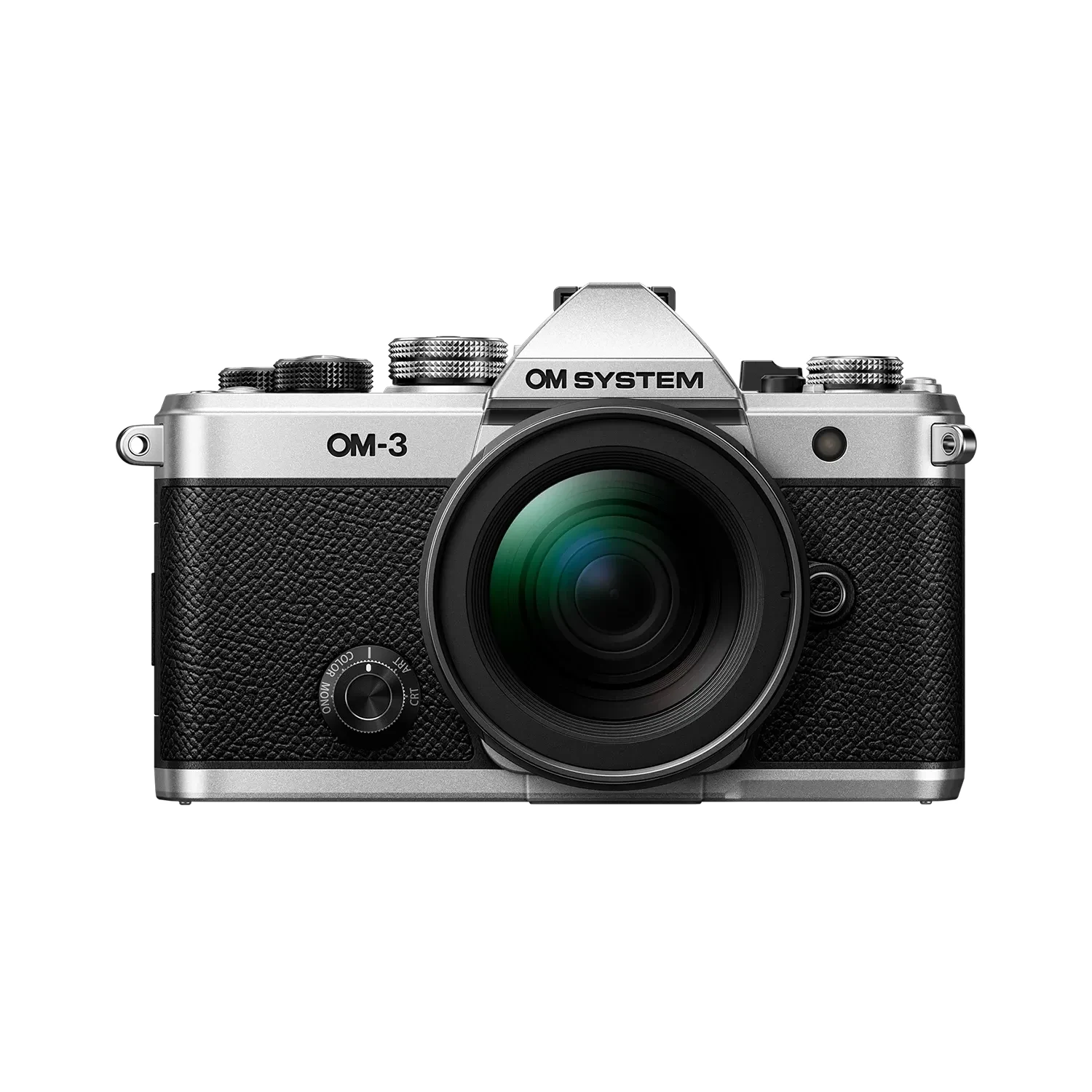
The crop factors in the table come straight from vendor focal-length equivalents. Panasonic lists its 12-35mm Micro Four Thirds zoom as equivalent to 24-70mm in 35mm terms, which is a 2x crop, and OM System lists the OM-3 sensor at 17.3 x 13.0mm on the Micro Four Thirds mount. At the other end, Fujifilm says its GFX sensor is approximately 1.7 times larger than a 35mm full-frame sensor, and it lists the new GF19-35mm zoom as equivalent to 15-28mm.
Bigger is not automatically better for every buyer. Nikon says its full-frame FX sensor offers higher sensitivity and generally lower noise, which matters for weddings, concerts and astrophotography. APS-C and Micro Four Thirds pay that back in weight and cost, and the crop factor stretches a telephoto lens for birds and field sports. Pixel count is a separate question: the Nikon Z lineup alone runs from 20.9 megapixels on its APS-C bodies to 45.7 megapixels on the Z8 and Z9.
Lens Mounts and the Systems Behind Them
Every mirrorless camera is built around a lens mount, the bayonet and electrical contacts that join body and lens. Nikon says its Z mount has a 55mm inner diameter and a 16mm flange focal distance, the gap between mount and sensor, and credits that design for apertures as wide as f/0.95; its Z mount lens lineup includes the NIKKOR Z 58mm f/0.95 S Noct. Mount dimensions matter less to buyers than what each system sells:
| Mount | Camera brands | Sensor formats | Worth knowing |
|---|---|---|---|
| Canon RF | Canon | Full-frame (RF) and APS-C (RF-S) | EF and EF-S lenses fit through Canon's EF-EOS R adapter |
| Nikon Z | Nikon | Full-frame (FX) and APS-C (DX) | F-mount lenses fit through the FTZ II adapter |
| Sony E | Sony | Full-frame and APS-C | Third-party lenses available, including Sigma |
| Fujifilm X and GFX | Fujifilm | APS-C (X Mount) and large format (GFX bodies with GF lenses) | Separate lens lines for the two sensor sizes |
| L-Mount | Leica, Panasonic, Sigma and partners | Depends on the partner's body | One mount shared across several brands |
| Micro Four Thirds | Panasonic, OM System | Micro Four Thirds (17.3 x 13.0mm on the OM-3) | Third-party lenses available, including Sigma |
Shared mounts widen the lens choice. The L-Mount Alliance describes itself as a partnership founded by Leica Camera, Sigma and Panasonic, with more manufacturers added, so any partner's lens fits any partner's camera. Third-party makers matter too: Sigma's lens catalog filters by L-Mount, Sony E-mount, Nikon Z, Canon RF, Fujifilm X and Micro Four Thirds, though the range on offer differs by mount. Before choosing a body, check whether the two or three lenses you most want exist in that mount, from the camera maker or anyone else.
Choosing Lenses That Match the Body
Lenses usually stay in use across several mirrorless camera bodies, so the first lens deserves as much thought as the camera. Two numbers define a lens: focal length, which sets the angle of view, and maximum aperture, which sets how much light it gathers and how much background blur it can produce. A zoom covers a range of focal lengths; a prime lens has one fixed focal length and is usually smaller, brighter and sharper for its price.
- Kit zoom: the flexible starting point, covering wide-angle to short telephoto in one compact lens.
- Fast prime: a 35mm or 50mm prime with a wide aperture is the cheapest real upgrade for low light and portraits.
- Telephoto zoom: needed for sports, wildlife and stage work; on APS-C the crop factor adds reach.
- Lens format: APS-C lenses (RF-S, DX) are smaller and cheaper, but on a full-frame body they trigger a crop mode.
That last point catches upgraders. Canon says an RF-S lens on a full-frame EOS R body automatically enables the 1.6x crop mode, and Nikon says a DX lens on an FX camera engages DX crop, recording only from the center of the sensor. The lens keeps working, but you lose resolution. Stabilization splits along the same body-or-lens line: in-body image stabilization moves the sensor and helps every lens, while optical stabilization lives in the lens. Canon rates the stabilizer in its RF-S18-45mm at up to 4 stops of shake correction.
Specs That Matter and Specs to Skip
Mirrorless camera spec sheets are long, and only some lines change your pictures. These are worth reading closely, with current examples from vendor spec pages:
- Subject detection: Nikon lists detection for nine subject types on the Z5II, the feature that keeps focus on an eye or a car as it moves.
- In-body image stabilization: Nikon rates the Z5II's in-camera VR at 7.5 stops at the center of the frame, based on the CIPA 2024 standard according to its footnote.
- Burst and pre-capture: the same Nikon page lists up to 30 fps and Pre-Release Capture. Sony describes its version, Pre-Capture, as recording up to one second before the shutter is pressed, which helps with pets and sports.
- Video crop: Nikon marks the Z5II's 4K/60p mode as cropped, so the field of view narrows when you switch to it; Sony's Alpha 7 V announcement likewise reserves its fastest 4K mode for an APS-C/Super 35mm crop.
- Card slots: Canon pairs a CFexpress Type B slot with an SD slot on the EOS R6 Mark III; faster card formats cost more per gigabyte.
- Battery life: compare shot counts quoted under the CIPA standard rather than general claims of all-day use.
Other lines deserve less weight than they get. An extended ISO maximum is an emergency setting, so the native ISO range is the better guide. Very high megapixel counts help landscape and studio work but fill cards and slow editing. Digital zoom and in-camera filters are no reason to choose one body over another. Burst rates beyond what you will shoot matter less than autofocus that holds a subject. USB power is the quiet convenience: the USB Power Delivery specification lets a device negotiate only the power it needs from a charger, so a camera that supports USB-C power can share a laptop charger; check the manual for which modes it supports.
Mistakes Buyers Make
Most mirrorless camera regrets come from money spent in the wrong place or a compatibility detail found too late. The overspending traps look like this:
- Body first, lenses never: for most everyday shooting, a mid-range body with a good prime gives more visible gains than a flagship body with only a kit zoom.
- Paying for video you will not shoot: features such as 7K RAW video and Open Gate recording, both listed for Canon's EOS R6 Mark III, serve filmmakers first.
- Forgetting the card budget: a body with a CFexpress slot needs fast cards to reach its burst and video specs.
The compatibility gotchas are quieter. Adapters keep old lenses usable but not always fully featured: Nikon says the Mount Adapter FTZ II makes hundreds of F-mount NIKKOR lenses work on Z bodies, with full autofocus and auto exposure only for certain lens types such as AF-S G, D and E. Canon's spec sheets, such as the one for the EOS R10, say RF bodies take EF and EF-S lenses through the Mount Adapter EF-EOS R, while EF-M lenses are excluded. RAW files are the other trap. Apple keeps a list of supported camera RAW formats for its operating systems, adds models over time, and marks some with limits such as lossless RAW only, so a brand-new body's files may not open in your editor on day one. Heavy RAW and 4K editing also lean on the computer; the video editing workstation comparison covers that side.
Matching a Camera to How You Shoot
The right mirrorless camera follows from what you shoot most, and the use cases point to fairly clear starting points:
- Travel and everyday: a light APS-C body with a small zoom or prime. Fujifilm puts the X-T30 III at 378g with battery and card, on a 26.1-megapixel X-Trans CMOS 4 sensor.
- Family, pets and sports: strong subject detection and pre-capture matter more than resolution.
- Low light, weddings and events: full-frame plus a fast prime.
- Wildlife: APS-C for reach on a budget, or full-frame with a long telephoto zoom.
- Video and vlogging: check crop in 4K modes, recording time and a flip-out screen before resolution.
- Landscape and studio: high-resolution full-frame, or a Fujifilm GFX body, which Fujifilm calls large format.
For budget guidance, plan by system cost. An APS-C body and kit zoom is the usual entry point for Canon, Nikon, Sony and Fujifilm. Full-frame starts higher and climbs with the lenses: Sony priced the Alpha 7 V body at about $2,899 at launch, with its FE 28-70mm f/3.5-5.6 OSS II kit zoom at about $449, per its launch announcement. Fujifilm's large-format GFX bodies sit above both. A sensible rule is to keep a third or more of the budget for lenses. For anyone moving up from a phone, the Android camera phone roundup shows how far computational photography already goes; a mirrorless camera earns its place with optics, sensor size and control a phone cannot match.
Further reading
Frequently Asked Questions
What is the difference between a compact and a mirrorless camera?
The lens: a mirrorless camera takes interchangeable lenses, while a compact camera keeps one lens on the body. Fujifilm's X100VI shows the compact side, with a 23mmF2 lens of fixed focal length that only add-on conversion lenses change. A small mirrorless body such as the 355g X-M5 comes close in size but lets you move to a telephoto or a fast prime later.
What are the downsides of mirrorless cameras?
Battery life is the one Nikon itself names. Its mirrorless and DSLR explainer says DSLRs still have the edge because a mirrorless camera runs its displays constantly, though the gap has narrowed. Native lens lineups are also younger than the decades of DSLR glass, so Nikon and Canon sell mount adapters to bridge the gap. Our advice: budget for a spare battery and check that the lenses you want exist in the mount.
Are mirrorless cameras good for beginners?
Yes, and Nikon says many are designed with simple controls and automatic settings while keeping advanced features to grow into, in its mirrorless camera FAQ. The live exposure preview helps too, because the screen shows the result before you press the shutter. An APS-C body with a kit zoom is the usual start, such as the Nikon Z50II with its 20.9-megapixel DX sensor.
Is a full-frame mirrorless camera worth it over APS-C?
Only if you shoot often in low light or want the shallowest depth of field, because the larger sensor is the main thing the extra money buys. Nikon says its full-frame FX sensor offers higher sensitivity and, generally, lower noise than DX. APS-C bodies and lenses are smaller and cheaper, and the 1.5x or 1.6x crop gives telephoto lenses extra reach for sports and wildlife. Nikon and Canon full-frame bodies also accept their APS-C lenses in an automatic crop mode, so starting on APS-C does not strand those lenses.
Can I use my old DSLR lenses on a mirrorless camera?
Usually yes, through the camera maker's own mount adapter, but full autofocus support depends on the lens type. Nikon says its Mount Adapter FTZ II gives full AF and AE only with certain F-mount lens types, such as AF-S G, D and E. Canon says EF and EF-S lenses fit RF bodies through the Mount Adapter EF-EOS R. Check the adapter's compatibility list before buying a body for old glass.
How much should you spend on a mirrorless camera?
Plan the total for body plus the first one or two lenses, not the body alone, because lenses usually move with you to the next body. For scale, Sony priced the full-frame Alpha 7 V body at about $2,899 at launch and its FE 28-70mm f/3.5-5.6 OSS II kit zoom at about $449, according to its launch announcement. APS-C systems usually cost less. A cheaper body with a good prime often beats an expensive body with only the kit zoom.