Mobile innovation is the continuous hardware and software progression that transforms smartphones from basic communication tools into pocket-sized computing platforms. Each hardware generation since the first mass-market touchscreen devices has expanded what a phone can sense, compute, and communicate. The forces behind smartphone evolution span materials science, silicon architecture, platform software, and radio frequency engineering, making modern handsets the most complex consumer devices ever manufactured at scale.
From Feature Phones to Mobile Computing Platforms
Mobile innovation began accelerating when touchscreens replaced physical keypads and app ecosystems gave developers a direct channel to hundreds of millions of users. The transition from hardware keyboards to capacitive glass surfaces collapsed the barrier between input and display, letting a single slab of glass serve as camera shutter, gaming controller, navigation console, and payment terminal. Smartphone evolution accelerated further when platform vendors opened application programming interfaces (APIs) that gave third-party developers access to sensors, radios, and camera pipelines previously locked to first-party software. The resulting app ecosystem on both Android and iOS reached millions of titles within a few years of the first open storefronts.
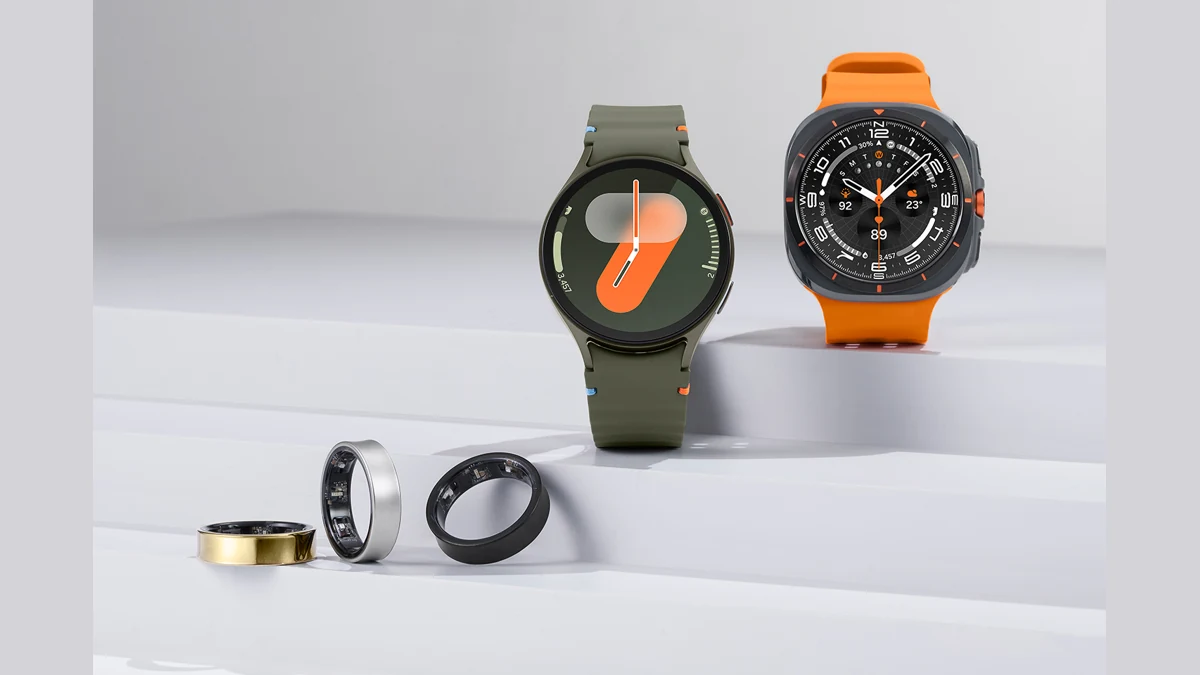
Five architectural shifts define the trajectory from those first capacitive-screen devices to the current generation of mobile computing platforms. The current smartphone trends including foldable displays article maps where the hardware market stands today; the section below traces the forces that got it there.
- Application platform openness. Publishing an API for sensors and radios converted handsets into extensible platforms rather than closed appliances, enabling the app ecosystem that now defines smartphone value.
- Dedicated silicon layers. Camera signal processors, neural processing units (NPUs), and cellular modems moved off general-purpose cores onto purpose-built silicon, reducing power draw while increasing throughput.
- Multi-radio stacks. Adding Wi-Fi, Bluetooth, NFC (near-field communication), UWB (ultra-wideband), and sub-6 GHz 5G into a single chassis expanded wireless connectivity from voice calls to contactless payments, precision location, and gigabit streaming.
- Sensor fusion. Combining accelerometers, gyroscopes, barometers, proximity sensors, and ambient light detectors let the OS infer context, enabling features from step counting to always-on display optimization.
- Over-the-air update infrastructure. Reliable delta updates separated hardware release cycles from software capability delivery, extending the functional lifespan of a device well beyond its launch firmware.
Computational Photography: Cameras as the Primary Innovation Driver
Computational photography now defines smartphone differentiation more than processor benchmarks, with platform-level camera APIs enabling Low Light Boost and per-frame algorithm control on Android 15. The shift is architectural: rather than scaling megapixel counts on a single sensor, vendors stack multiple camera hardware modules with different focal lengths, apertures, and sensor sizes, then merge their outputs in real time using the device's NPU. The result is images that no individual lens-sensor pairing could produce on its own.
Android 15 introduces Low Light Boost as a platform-level capability, surfacing low light boost through the CameraX and Camera2 APIs so any app can access consistent night-mode processing without implementing proprietary algorithms (Android 15 Platform Summary). The camera hardware pipeline is further documented in the Android 15 Release Notes, which specify behavior changes for per-frame capture controls that improve consistency across third-party camera apps. For photographers comparing handsets, the best Android phones for photography article evaluates how these APIs translate into real shooting results across current flagship devices.
The capabilities that now ship as standard in computational photography across mid-range and premium handsets include:
- Multi-frame noise reduction
- The NPU stacks dozens of underexposed frames captured in rapid succession and aligns them at the sub-pixel level, producing sharp low-light output without a physical aperture increase.
- Scene-adaptive HDR
- Tone mapping algorithms adjust exposure zone-by-zone within a single frame, preserving highlight detail in bright sky while lifting shadow detail in foreground subjects.
- Semantic segmentation
- Neural models identify subject classes (faces, foliage, sky, architecture) and apply class-specific sharpening, color grading, and bokeh rendering, replacing the single-parameter blur of earlier portrait modes.
- Video stabilization via gyroscope fusion
- Combining optical image stabilization (OIS) hardware with electronic stabilization driven by gyroscope data corrects both high-frequency vibration and lower-frequency camera sway simultaneously.
On-Device AI: Intelligence Without the Cloud
On-device AI inference shifts processing from remote data centers to the chip inside the handset, reducing latency and preserving user data on the device itself. The architectural requirement is an NPU with enough throughput to run quantized large language models (LLMs) and vision transformers in real time while leaving thermal headroom for the radio stack and display. Platform support for on-device AI has matured considerably: Android's ML Kit and the Android Neural Networks API (NNAPI) provide standardized access to the NPU across device generations, insulating app developers from vendor-specific chip differences.
Mobile innovation in the AI layer is moving along three axes simultaneously. Quantization compresses model weights from 16-bit floating point to four-bit or eight-bit integers, shrinking memory footprint without proportionally reducing accuracy on common tasks. Speculative decoding lets a smaller draft model generate token candidates that the larger model verifies in parallel, increasing effective throughput per watt. Adapter-based fine-tuning allows base models to be customized for a device owner's vocabulary and preferences without uploading training data to a server. Together, these techniques extend what on-device AI can do without increasing battery draw or chip area.
Platform support for on-device AI workloads also affects privacy posture. Processing speech recognition, photo categorization, and message summarization locally means the raw audio, image, and text data never leaves the device. The contrast with cloud-based processing is measurable: a local transcription pipeline adds no network round-trip latency, produces no server-side log, and continues functioning without a data connection. Android's Private Space feature, introduced in Android 15, reinforces this model by isolating a second profile's data from the primary profile at the OS level, ensuring that sensitive on-device AI models and their outputs remain compartmentalized (Android 15 Platform Summary).
- Speech-to-text and translation. Real-time transcription and language translation run on the NPU without a network request, enabling use in airplane mode or in areas with weak cellular signal.
- Photo and video understanding. Object detection, scene classification, and semantic search across a device's camera roll use on-device AI models to index content without uploading images to a cloud index.
- Predictive text and writing assistance. Next-token prediction for keyboard autocomplete and short-form drafting suggestions now runs on the device's language model rather than a remote API endpoint.
- Proactive task automation. The OS can surface context-aware suggestions (calendar entries from flight confirmation emails, reminders from conversational context) by parsing local data rather than routing it through a cloud pipeline.
Satellite Connectivity and the End of Coverage Gaps
Satellite connectivity extends mobile reach beyond cellular tower grids, and Android 15 formalizes that support with platform-level APIs that ensure a consistent user experience across satellite networks. The engineering challenge satellite connectivity solves is geographic: terrestrial cellular infrastructure is economically viable only where population density justifies tower construction. Coastlines, mountain ranges, deserts, and open water remain coverage gaps for the majority of the world's cellular operators. Direct-to-device satellite links close those gaps by routing messages and emergency data through low-Earth orbit (LEO) satellite constellations that cover the entire planet's surface.
The Android 15 satellite support layer includes system-level APIs that let messaging apps detect satellite connectivity, adjust message encoding for high-latency links, and present appropriate UI states when the device is operating over a satellite rather than a cellular connection (Android 15 Platform Summary). Platform support at the OS level means app developers can rely on standardized wireless connectivity signals rather than implementing per-carrier detection logic. The practical result: emergency SOS messaging, location sharing, and text communication over satellite become consistent platform features rather than vendor-specific additions.
Key capabilities that the platform-level satellite connectivity model enables:
- Emergency SOS messaging that routes through satellite when cellular and Wi-Fi are unavailable, giving rescuers a GPS-tagged location even in remote terrain.
- Standardized UI indicators that inform users when the device has switched to satellite mode, setting expectations for message delivery latency (typically 10 to 60 seconds per message round-trip).
- Two-way text messaging for non-emergency use cases on networks that support higher-bandwidth LEO satellite links, extending wireless connectivity to activities like trail navigation and marine expedition communication.
- Platform APIs that abstract carrier-specific satellite protocol differences, reducing the integration cost for messaging and safety app developers.
Foldable Displays and New Form-Factor Innovation
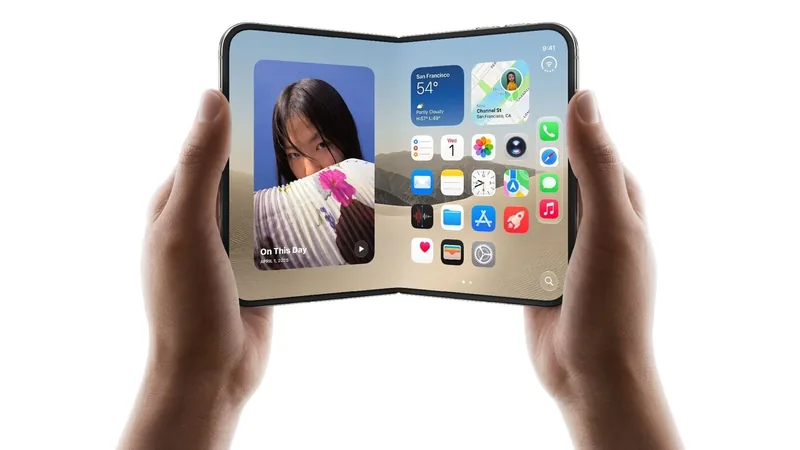
Foldable displays represent the most visible break from the slab form factor that defined a decade of smartphone evolution, folding screen real estate from a compact pocket size to a near-tablet surface. The engineering behind a foldable display involves ultra-thin glass (UTG) laminated to a polymer backing with a hinge mechanism that must survive hundreds of thousands of open-close cycles without creasing the active display area. Mobile innovation in the foldable segment has accelerated as UTG suppliers refined their chemical etching processes and hinge manufacturers moved from polymer brackets to stainless-steel water-drop mechanisms that flatten the fold radius.
The form factor splits into two primary configurations. Book-style foldables open horizontally to expose a large inner display while closing to a tall, narrow outer screen. Flip-style foldables fold vertically, producing a square compact form with a small cover display. Each configuration involves different tradeoffs in hinge width, crease visibility, and screen aspect ratio. Understanding how iOS and Android handle the same hardware differently matters here: the how iOS and Android handle the same hardware differently comparison examines how each platform adapts its multitasking model to the expanded canvas a foldable display provides.
| Dimension | Book-Style Foldable | Flip-Style Foldable |
|---|---|---|
| Unfolded aspect ratio | Tablet-like, near-square when unfolded | Standard tall-phone ratio |
| Folded pocket size | Taller and thicker than a standard slab | Roughly half the height of a standard slab |
| Cover display utility | Moderate: narrow outer screen for notifications | High: wider cover screen accommodates apps |
| Multitasking benefit | High: side-by-side app windows at near-tablet width | Low: inner display same width as standard phone |
| Primary use case | Productivity, reading, split-screen media | Portability, social media, casual photography |
Battery Efficiency: Longer Life Through Hardware and Software Co-Design
Battery efficiency gains now come from co-designed silicon, adaptive refresh rates, and OS-level power scheduling rather than simply increasing cell capacity. Doubling a battery's capacity adds weight and thickness without addressing the root cause of drain: inefficient compute, display, and radio workloads running at full power when partial power would suffice. The more productive engineering direction combines OLED display panels with variable refresh rates (from one hertz during static content up to 120 Hz during fast scrolling), NPUs optimized for sparse activation patterns, and modem firmware that drops transmit power when signal strength allows.
Android 15 extends platform support for memory efficiency through a 16 KB memory page size option that reduces the overhead of memory translation for large applications (Android 15 Developer Documentation: 16 KB Page Size Support). Larger page sizes reduce the number of page-table entries the memory management unit (MMU) must maintain, cutting both CPU cycles and DRAM accesses for memory-intensive workloads. Mobile innovation in battery efficiency operates across four layers simultaneously.
- Silicon co-design. Vendors collaborate with OS teams to expose chip-specific power states through standardized APIs, letting the scheduler pick the most efficient core-clock combination for each workload rather than defaulting to a single performance profile.
- Adaptive refresh rate. The display controller drops refresh frequency when content is static and raises it only during animation or scrolling, cutting panel power by a meaningful fraction of total device consumption without degrading perceived smoothness.
- Intelligent background processing. The OS defers non-time-critical background work (sync, indexing, backup) to charging windows or periods of high battery state, reducing the radio and storage activity that drains battery during screen-off periods.
- Thermal modeling. The power management unit monitors junction temperatures across CPU, GPU, NPU, and modem cores and throttles each independently, preventing the sustained thermal limits that force blanket frequency reductions and spike power draw.
Wearable Technology as the Extension of Mobile Innovation
Wearable technology extends mobile innovation beyond the handset by moving continuous health sensing, notifications, and payment capabilities onto the wrist and other body-worn form factors. The smartphone remains the hub: it holds the SIM, runs the heavier compute workloads, and provides the display surface for complex interactions. Wearable technology offloads the ambient, always-on sensing tasks that would drain a phone screen battery in hours, using low-power microcontrollers and Bluetooth Low Energy (BLE) links to report data back to the handset without sustained radio contact. Battery life on the wrist still varies widely: how long a fitness tracker lasts between charges depends on settings such as the always-on display and onboard GPS.
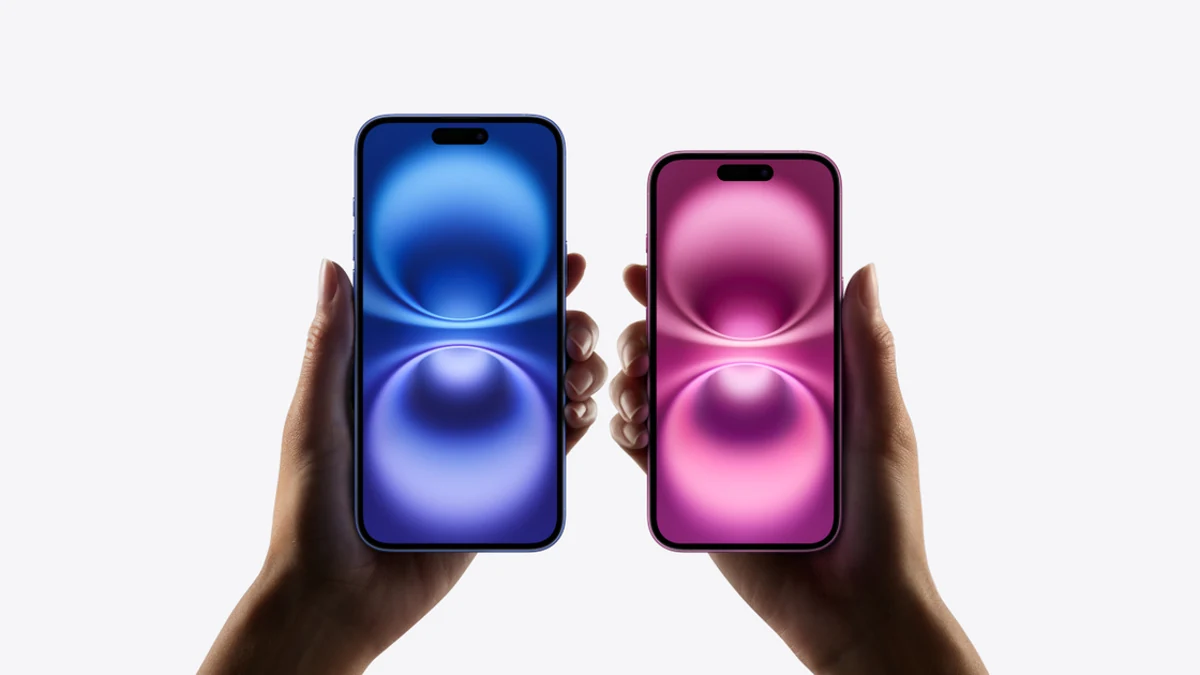
Smartphone evolution created the conditions for wearables to exist. Companion apps, standardized health data APIs (such as Android's Health Connect), and short-range wireless connectivity protocols gave device makers a software platform to build against rather than a blank embedded systems problem. Platform support through Health Connect creates a common data layer where heart rate, sleep stages, blood oxygen, and activity metrics from different wearable brands can flow into a single repository, accessible to third-party apps with user permission.
For a detailed evaluation of current hardware, the best wearables compared across smartwatches, rings, and trackers article covers how different form factors perform across health accuracy, battery life, and platform compatibility. The categories below capture where wearable technology sits as an extension of the mobile platform.
- Smartwatches. Full-featured wrist computers with GPS, optical heart rate sensors, ECG electrodes, blood oxygen (SpO2) sensors, NFC for payments, and LTE radios for standalone connectivity. App ecosystems on both Wear OS and watchOS let developers extend the platform to the wrist with the same SDK primitives available on the phone.
- Smart rings. Finger-worn sensors prioritize continuous passive sensing over interaction. Lacking a display, they extend battery life by running a minimal sensor stack, making them effective for sleep staging and resting heart rate monitoring where a watch face would be intrusive.
- Fitness trackers. Slim-band form factors with LED-based heart rate sensors, step counters, and limited notification mirroring target users who want health data without the interaction surface of a full smartwatch. Battery efficiency is the primary design constraint, with many trackers targeting week-long autonomy.
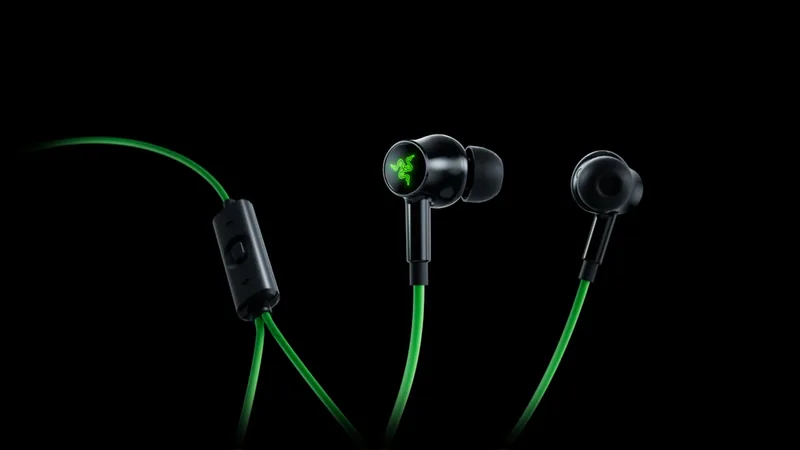
- Hearables. Smart earbuds add ambient noise processing, real-time translation, and health sensing (in-ear heart rate, body temperature) to the audio function, turning a passive accessory into a sensor node on the mobile platform.
Further reading
Primary sources cited in this article:
- Android 15 Platform Summary: Low Light Boost, Satellite Connectivity, Private Space.Android developer documentation covering the platform capabilities referenced throughout this article.
- Android 15 Release Notes: Camera and Platform Behavior Changes.Detailed changelog for camera API behavior changes and per-frame capture controls.
- Android 15 Developer Documentation: 16 KB Page Size Support.Technical guidance on memory page size optimization and its implications for application battery efficiency.
- Google Meet: Background Effects and Cloud Processing Documentation.Reference for cloud versus on-device processing architecture in Google's platform applications.
- Best Desktop CPU for Productivity and Gaming: Clock Speed vs Core Count
- Best Developer Laptops: MacBook vs ThinkPad vs Dell Compared
- Best Gaming PC Parts: A Build Guide by Resolution Tier