Android camera phone is a smartphone category that pairs Android software with multi-lens optical hardware, a dedicated image signal processor, and computational photography to produce professional-quality images. Samsung, Google, Xiaomi, and OnePlus each list different sensor, zoom, and video hardware for their flagships, and each documents different software tools, which makes the four a useful cross-section of Android photography.
How Android Camera Systems Actually Work
An Android camera phone splits image quality across three layers: an optical stack, a sensor, and an image signal processor (ISP). The optical stack is the lens, the camera aperture, and optical image stabilization (OIS), which steadies the frame during exposure. The sensor collects light, and its size and pixel binning (combining neighboring pixels into one larger effective pixel) shape how much light each output pixel receives. The ISP then runs computational photography, including multi-frame merging and night mode processing.
| Layer | What it controls | What to compare |
|---|---|---|
| Optical stack | How light reaches the sensor and how steady the frame stays | Camera aperture, focal length, OIS |
| Sensor | How much light each output pixel collects | Sensor size, megapixels, binning |
| ISP | Frame merging, noise handling, night mode processing | Named features and their documented limits |
Spec sheets describe the first two layers well and the third one poorly, so this comparison pairs vendor specifications with each maker's feature documentation. The four phones are the Samsung Galaxy S26 Ultra, the Google Pixel 11 Pro and Pro XL, the Xiaomi 17 Ultra, and the OnePlus 15, and every spec comes from each maker's own pages. For platform-level context, the iOS vs Android: Platform Architecture, Privacy, and Enterprise Compared guide covers the software side of the choice.
Flagship Camera Specs Side by Side
Android photography hardware differs most in zoom and sensor choices, so the table below sets the four flagships side by side using Samsung's specifications, Google's Pixel 11 Pro announcement, Xiaomi's specifications, and OnePlus's specifications. The rows for telephoto reach and optical image stabilization show the widest gaps in what each vendor chooses to publish. Samsung's chipset and US price come from its US launch announcement, the extra Pixel 11 Pro camera and video figures from Google's Pixel 11 Pro spec sheet, and the OnePlus 15 US price from OnePlus's launch release.
| Spec | Galaxy S26 Ultra | Pixel 11 Pro and Pro XL | Xiaomi 17 Ultra | OnePlus 15 |
|---|---|---|---|---|
| Chipset | Snapdragon 8 Elite Gen 5 for Galaxy | Google Tensor G6 | Snapdragon 8 Elite Gen 5 | Snapdragon 8 Elite Gen 5 |
| Main camera | See Rear cameras row | 50MP, f/1.68, 1/1.3-inch sensor, 82-degree FOV | Leica 23mm, 50MP Light Fusion 1050L, 1-inch sensor, f/1.67, OIS | 50MP Sony IMX906, f/1.8, OIS, 84-degree FOV |
| Telephoto | Optical 3x and 5x | 48-megapixel, larger sensor, 30% more light sensitivity, 5x optical | Leica 200MP 75-100mm variable, Samsung HPE, 1/1.4-inch, f/2.39 to f/2.96, OIS | 50MP S5KJN5, 3.5x optical |
| Ultra-wide | See Rear cameras row | 48MP, f/1.7, 123-degree FOV, autofocus | Leica 14mm, 50MP Samsung JN5, 1/2.75-inch, f/2.2, 115-degree FOV | 50MP OV50D, f/2.0, 116-degree FOV |
| Rear cameras | 200 MP + 50 MP + 50 MP + 10 MP; F1.4, F2.9, F1.9, F2.4; OIS | See rows above | See rows above | See rows above |
| Zoom claims | Optical-quality 2x and 10x; digital up to 100x | Pro Zoom up to 120x | Digital zoom up to 120x | 7x optical-quality |
| Video | 8K at 30fps; slow motion 240fps at FHD, 120fps at UHD | 8K at 30fps via Video Boost; 4K up to 60fps | 8K at 30fps; 4K Dolby Vision up to 120fps; Log up to 4K at 120fps | 8K at 30fps; 4K up to 120fps |
| Front camera | 12 MP, F2.2, autofocus | 42MP, f/2.2, autofocus; 4K up to 60fps | 50MP autofocus; 4K Dolby Vision up to 60fps | 32MP Sony IMX709, f/2.4, autofocus |
| US starting price | $1,299.99 | $1,099 (Pro), $1,299 (Pro XL) | N/A | $899.99 (12GB/256GB) |
Megapixels and sensor size describe inputs to an image; processing and tuning decide the result, and camera aperture values such as f/1.67 and f/2.39 cannot be compared across different focal lengths. In the specs listed by Xiaomi, the 17 Ultra has a stated 1-inch main sensor, Log video, and a RAW photo mode.
Google Pixel 11 Pro: Night Sight, Astrophotography, and Video Boost
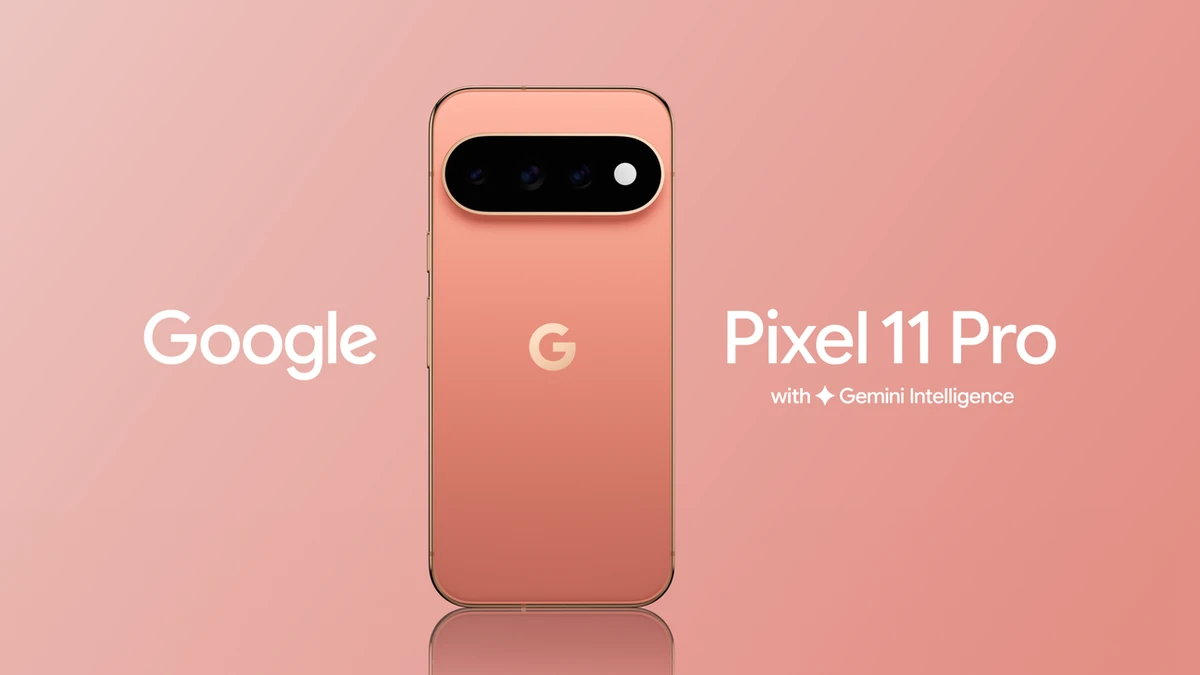
Google positions the Pixel 11 Pro and Pro XL as an Android camera phone pair with a redesigned telephoto and a software-heavy approach to low-light photography. Per Google, both models use the Google Tensor G6, start at $1,099 (Pro) and $1,299 (Pro XL) in the US, and reached shelves on August 20, 2026. The feature documentation adds the following.
- Telephoto: Google lists an upgraded 48-megapixel telephoto with a larger sensor, 30% more light sensitivity, 5x optical zoom, and Pro Zoom up to 120x.
- Night Sight: per Google Pixel Camera Help, Night Sight takes low-light photos without flash when the phone is steady, and it turns on automatically in low light when Photo or Portrait mode is active.
- Astrophotography: a mode with its own requirements, distinct from Night Sight, that extends Pixel low-light photography to night skies. It needs the phone set on a steady surface such as a stand or tripod, and on Pixel 4a (5G) and later it works only at 1x zoom or greater.
- Video Boost: Google's support page lists it on Pixel 8 Pro and newer Pro and Fold models through the Pixel 11 Pro series, with zoom from 0.5x to 20x and a 10-minute maximum recording.
- Pro Stable Video: the same page lists it for the Pixel 11 Pro and Pixel 11 Pro XL.
- Circle to Search: a photo-analysis feature rather than camera hardware, available on selected Android phones including Pixel 6 and later, per Google Pixel Phone Help.
Samsung Galaxy S26 Ultra: Zoom Range, 8K Video, and Expert Raw
Android photography on the Samsung Galaxy S26 Ultra is defined on paper by its zoom range and 8K video. Samsung's specification page lists four rear cameras as 200 MP + 50 MP + 50 MP + 10 MP with apertures of F1.4, F2.9, F1.9, and F2.4. Samsung gives these as two ordered lists without assigning a value to a named lens, so this guide does not map them either.

- Telephoto reach: Samsung lists optical 3x and 5x, plus optical-quality 2x and 10x through the Adaptive Pixel sensor. The page separates these optical-quality steps from true optical lenses, and lists digital zoom up to 100x.
- Video: up to 8K UHD at 30fps, with slow motion at 240fps in FHD and 120fps in UHD. The 12 MP front camera is F2.2 with autofocus.
- Expert Raw: Samsung Support describes it as an advanced camera app with fine control of camera options for detailed photos, which suits a RAW capture workflow.
- Pro mode: the same page says it lets users set exposure, shutter speed, color tone, and ISO sensitivity manually.
- Zoom Nightography: Samsung's Galaxy AI page lists it for the Galaxy S26 series among other select Galaxy devices.
Samsung's Expert Raw and Pro mode pages describe those tools for select Galaxy devices without naming the S26 Ultra, so confirm availability on the specific model's support page before buying for them.
Xiaomi 17 Ultra and OnePlus 15: Two Different Camera Priorities
Android photography splits into two distinct approaches in the Xiaomi 17 Ultra and the OnePlus 15, both of which use the Snapdragon 8 Elite Gen 5 per their makers' pages. Neither is ranked here; the specs point at different priorities.

- Xiaomi 17 Ultra: Xiaomi lists Leica-labeled lenses, a 1-inch main sensor at f/1.67, and a 200MP telephoto with a 75-100mm variable focal length on a 1/1.4-inch Samsung HPE sensor. A 14mm ultra-wide, 8K at 30fps, 4K Dolby Vision up to 120fps, Log video up to 4K at 120fps, ACES, a RAW photo mode, and a 50MP front camera round out the page.
- OnePlus 15: OnePlus lists three 50MP rear cameras: a Sony IMX906 main at f/1.8 with OIS, a telephoto with 3.5x optical and 7x optical-quality zoom, and an OV50D ultra-wide at f/2.0 with a 116-degree field of view. Video runs to 8K at 30fps and 4K up to 120fps, with a 32MP Sony IMX709 front camera.
Xiaomi's priorities are large sensors, a long variable telephoto, and Log video plus RAW capture for color grading. OnePlus prioritizes a uniform 50MP trio and 7x optical-quality reach. Cheaper Android cameras sit in a different tier, covered in the Budget Smartphones Under $500 comparison.
Which Android Photography Phone Fits Your Workflow
Android photography choices follow the shooter more than the spec sheet, because the image signal processor and computational photography tools differ by vendor and are not measured in these sources. The table maps four common workflows to a shortlist, using only facts listed above.
| Priority | Phone to shortlist | What to verify |
|---|---|---|
| Low-light and night | Pixel 11 Pro, Xiaomi 17 Ultra | Night Sight and Astrophotography need a steady phone; Xiaomi lists a 1-inch main sensor |
| RAW and pro control | Galaxy S26 Ultra, Xiaomi 17 Ultra | Expert Raw and Pro mode on your Galaxy model; Xiaomi lists RAW photo mode and Log |
| Video creator | Pixel 11 Pro, Galaxy S26 Ultra, Xiaomi 17 Ultra, OnePlus 15 | Video Boost caps at 10 minutes; 8K is 30fps on Samsung, Xiaomi, OnePlus |
| Zoom shooter | Galaxy S26 Ultra, Pixel 11 Pro, OnePlus 15, Xiaomi 17 Ultra | Optical 3x and 5x (Samsung), 5x (Pixel), 3.5x (OnePlus), 75-100mm variable (Xiaomi) |
The Samsung Galaxy vs iPhone for Business comparison covers work use of Galaxy hardware, and the How Smartphones Have Changed Over Time history gives longer-run context on the category.
Takeaway: Pick the phone by the shot you take most. Each vendor publishes different strengths, and none of these sources measure image quality, so shortlist by the features above, then compare sample files from your own subjects before buying.