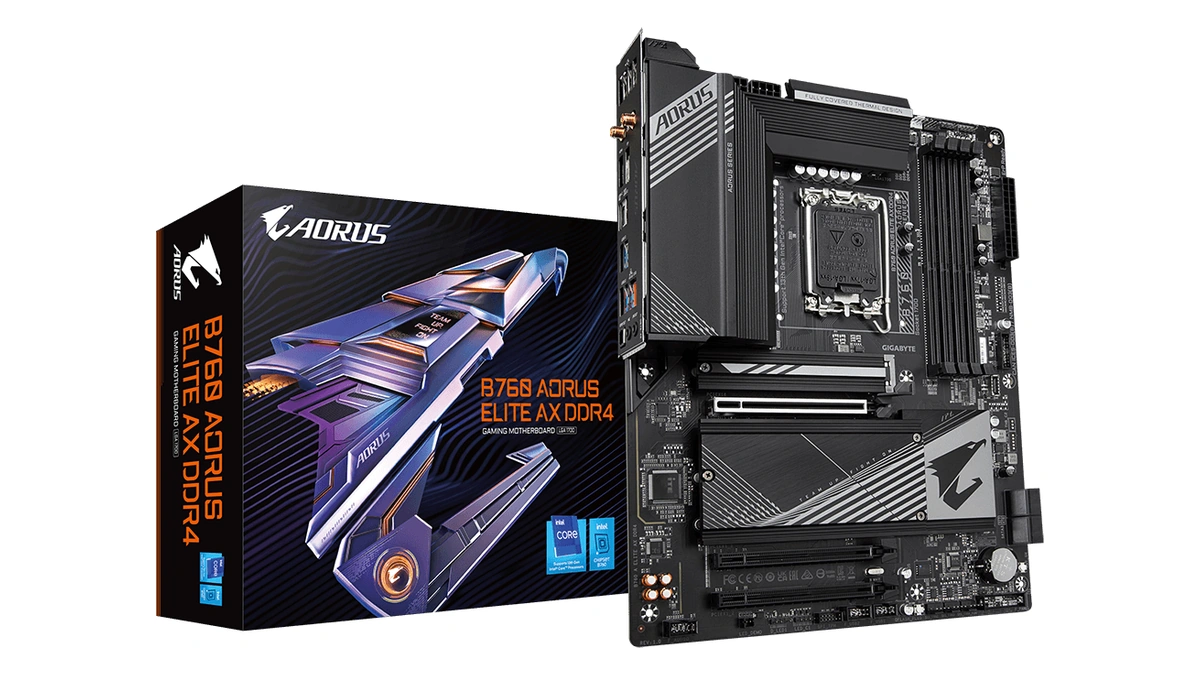
Gigabyte has released BIOS updates for its entire range of Intel B760 and H610 motherboards, preparing the boards for a new set of LGA1700 processors that the company says will arrive in early 2027. Models built for DDR5 memory and for DDR4 are both included.
The upgrade path, as Gigabyte describes it, has three steps: download the BIOS, flash it, then fit the new processor. No board replacement or system rebuild is involved. The company also calls itself the first in the industry to cover every B760 and H610 model, a claim it makes without naming a rival or offering any comparison.
Missing from the announcement is almost everything about the chips themselves. Gigabyte names no processor, gives no core counts or clock speeds, and offers no launch date more precise than early 2027. It also leaves the BIOS version numbers off the page and sends readers to its website for the board-by-board list.
For anyone holding a DDR4 board, the inclusion of those models matters most: Gigabyte says the DDR4 versions qualify too, not only the newer DDR5 boards.
The company also pitches the move to system builders, retailers and channel partners. Its argument is that covering the whole lineup simplifies inventory planning and keeps board stock that is already on shelves relevant until the processors ship. Until then nobody outside the company can confirm the readiness claim, because the chips it depends on are not on sale. Buyers will learn how smoothly a flash-and-swap upgrade goes only once the chips ship.