Every processor in AMD's new client stack clears Microsoft's Copilot+ bar, and that breadth is the actual message of the company's CES 2026 lineup. The Ryzen AI 400 Series pairs Zen 5 CPU cores with a second-generation XDNA 2 neural engine rated at up to 60 TOPS, and AMD confirmed that even the four-core Ryzen AI 5 430 at the bottom of the range ships a 50-TOPS NPU. A year ago that level of on-device AI was a premium feature; AMD is now treating it as table stakes across the whole portfolio.
The consumer parts top out at 12 cores with integrated Radeon 800M graphics, and a commercial Ryzen AI PRO 400 Series mirrors the same silicon while adding AMD's PRO security and fleet-management layer for business laptops. Computing and Graphics chief Jack Huynh cast the generation as moving the AI PC "from early adoption to mainstream utility," which is marketing language, but the SKU table backs the direction: the NPU is no longer reserved for the flagship.
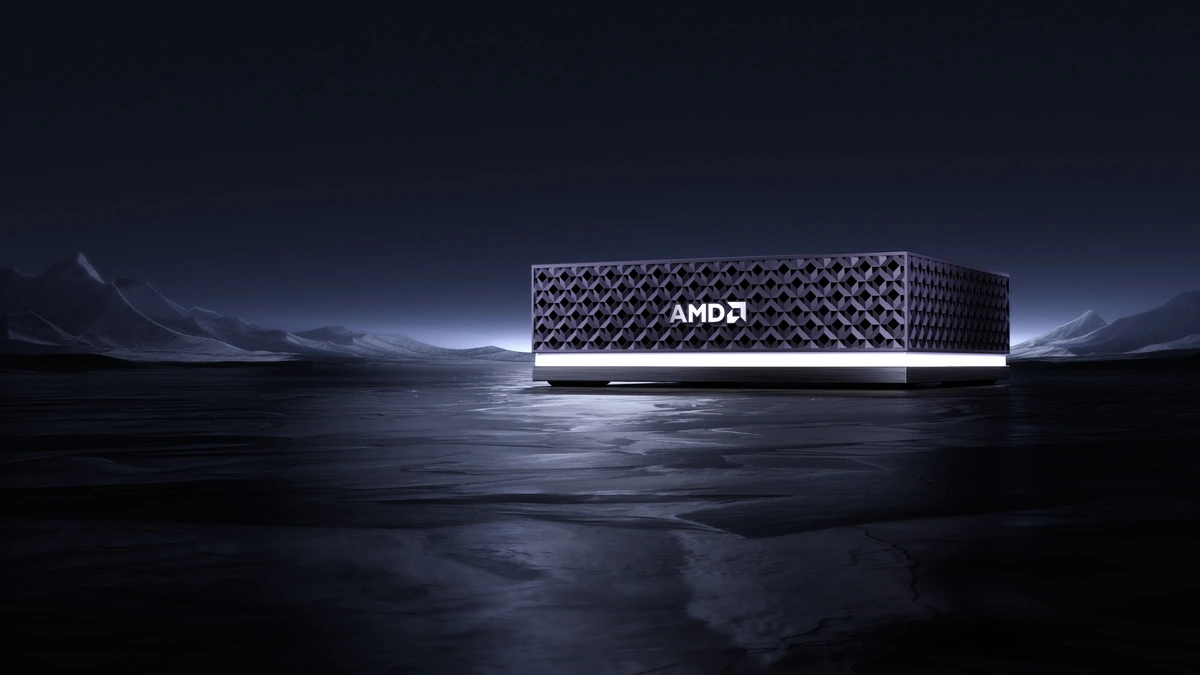
Above the mainstream line, AMD added the Ryzen AI Max+ 392 and Max+ 388, which combine Zen 5 cores with 40 Radeon 8060S graphics compute units and up to 76MB of cache for ultra-thin notebooks and mini-PCs that double as light workstations. Alongside them the company introduced Ryzen AI Halo, its first AMD-branded mini-PC developer platform, aimed at engineers who want to run large models locally instead of renting cloud GPU time.
For gamers, the standout is the Ryzen 7 9850X3D, a Zen 5 part with second-generation 3D V-Cache, eight cores, and a boost clock 400MHz higher than the outgoing 9800X3D it replaces. AMD claims it is the fastest gaming processor available and cites up to 27 percent better gaming performance than Intel's Core Ultra 9 285K. That number, like the rest of the launch, is a vendor figure from AMD's own labs and was not independently verified.
The software half of the announcement matters more than it looks. AMD released ROCm 7.2 with support for the Ryzen AI 400 Series across Windows and Linux, plus integration into ComfyUI, the node-based interface many local-diffusion users already run. AMD's persistent weakness against NVIDIA has never been raw silicon so much as the software stack developers reach for by default, and every step that makes Ryzen NPUs and Radeon GPUs usable inside existing tools chips away at that gap.
Laptops arrive in the first quarter from Acer, ASUS, Dell, HP, GIGABYTE, and Lenovo, with desktops in the second and no pricing disclosed. AMD has assembled a wider, more coherent client story than it has brought to a CES in some time. Whether that translates into share depends less on the 60-TOPS figure than on how many of those design wins ship in volume and how much of the ROCm ecosystem developers actually adopt once the show ends.