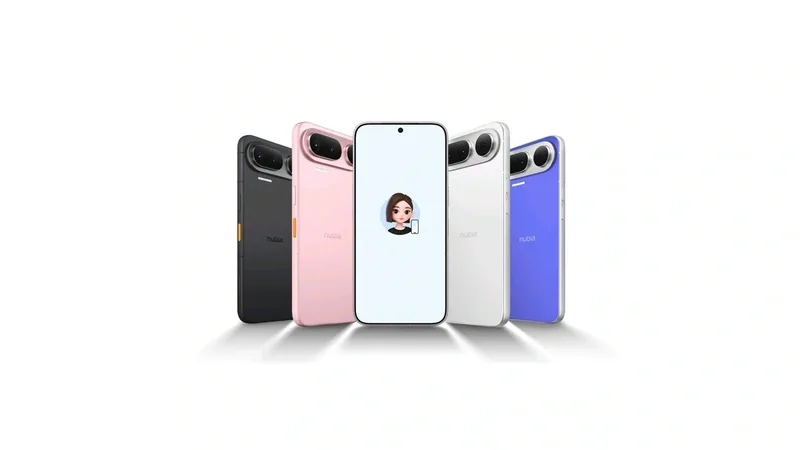

A foldable smartphone is a premium mobile device that uses a flexible display panel to collapse a tablet-scale screen into a pocketable form factor. That mechanical capability, once a prototype novelty, has matured into a verified market category with three credible OEMs competing in North America and shipment growth that outpaces the broader premium smartphone segment. The question for buyers is no longer whether foldables are reliable enough to consider, but which form factor serves their actual workflow.
What Makes a Foldable Smartphone Different
A foldable smartphone achieves something no candy-bar phone can: it scales the display surface without scaling the carry size. The entire category is built around two competing interpretations of that idea, each targeting a different buyer. The iOS vs. Android comparison covers how mobile ecosystems shape software behavior across both form factors.
- Book-fold design
- Opens like a small notebook, revealing a near-tablet canvas. The hinge mechanism runs vertically along the center, splitting a large flexible display into two panels. Suited to power users who need a genuine productivity surface: spreadsheets, document review, multi-window split-screen sessions. The device is noticeably wider than a standard phone when unfolded, and pocketability requires it to stay closed.
- Clamshell design
- Folds in half horizontally, bringing the top and bottom panels together. The hinge mechanism runs across the middle, and a cover screen on the exterior handles notifications and quick interactions without opening the phone. Compact carry is the primary draw. The flexible display is still meaningfully larger than a standard phone screen when unfolded, but the closed footprint is smaller than most flagship candy-bar devices.
Both form factors rely on a multi-layer flexible display stack. The outermost material is a polymer film rather than rigid glass, which gives the screen the physical flexibility needed to bend through repeated open-close cycles. The hinge mechanism engineering underneath that film determines how well crease depth is managed and how long the device holds its mechanical precision. Both form factors also support multi-window multitasking natively, though the larger unfolded canvas of the book-fold design gives that capability more room to operate.
Foldable Smartphone Market Landscape
Foldable smartphones have moved from a niche tier to a measurable slice of the broader premium smartphone segment. North America foldable shipments grew 28% year over year, and Samsung, Motorola, and Google now hold clearly differentiated share positions, according to Counterpoint Research's North America foldables analysis. The OEM breakdown is in the table below. Globally, the category posted 45% year-over-year growth in Q2 (Counterpoint Q2 global tracker), then moderated to 14% YoY in Q3 (Counterpoint Q3 tracker) and 16.7% YoY in Q4 (Counterpoint Q4 analysis). The Q2 spike reflects a heavy launch cycle; sequential shipments remained positive in both subsequent quarters.
| OEM | Form-Factor Specialty | NA Market Share (2025) | 2025 Growth Note |
|---|---|---|---|
| Samsung | Book-fold and clamshell lines | 51% | Largest share; category leader |
| Motorola | Clamshell-first (Razr series) | 44% | Highest OEM growth rate; Razr clamshell line cited as primary driver |
| Book-fold (Pixel Fold line) | 5% | +52% YoY; fastest percentage growth among the three |
The gap between Samsung and Motorola is narrower than it appears: Motorola's 44% share combined with the highest OEM growth rate means the market is becoming less reliant on a single vendor. Google's 5% share is the smallest absolute position but the steepest percentage growth at +52% YoY, suggesting early traction is compounding. These figures cover foldable shipments only. The broader mobile vendor landscape, where Apple holds 32.55% and Samsung 19.11% of total mobile market share, is a different measurement and should not be read as a proxy for foldable category dynamics (see StatCounter mobile vendor market share for the full picture).
How AI Chips Change Smartphone Performance

Foldable smartphones serve different buyer profiles depending on which form factor they use. Both live in the premium smartphone segment, and the cost differential versus flagship candy-bar phones is real. Buyers priced out of the foldable tier will find the budget smartphone comparison under $500 a more relevant starting point. For those evaluating within the foldable category, form factor should drive the shortlist before any other variable.
- Productivity power users: the book-fold design is the stronger choice. The unfolded canvas supports genuine multi-window multitasking with two full-size app windows side by side, and the larger display area handles spreadsheets, document review, and video conferencing at near-tablet scale. The trade-off is bulk: a book-fold device is thicker when folded and wider when open than a clamshell design.
- Compact-carry users: the clamshell design suits buyers who want a physically smaller device when pocketed. The cover screen handles most ambient interactions without opening the phone. The unfolded display is still substantially larger than a standard phone screen, giving the clamshell design an advantage over a candy-bar device for media consumption and reading.
- Android camera enthusiasts: both form factors compete for this profile, but the rigid flagship category still leads on camera hardware optimization. The Android phones for photography comparison covers imaging performance across the broader Android lineup, including non-foldable flagships that often lead on camera scores.
- Enterprise mobile workers: the book-fold design's multi-window multitasking capability and keyboard-pairing support make it the default choice for field workers or travelers who want to minimize device count without sacrificing a near-laptop productivity surface.
Further reading
Frequently Asked Questions
What are the main benefits of a foldable smartphone over a standard phone?
A foldable smartphone delivers a tablet-scale display that collapses to a standard phone footprint, enabling genuine multi-window multitasking without carrying a second device. The unfolded screen is particularly useful for spreadsheets, video calls, and split-screen productivity apps that feel cramped on a standard candy-bar display.
How do AI chips specifically improve foldable smartphone performance?
A dedicated neural processing unit (NPU) in current foldables accelerates on-device tasks such as live camera scene optimization, real-time translation, and adaptive battery throttling without routing data to the cloud. On a foldable larger canvas, this makes AI-assisted multitasking noticeably faster and reduces latency compared to software-only approaches.
How competitive is the North America foldable smartphone market in 2025?
According to Counterpoint Research, North America foldable shipments grew 28% year over year in 2025. Samsung held 51% share, Motorola reached 44% share driven by its Razr foldable lineup and aggressive carrier pricing, and Google reached 5% share with 52% year-over-year growth. Counterpoint characterizes the market as becoming more competitive and less one-company dominated.