An Indicator of Compromise is a forensic artifact that signals a security breach has already occurred, detectable through file hashes, IP addresses, domain queries, registry changes, or network behavior anomalies that match known adversary tradecraft. Security teams have relied on these artifacts for decades to confirm intrusions, block malicious infrastructure, and feed rule-based alerting. The gap in that approach is temporal: by the time an indicator surfaces, the adversary is already present. Threat hunting shifts the clock forward, letting analysts search for attacker behavior before an alert fires.
What Indicator of Compromise Are
Indicator of Compromise are the observable residue of an attack. Each artifact type maps to a different phase of the kill chain, and defenders collect them from endpoint logs, network sensors, and threat intelligence feeds to build detection rules and blocklists.
File hash analysis identifies malicious binaries by their cryptographic signature (MD5, SHA-256, or SHA-1). A confirmed malware sample produces a hash that can be blocklisted across every endpoint in a fleet within minutes. IP address blocklists track command-and-control servers and known malicious hosts; domain reputation scoring extends that coverage to DNS-layer controls. Registry key changes reveal persistence mechanisms, where attackers write run keys or service entries to survive reboots. Anomalous network traffic, including unexpected outbound connections on non-standard ports or high-volume data transfers to unfamiliar destinations, rounds out the artifact set.
The artifact types cluster into three categories:
- Network indicators: malicious IP addresses, suspicious domain lookups, unusual DNS query patterns, and command-and-control beacon intervals
- Host indicators: file hashes of known malware, registry key changes associated with persistence, modified system binaries, and suspicious process parent-child relationships
- Account indicators: impossible-travel login events, privilege escalation sequences, and credential access patterns that diverge from user baselines
The core limitation: every artifact on that list was generated by an attack that already happened. Detection is confirmation, not prevention.
Why IoC-Only Detection Has Coverage Gaps
Indicator of Compromise lose effectiveness against adversaries who rotate infrastructure, operate without malware, or exploit vulnerabilities with no prior signature. Three attacker categories illustrate the structural problem.
Mandiant's M-Trends 2024 report measured global median dwell time at ten days for organizations with mature detection programs, but that figure climbs to over 150 days for organizations relying exclusively on reactive controls. The detection lag between initial access and alert is where damage accumulates: data exfiltration, lateral movement, and credential harvesting all occur in that window.
The specific attack patterns that defeat IoC-only approaches:
- Fileless malware: code executes entirely in memory using PowerShell, WMI, or .NET reflection. No file is written to disk, so file hash analysis returns nothing actionable. Process hollowing and reflective DLL injection follow the same pattern.
- Living-off-the-land (LOTL) attacks: adversaries use native OS binaries such as certutil, mshta, regsvr32, and wmic to stage payloads and execute commands. These binaries have legitimate uses, so signature-based detection produces excessive false positives or misses the activity entirely.
- Zero-day exploits: vulnerabilities with no existing signature produce no file hash match, no IP blocklist hit, and no domain reputation flag. The first IoC is generated only after exploitation has occurred and a researcher submits the sample.
- IoC rotation by APT groups: nation-state and sophisticated criminal actors cycle command-and-control infrastructure on short intervals, sometimes hourly. An IP blocklist updated daily is perpetually behind the rotation cadence.
- Signature evasion: simple modifications to malware, adding null bytes, recompiling with different compilers, or packing with a custom packer, change the hash while preserving functionality. File hash analysis blocks yesterday's binary, not today's variant.
These gaps are structural properties of any detection system that depends on known-bad indicators. The answer is a parallel capability: proactive threat detection that operates on behavior rather than signatures.
How Threat Hunting Differs from IoC Monitoring
Threat hunting is an analyst-driven process where trained practitioners search for adversary tradecraft inside telemetry, using a hunt hypothesis to guide the query rather than waiting for a rule to fire. The MITRE ATT&CK framework provides the structured taxonomy of adversary behaviors that hunters use as their starting vocabulary.
Behavioral analytics replaces signature matching as the detection primitive. Instead of asking "does this file hash appear on a blocklist?", the hunter asks "does this sequence of process executions match a pattern associated with credential dumping under ATT&CK Technique T1003?" The query is hypothesis-driven detection rather than rule-triggered alerting.
| Dimension | IoC Monitoring | Threat Hunting |
|---|---|---|
| Trigger | Known-bad artifact match | Analyst-formulated hypothesis |
| Detection posture | Reactive (alert after artifact appears) | Proactive (search before alert fires) |
| Data scope | Structured event logs, blocklist lookups | Raw telemetry, process trees, network flows, memory snapshots |
| Required skill level | Tier 1 analyst (rule tuning, triage) | Tier 2-3 analyst (TTP knowledge, query authoring, kill chain analysis) |
| Mean time to detect | Depends on IoC publication lag plus dwell time | Bounded by hunt cadence and hypothesis quality |
The MITRE ATT&CK framework's taxonomy of tactics, techniques, and sub-techniques gives hunters a shared language for hypothesis construction. A team that identifies lateral movement via pass-the-hash (T1550.002) as a plausible threat can build a hunt directly from that technique ID, pulling the recommended data sources and detection logic from the framework's technique pages.
Building the Threat Hunting Workflow: Four Steps
Threat hunting requires a repeatable procedural structure. Without it, hunts become ad hoc and findings cannot be operationalized as permanent detection rules. The following four steps align with the detection process model described in NIST SP 800-61r3, which frames incident handling as a continuous cycle of preparation, detection, analysis, and post-incident activity.
- Establish a hunt hypothesis grounded in MITRE ATT&CK TTPs. A hunt hypothesis is a falsifiable statement about adversary behavior: "Attackers targeting our environment may use scheduled tasks for persistence (T1053.005) because our Windows fleet has a broad attack surface and this technique is prevalent in ransomware operator playbooks." The hypothesis must name the technique, the data source that can surface it, and the expected observable. Hypothesis-driven detection starts here, not at the query layer. Sources for hypothesis generation include threat intelligence feeds from vendors such as Recorded Future or Mandiant Advantage, sector-specific ISAC reporting, and the MITRE ATT&CK framework's Groups and Software pages that document known adversary tool sets.
- Collect and normalize telemetry from SIEM and EDR sources. SIEM telemetry aggregates event data across network devices, servers, and authentication systems into a centralized, queryable store. EDR telemetry adds process-level visibility: parent-child process relationships, command-line arguments, file system writes, and network connections at the host layer. Before executing a hunt, analysts confirm that the relevant telemetry exists and is normalized. A hunt for lateral movement via SMB (T1021.002) requires Windows Security Event 4624 (logon success) and 4648 (explicit credential logon) at minimum. If those events are not flowing into SIEM telemetry, the hunt cannot proceed. Data completeness is a prerequisite, not an assumption.
- Execute the hunt using behavioral analytics queries. Behavioral analytics queries look for patterns rather than signatures. A query for credential-spraying activity might search for accounts authenticating to more than five unique hosts within a 30-minute window outside business hours. SIEM platforms with UEBA (User and Entity Behavior Analytics) capabilities can baseline normal access patterns and surface statistical deviations without requiring a manually written rule for every variant. Sigma rules provide a portable query format that translates detection logic across SIEM platforms, reducing the effort of maintaining separate rule sets for Splunk, Microsoft Sentinel, and Elastic.
- Document findings and convert confirmed threats into detection rules. Each completed hunt produces one of three outcomes: confirmed threat activity (escalate as incident), unconfirmed but suspicious pattern (flag for follow-up hunt), or no evidence of the hypothesized technique (document as negative finding and update the data coverage inventory). Confirmed threats become the input for new detection rules in the SIEM or EDR. The hunt hypothesis, query logic, and findings are recorded in a hunt register that feeds back into the next hypothesis cycle. This documentation loop is what converts proactive threat detection into institutional knowledge rather than one-time analyst effort.
Tools That Bridge IoC Detection and Threat-hunting
Indicator of Compromise triage and hypothesis-driven detection share a common tool foundation, though each discipline draws on different capabilities within those platforms. Selecting tools with broad telemetry coverage and flexible query interfaces matters more than selecting tools marketed explicitly as hunting program solutions.
- SIEM (Security Information and Event Management): aggregates logs from network devices, endpoints, identity platforms, and cloud workloads into a central store with rule-based alerting and historical search. SIEM telemetry is the primary substrate for hunting practice queries. Platforms in this category include Splunk Enterprise Security, Microsoft Sentinel, and IBM QRadar. For a detailed comparison of SIEM capabilities alongside orchestration platforms, see SIEM vs SOAR: Understanding Threat Detection Systems.
- EDR (Endpoint Detection and Response): provides process-level telemetry, memory inspection, and behavioral detection at the host layer. EDR platforms such as CrowdStrike Falcon, Microsoft Defender for Endpoint, and SentinelOne generate the granular process-tree data that makes complex behavioral queries possible. Without EDR coverage, lateral movement and credential access techniques that leave no network-layer trace are invisible to hunters.
- TIP (Threat Intelligence Platform): curates and normalizes threat intelligence feeds from commercial providers, open-source repositories (MISP, OpenCTI), and government feeds (CISA, MS-ISAC). A TIP maps ingested intelligence to MITRE ATT&CK framework technique IDs, making it directly actionable as hypothesis input. For a full breakdown of threat intelligence use cases, see Threat Intelligence Tools Use Cases.
- UEBA (User and Entity Behavior Analytics): establishes statistical baselines for user and system behavior and surfaces deviations that exceed those baselines by a statistically significant margin. UEBA operationalizes behavioral analytics: it automates the baseline comparison that a human analyst would otherwise do manually, scaling anomalous access detection across thousands of accounts.
- Sigma rules: an open-source, vendor-neutral format for expressing detection logic as YAML signatures that compile to query syntax for any supported SIEM. The community-maintained Sigma repository (github.com/SigmaHQ/sigma) covers most ATT&CK techniques, giving teams a starting point for hunt queries without authoring from scratch. YARA rules serve an equivalent function for file-based and memory-based detection, scanning process memory and file system artifacts against pattern signatures.
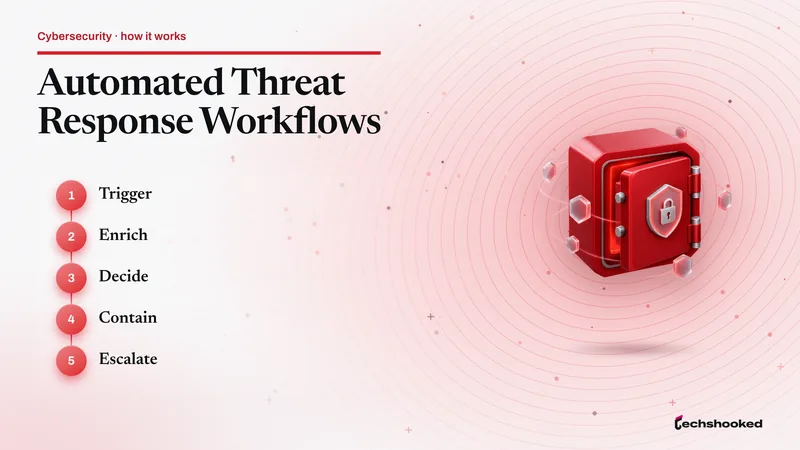
Staffing considerations for operating this tool stack are covered in Building A SOC Team: Roles and Tools. Automating the response actions that follow a confirmed hunt finding is addressed in Implement Automated Threat Response Workflows.
Measuring Detection Maturity Progress
Indicator of Compromise triage is a prerequisite skill, not a ceiling. Security operations centers that want to measure their progression toward proactive threat detection need a maturity model that maps observable capabilities to defined levels. The SANS Hunting Maturity Model (HMM), developed by David Bianco at SANS Institute, provides that scaffold in four levels.
- Level 0 (Initial): Detection relies exclusively on automated alerts from SIEM rules and IoC blocklists. No hypothesis-driven hunting activity occurs. Mean time to detect is bounded by alert latency. The security operations center is reactive by design. Organizations at this level should focus first on telemetry coverage and SIEM tuning before attempting hunts.
- Level 1 (Minimal): Analysts conduct occasional, unstructured hunts based on threat intelligence feeds or analyst intuition. Hunt findings are not systematically documented or converted to detection rules. Proactive threat detection is intermittent and person-dependent. Detection maturity at this level is fragile because it does not survive analyst turnover.
- Level 2 (Procedural): The security operations center runs hunts on a defined cadence (weekly or biweekly) using documented procedures and hunt templates grounded in ATT&CK technique coverage. Findings feed a hunt register and convert confirmed threats into permanent SIEM rules. KPI baselines such as mean time to detect and hunt coverage percentage are tracked against a defined baseline. Detection maturity is measurable and improving.
- Level 3 (Innovative): Analysts develop novel hunt techniques beyond documented ATT&CK coverage, using behavior analytics, machine learning anomaly detection, and custom adversary tradecraft modeling. The team contributes back to community resources such as Sigma rules repositories and ATT&CK technique updates. Mean time to detect for covered technique categories drops below the publication lag for external TI feeds.
For teams integrating proactive hunting into a broader zero-trust architecture, see How To Implement A Zero Trust Network Architecture.
Further reading
- NIST SP 800-61r3: Incident Response Recommendations and Considerations for Cybersecurity Risk Management
- ATT&CK framework: Adversarial Tactics, Techniques, and Common Knowledge
- SANS Institute: The Hunting Maturity Model (David Bianco)
- Mandiant M-Trends 2024 Report: Attacker Dwell Time Statistics
- Best CrowdStrike Alternatives For Endpoint Detection: SentinelOne, Defender, Sophos, Elastic, Trellix
- Top Identity Management Tools For Privacy: Okta, Entra ID, PingOne, OneLogin Compared
- What Is Digital Identity? Managing Privacy in a Surveillance Economy
- CISA BOD 26-04 tightened federal patch deadlines
See also NIST SP 800-150 Threat Sharing.
Frequently Asked Questions
What are IoCs in cybersecurity?
Compromise indicators are observable artifacts, such as file hashes, malicious IP addresses, and unexpected registry changes, that confirm a security breach has occurred or is in progress. They are generated after an attack and are used to build detection rules, blocklists, and incident timelines. Their limitation is that they describe events that have already happened.
How do you transition from breach indicators to hunting initiative?
The transition requires three organizational prerequisites: normalized telemetry from SIEM and EDR sources, analyst familiarity with MITRE ATT&CK TTPs, and a documented hypothesis framework before the first hunt begins. Teams that skip telemetry normalization will run hunts against incomplete data and generate false negatives. Analyst training on adversary tradecraft, specifically on how APT groups use living-off-the-land techniques and legitimate tools, is the skill prerequisite that most organizations underestimate.
What questions should be asked during hunting team?
Effective hunt questions are grounded in adversary behavior: which TTPs are active in the sector, what data sources can surface those behaviors, and what baseline deviations would confirm or refute the hunt theory. A question like "are there accounts accessing domain controllers at 3am that have no prior history of doing so?" is operationalizable. A question like "are there threats in our network?" is not. Hunt question quality determines whether the hunt produces actionable findings or inconclusive noise.