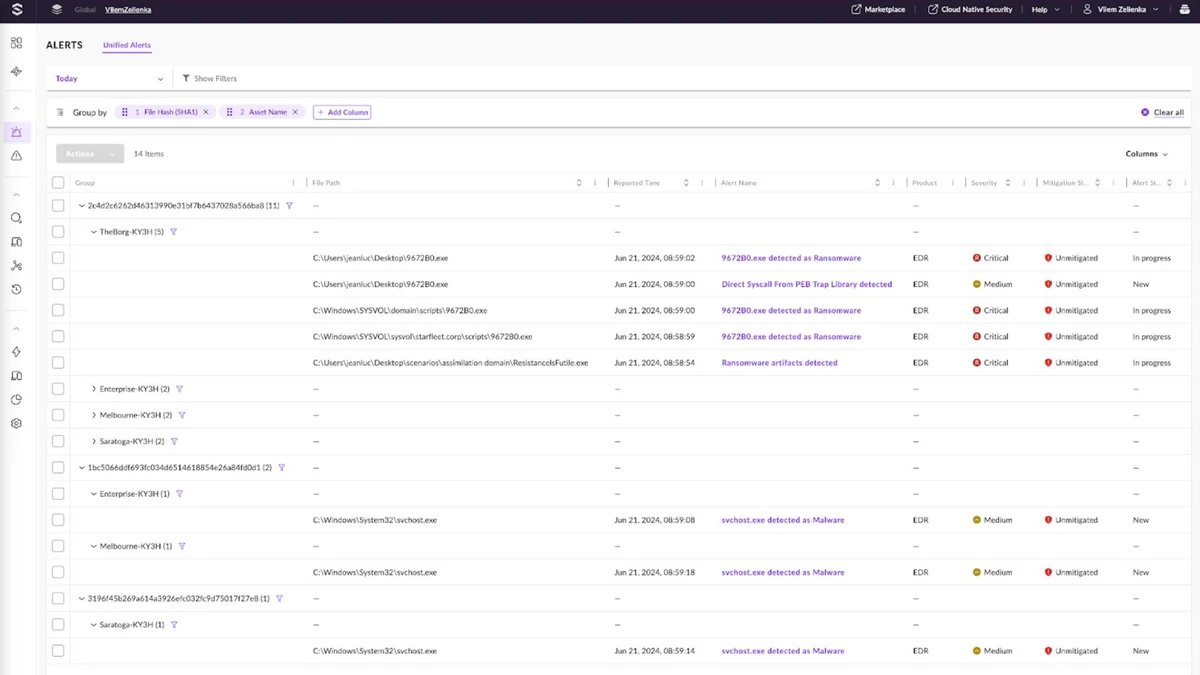
Endpoint detection and response (EDR) is a cybersecurity category that continuously monitors endpoint telemetry, correlates behavioral signals against known attack patterns, and provides automated or analyst-guided containment of active threats.
For most of the past decade, CrowdStrike dominated that category. The July 2024 Falcon sensor content-update incident, which resulted in a Windows system crash affecting approximately 8.5 million devices according to CrowdStrike's preliminary post-incident report, forced security teams to revisit procurement assumptions they had treated as settled. Vendor resilience, kernel-sensor architecture risk, and XDR convergence strategy moved to the top of evaluation checklists.
This comparison profiles five alternatives, weighted by detection fidelity, deployment architecture, licensing economics, and operational fit for teams across the SOC maturity spectrum.
What Endpoint Detection and Response Does
Endpoint detection and response operates across three functional layers that together distinguish it from legacy signature-based antivirus. The collection layer deploys an agent on each managed device to stream process events, file system changes, network connection attempts, and registry modifications as continuous endpoint telemetry. The detection layer runs behavioral threat detection engines against that telemetry, matching process chains and privilege-escalation sequences to MITRE ATT&CK technique identifiers rather than waiting for a file-hash match against a known-malware database. Behavioral detection matters most against zero-day attacks, which signature-based tools miss before a patch exists. When the engine identifies an indicator of compromise, the response layer can isolate the host, kill the offending process, or initiate a rollback, depending on platform capability and policy configuration.
Threat hunting sits on top of this architecture. Analysts use the telemetry record to pivot across timeline data, query process trees, and surface low-and-slow attack patterns that automated rules miss. Teams with mature threat hunting programs extract the most value from EDR platforms; teams without them should factor managed detection and response (MDR) availability heavily into vendor selection.
CrowdStrike became the market reference point because it combined a lightweight kernel-mode agent with cloud-scale behavioral analytics and a strong detection track record in independent evaluations. The July 2024 incident did not change CrowdStrike's detection quality, but it introduced kernel-sensor stability as a selection criterion that buyers had previously treated as a commodity assumption. For a broader view of how SOC teams structure around these tools, see Building A SOC Team: Roles and Tools.
Why Teams Evaluate CrowdStrike Alternatives
CrowdStrike Falcon retains strong detection performance, but three procurement pressures are driving systematic alternative evaluations across mid-market and enterprise security teams.
- Behavioral telemetry from kernel sensor
- Threat-graph correlation across endpoints
- Containment and rollback actions on detection
- MITRE ATT&CK mapping per alert
The first is kernel-mode sensor risk. CrowdStrike Falcon's sensor operates in kernel space to achieve deep visibility, and the July 2024 content update demonstrated how a faulty channel file pushed to a kernel-mode sensor can propagate a boot failure across an entire fleet in hours. NIST SP 800-53 Rev 5 supply-chain risk management controls SR-3 and SR-6 provide the governance frame for evaluating vendor software-update risk, and procurement teams under those controls now require explicit vendor documentation of update validation processes and rollback mechanisms.
The second pressure is licensing cost. Per-endpoint fees compound at scale; a 10,000-device fleet at mid-market EDR pricing adds six figures annually before module add-ons. Organizations running attack surface reduction programs that extend to unmanaged devices, OT endpoints, or cloud workloads find that per-endpoint pricing models scale poorly against their actual estate.
The third is XDR convergence strategy. Buyers consolidating endpoint, identity, cloud, and network telemetry onto a single data plane prefer vendors with native lateral movement detection across those signal sources, rather than CrowdStrike's module-add approach. How To Implement A Zero-Trust Network Architecture covers how identity and network segmentation signals integrate into that consolidated view.
Top CrowdStrike Alternatives Compared
Each profile below covers detection approach, agent architecture, MITRE ATT&CK coverage performance, MDR availability, and pricing model. The comparison table following the profiles summarizes decision-relevant attributes across all six vendors including CrowdStrike as the baseline.
SentinelOne Singularity
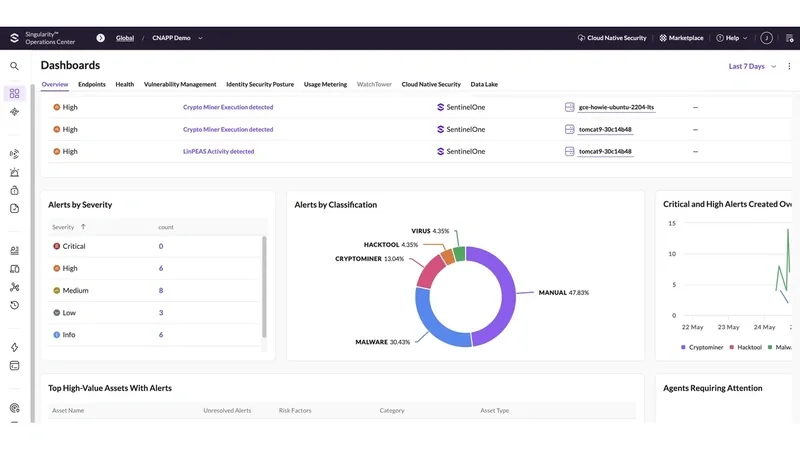
SentinelOne Singularity leads with autonomous AI response: the platform can roll back endpoint changes caused by malware without requiring analyst intervention, executing remediation through a user-mode agent rather than a kernel-mode sensor. That architectural choice reduces the blast radius of a faulty sensor update while preserving deep behavioral threat detection through user-space hooks and eBPF-based telemetry on Linux.
In MITRE ATT&CK Evaluations, SentinelOne Singularity has posted top-tier analytic detection scores across multiple adversary simulation rounds including APT29 and the Carbanak and FIN7 tracks, with high rates of technique-level detections rather than tactic-level alerts. The distinction matters operationally: technique-level detections reduce analyst triage time because the platform labels the specific ATT&CK sub-technique rather than returning a generic alert category.
The Singularity XDR data plane ingests cloud workload telemetry, identity signals, and network traffic alongside endpoint data, supporting cross-source lateral movement detection without requiring a separate SIEM layer. Pricing is per endpoint; enterprise volume tiers are available. Best fit: organizations wanting maximum detection autonomy, mixed OS estates, or an existing investment in cloud workload security that needs unified visibility. For cloud security posture context alongside EDR, see Best CSPM Tools For AWS.
Microsoft Defender for Endpoint
Microsoft Defender for Endpoint benefits from OS-native integration on Windows: the sensor operates as part of the OS security subsystem, which reduces the kernel-sensor deployment risk profile on Windows devices because Microsoft controls both the sensor and the OS update pipeline. macOS and Linux coverage is narrower than CrowdStrike or SentinelOne, making it a weaker choice for mixed estates where non-Windows endpoints carry significant risk.
The licensing model is per user rather than per endpoint, bundled into Microsoft 365 E5 at no marginal EDR cost for organizations already on that tier. For Microsoft-heavy environments, this substantially changes the total cost of ownership calculation compared to per-endpoint EDR vendors.
Native XDR integration runs through Microsoft Defender XDR, which correlates endpoint telemetry with identity signals from Entra ID, email threats from Defender for Office 365, and cloud app signals from Defender for Cloud Apps. MITRE ATT&CK coverage in evaluations is strong on Windows-specific technique tracks. Best fit: organizations deeply invested in the Microsoft 365 stack, Windows-dominant device estates, or teams managing security spend against existing M365 E5 commitments.
Sophos Intercept X with MDR
Sophos Intercept X differentiates on two detection capabilities aimed directly at mid-market threats: CryptoGuard, which intercepts ransomware encryption behavior at the file system layer before significant data loss occurs, and a deep-learning malware detection engine trained on file attributes rather than signatures. Together these reduce dependency on behavioral threat detection rule updates for commodity ransomware variants. See also: Encryption.
The MDR tier is the most significant differentiator for resource-constrained buyers. Sophos managed detection and response provides 24/7 analyst coverage, threat hunting, and incident response through Sophos's own SOC, eliminating the need for an in-house team. Per-device pricing with annual commitment makes cost forecasting predictable. Best fit: mid-market organizations without a dedicated security analyst team, or those that want to transfer threat hunting and response operations to a managed provider without switching endpoint agents.
Elastic Security
Elastic Security converges SIEM and EDR in one stack, using the same Elasticsearch data layer for both endpoint telemetry ingestion and security event correlation. Detection rules are open source, published in the Elastic Detection Rules repository on GitHub, allowing security engineers to audit, modify, and extend coverage without waiting on vendor release cycles.
The Fleet agent supports agentless telemetry ingestion paths for environments where installing a full endpoint agent is operationally constrained. Pricing is based on data ingest volume rather than endpoint count, which benefits organizations with high endpoint counts but moderate telemetry volumes, and which scales predictably as the estate grows. MITRE ATT&CK coverage maps directly in the detection rule library, with each rule tagged to a specific ATT&CK technique ID and indicator of compromise type for analyst triage context. Best fit: engineering-driven security teams already running Elasticsearch, organizations that require open and auditable detection logic, or buyers whose licensing economics favor ingest-based pricing over per-endpoint fees.
Trellix XDR
Trellix, formed from the merger of McAfee Enterprise and FireEye, operates the Helix XDR platform, which ingests endpoint, email, and network signals into a unified detection layer. The MV-Vision AI engine drives behavioral threat detection across those signal sources, with documented MITRE ATT&CK coverage across ransomware simulation and APT technique tracks that draws on FireEye's historical threat intelligence corpus.
A mid-market pricing tier is available alongside the enterprise tier, making Trellix accessible to organizations below the typical FireEye spend threshold. Managed detection and response services complement the platform for buyers that need analyst coverage. Best fit: enterprise buyers with complex multi-vendor security environments that require broad ATT&CK technique coverage and email-to-endpoint correlation, or organizations that already carry Trellix licenses through McAfee Enterprise contracts.
| Vendor | Detection Model | Agent Type | XDR Native | MDR Available | Pricing Basis | Best Fit |
|---|---|---|---|---|---|---|
| CrowdStrike Falcon (baseline) | AI behavioral + signature | Kernel-mode | Yes (Falcon platform modules) | Yes (Falcon Complete) | Per endpoint | Enterprise, high detection fidelity priority |
| SentinelOne Singularity | Autonomous AI | User-mode + eBPF | Yes (Singularity XDR) | Yes (Vigilance) | Per endpoint | Mixed OS, autonomous response, XDR consolidation |
| Microsoft Defender for Endpoint | AI behavioral + OS-native | OS-integrated (Windows) | Yes (Defender XDR) | Yes (via partners) | Per user (M365 E5) | Microsoft-heavy shops, Windows-dominant estates |
| Sophos Intercept X | Deep learning + CryptoGuard | User-mode | Partial | Yes (Sophos MDR) | Per device | Mid-market, limited SOC capacity |
| Elastic Security | Open detection rules + ML | Fleet agent / agentless | Yes (SIEM-EDR converged) | No native | Data ingest volume | Engineering teams, Elastic stack users |
| Trellix XDR | MV-Vision AI behavioral | Kernel-mode | Yes (Helix XDR) | Yes | Per endpoint / enterprise tier | Enterprise, multi-vendor complexity, APT coverage |
How to Choose the Right EDR Platform
Endpoint detection and response procurement decisions hinge on five criteria that interact differently depending on org size, OS estate, and SOC maturity. Work through them in order; the first criterion that produces a clear answer usually narrows the field to two vendors at most.
- Per-endpoint vs per-user licensing breakpoints
- Kernel-mode crash blast-radius history
- Managed detection availability and SLA
- Cloud-native vs on-prem console support
- SOC analyst capacity. Teams without dedicated threat hunting analysts should weight managed detection and response availability above detection architecture. Sophos Intercept X with MDR and Trellix's managed services tier both transfer hunting and response operations to a vendor SOC. Microsoft Defender for Endpoint has partner-delivered MDR options. SentinelOne Vigilance and CrowdStrike Falcon Complete are available for teams that want MDR without changing their primary platform.
- OS estate composition. Windows-dominant organizations running M365 E5 licensing get Microsoft Defender for Endpoint at marginal cost. Mixed estates with significant macOS and Linux coverage need cross-platform agent parity, which SentinelOne and CrowdStrike Falcon both provide. Elastic Security's Fleet agent supports broad OS coverage for engineering-driven teams comfortable managing detection rule libraries.
- XDR convergence roadmap. Teams planning to consolidate endpoint, cloud, and identity telemetry should prefer vendors with a native multi-signal data plane. Singularity XDR and Microsoft Defender XDR both aggregate those signals natively. Extended detection and response consolidation reduces the number of data pipelines and correlation gaps across the security stack.
- Kernel-sensor risk tolerance. NIST SP 800-53 Rev 5 SR-3 and SR-6 controls require organizations to evaluate vendor software-update risk and establish update-monitoring mechanisms. Buyers applying those controls should request vendor documentation of update validation procedures, staged rollout processes, and rollback capability. SentinelOne's user-mode agent architecture presents a lower kernel-mode sensor stability risk than kernel-resident agents. Microsoft Defender for Endpoint's OS-native approach on Windows ties update risk to Microsoft's own patch cycle.
- Licensing model fit. Per-endpoint pricing scales linearly with device count, while per-user pricing scales with headcount. At high BYOD ratios, where users carry multiple devices, per-user pricing from Defender for Endpoint typically costs less than per-endpoint fees from SentinelOne or CrowdStrike. Elastic Security's ingest-based model suits environments with high device counts and moderate telemetry volumes. Run the math against your actual estate before shortlisting.
After narrowing to two or three candidates, run proof-of-concept evaluations using the MITRE ATT&CK Evaluations methodology. Replicate the adversary simulation scenarios against your own environment to get detection quality data that reflects your OS mix and threat model rather than a vendor-controlled lab. ATT&CK coverage scores from public evaluation rounds give baseline signal, but environment-specific PoC results are the highest-confidence procurement input available. For password and identity controls that complement EDR in an access governance program, see Best Password Managers For Business Comparison.
Endpoint Security in the Broader Security Stack
Endpoint detection and response generates the raw telemetry that feeds detection and response workflows across the entire security stack. The platform itself handles host-level containment, but the behavioral threat detection signals it produces become more powerful when correlated with adjacent data sources.
- Define ATT&CK technique coverage targets for your threat model
- Score vendors against the ATT&CK Evaluations latest round
- Run a 30-day pilot on 1-5% of fleet
- Measure mean-time-to-detect and false-positive ratio
- Sign multi-year only after kernel-update test
SIEM and SOAR platforms ingest agent telemetry alongside network, identity, and cloud log streams to build cross-domain correlation rules that no single-source tool can match. The integration architecture matters: an EDR platform that exports raw events via API allows broader correlation than one that only surfaces pre-packaged alerts. See SIEM vs SOAR: Understanding Threat Detection Systems for how those layers divide detection and response responsibilities.
Identity signals from IAM platforms combine with sensor telemetry in extended detection and response architectures to enable lateral movement detection across authentication boundaries, not just network segments. When an attacker moves from a compromised endpoint to a privileged identity and then to a cloud service, EDR-only tools miss the latter two hops. XDR data planes that correlate all three signal sources close that gap. SaaS application security posture monitoring adds another layer; see How To Secure SaaS Applications At Scale for that integration context.
Attack surface reduction capabilities within EDR platforms, such as application control, exploit mitigation, and device compliance enforcement, reduce the number of valid attack paths before a threat reaches the detection layer. NIST Cybersecurity Framework 2.0 anchors continuous endpoint monitoring under the Detect function, with the Govern function establishing the vendor-resilience evaluation criteria that supply-chain risk management controls like SR-3 and SR-6 operationalize. Treating attack surface reduction and continuous detection as separate programs misses the operational dependency between them: a well-hardened endpoint generates less alert volume and produces higher-fidelity signals.
Further reading
Frequently Asked Questions
What are the top alternatives to CrowdStrike?
The SentinelOne platform, Microsoft Defender, Sophos Intercept X, Elastic Security, and Trellix are the leading alternatives for endpoint detection and response. SentinelOne matches CrowdStrike most closely on AI behavioral detection quality and MITRE ATT&CK evaluation scores. MDE is cost-effective for organizations already licensed on Microsoft 365 E5. Sophos Intercept X suits mid-market teams that need managed detection and response without building an in-house SOC. Elastic Security fits engineering-driven organizations that want open detection rules and SIEM-EDR convergence. Trellix serves enterprise buyers with complex multi-vendor environments requiring broad ATT&CK technique coverage.
How does SentinelOne compare to CrowdStrike?
Singularity XDR differentiates from CrowdStrike primarily through autonomous AI response: the platform rolls back endpoint changes caused by malware without analyst intervention, a capability CrowdStrike Falcon requires manual workflow to replicate. In MITRE ATT&CK Evaluations, both vendors rank at the top of the field for analytic detection coverage, though specific round results vary by adversary simulation. SentinelOne's user-mode agent architecture presents a lower kernel sensor stability risk profile than CrowdStrike's kernel-resident Falcon sensor, a factor that became operationally significant after the July 2024 content-update incident. Pricing is comparable on a per-endpoint basis at mid-market scale. See the NIST National Vulnerability Database for CVE exposure data relevant to endpoint vulnerability assessment during vendor evaluation.
What should I consider when choosing an endpoint detection platform?
Five criteria dominate mid-market EDR procurement: SOC analyst capacity (teams without dedicated hunters should prioritize managed detection and response availability), OS estate composition (Windows-heavy shops access The Defender platform at low marginal cost under M365 E5), XDR convergence strategy (prefer vendors with a native multi-signal data plane for extended detection and response consolidation), kernel-level sensor risk tolerance (NIST SP 800-53 Rev 5 SR-3 and SR-6 controls provide the governance frame for vendor software-update risk evaluation), and licensing model fit (per-endpoint pricing scales with device count; per-user pricing scales with headcount, and the two diverge at high BYOD ratios). Run proof-of-concept tests using the MITRE ATT&CK Evaluations methodology for an objective detection quality benchmark before committing to a contract.