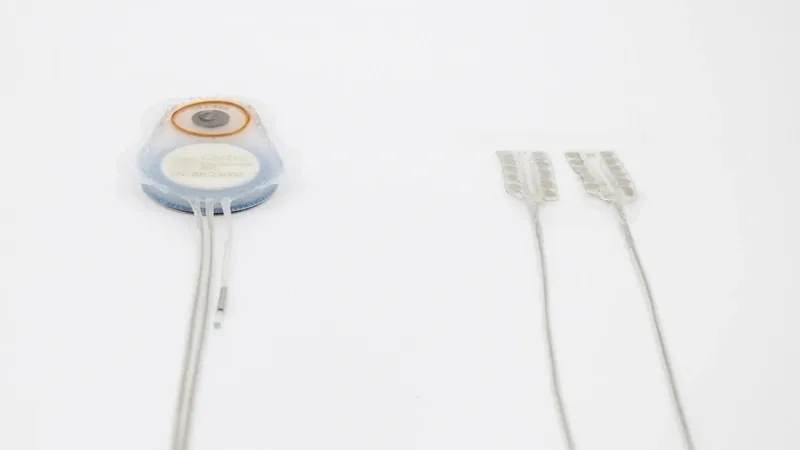
A brain-computer interface is a system that records brain activity and translates it into commands for a computer, phone or other device. The term covers two very different families of hardware. One is the implant: electrodes placed in or on the brain, tested so far in small clinical studies of people with paralysis and, for long-term use, still classed as investigational. The other is the headset or headband that reads electrical activity through the scalp and is sold for focus, meditation and sleep. Both decode neural data, but they differ in risk, regulation, cost and what they can do for the person using them.
What a Brain-Computer Interface Does
A brain-computer interface lets a person control a device with brain activity instead of muscles. Electrodes record signals from the brain, software decodes them into an intended action, and the result appears as cursor movement, typed text, a synthesized voice or a robotic arm. Implants are tested in people with paralysis; EEG headbands are sold for focus and sleep.
Every system runs the same basic loop, whatever sits on the sensing end. The field has no settled vocabulary yet; the IEEE Standards Association still lists IEEE P2731 as an active draft for a unified terminology and conceptual reference framework, because, as its project description puts it, ambiguous references hinder cross-sector innovation. The functional chain is easier to agree on than the names:
- Record (signal acquisition). Electrodes pick up electrical activity from neurons, either through the skull, from the brain surface, from inside a blood vessel or from inside the cortex itself.
- Decode (feature extraction and translation). Software, typically a model trained on the user's own recordings, maps patterns in that activity to an intended action such as moving a cursor or forming a word.
- Act (device output). The decoded intent drives an output: a pointer on a screen, a synthesized voice, a robotic arm or a switch input on a tablet.
- Feed back. The user sees or hears the result and corrects course in real time, which is what makes the system closed-loop.
The implants in clinical trials listen mainly to the motor cortex, the strip of brain that plans movement. Neuralink describes its Telepathy product as recording from the regions that control the hands and arms and converting attempted movement into digital commands, bypassing damaged neural pathways. Participants start by trying to move their hand; within minutes, the company says, many forget the hand and simply aim.
How Brain-Computer Interfaces Read Intent
A brain-computer interface is only as good as the signal it starts with, and distance from the neurons is the main variable. As a rule of thumb, the closer the electrode sits to individual cells, the more detailed the signal and the bigger the procedure to place it. The devices in clinical use and on sale are usually sorted from non-invasive to invasive, across four placements:
- Non-invasive, scalp EEG (electroencephalography): dry or gel electrodes on the head pick up the summed activity of millions of neurons, blurred by bone and skin. Consumer bands such as the Muse S Athena pair EEG with fNIRS, an optical blood-flow sensor, plus a PPG sensor and an accelerometer.
- Partially invasive, surface arrays (ECoG): thin electrode arrays laid on the brain surface, under the skull, read activity without bone and scalp in the way.
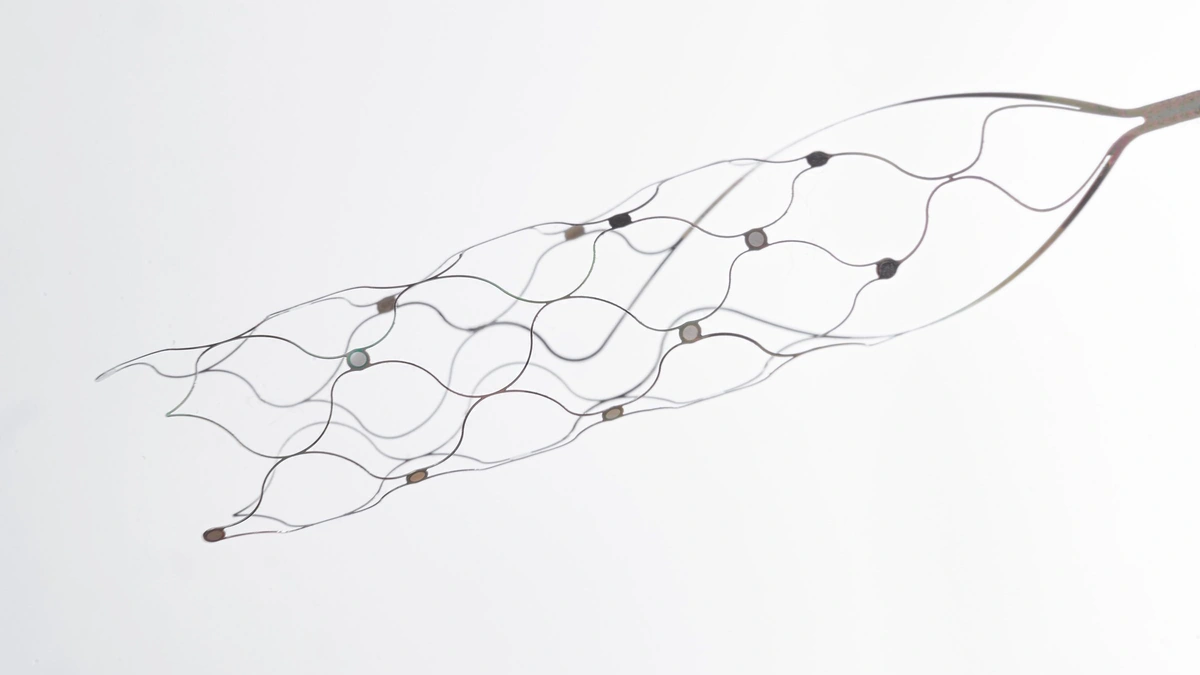
- Endovascular sensors: an electrode scaffold delivered through the jugular vein comes to rest in a blood vessel inside the brain, where it senses the sensorimotor cortex, with no opening of the skull.
- Invasive, intracortical electrodes: a microelectrode array or flexible threads penetrate the cortex and can record the firing of individual neurons during an attempted movement, the highest-resolution option.
Researchers score control with an information transfer rate in bits per second, which rewards both speed and accuracy on a target grid. Neuralink puts an able-bodied person using a mouse at about 8 to 10 bits per second and says several of its participants have reached or exceeded that range. The company publishes a browser version of the grid task, Webgrid, so anyone can measure their own information transfer rate.
Implants, Endovascular Devices and Headsets
The brain-computer interface market splits along the placements above, and each leading company has bet on one. The table gives one named example per approach, in the companies' own terms:
| Approach | Example | How it is placed | Status |
|---|---|---|---|
| Intracortical threads | Neuralink Telepathy | Wireless implant; threads inserted by a surgical robot | PRIME, CAN-PRIME, GB-PRIME and VOICE trials |
| Intracortical array | Paradromics Connexus | High-density array with a transceiver in the chest | Connect-One early feasibility study |
| Endovascular | Synchron Stentrode | Guided through a blood vessel like a stent | Investigational; INTENT study |
| Surface array | Precision Neuroscience array | Electrode array on the brain surface | FDA cleared for implants of up to 30 days |
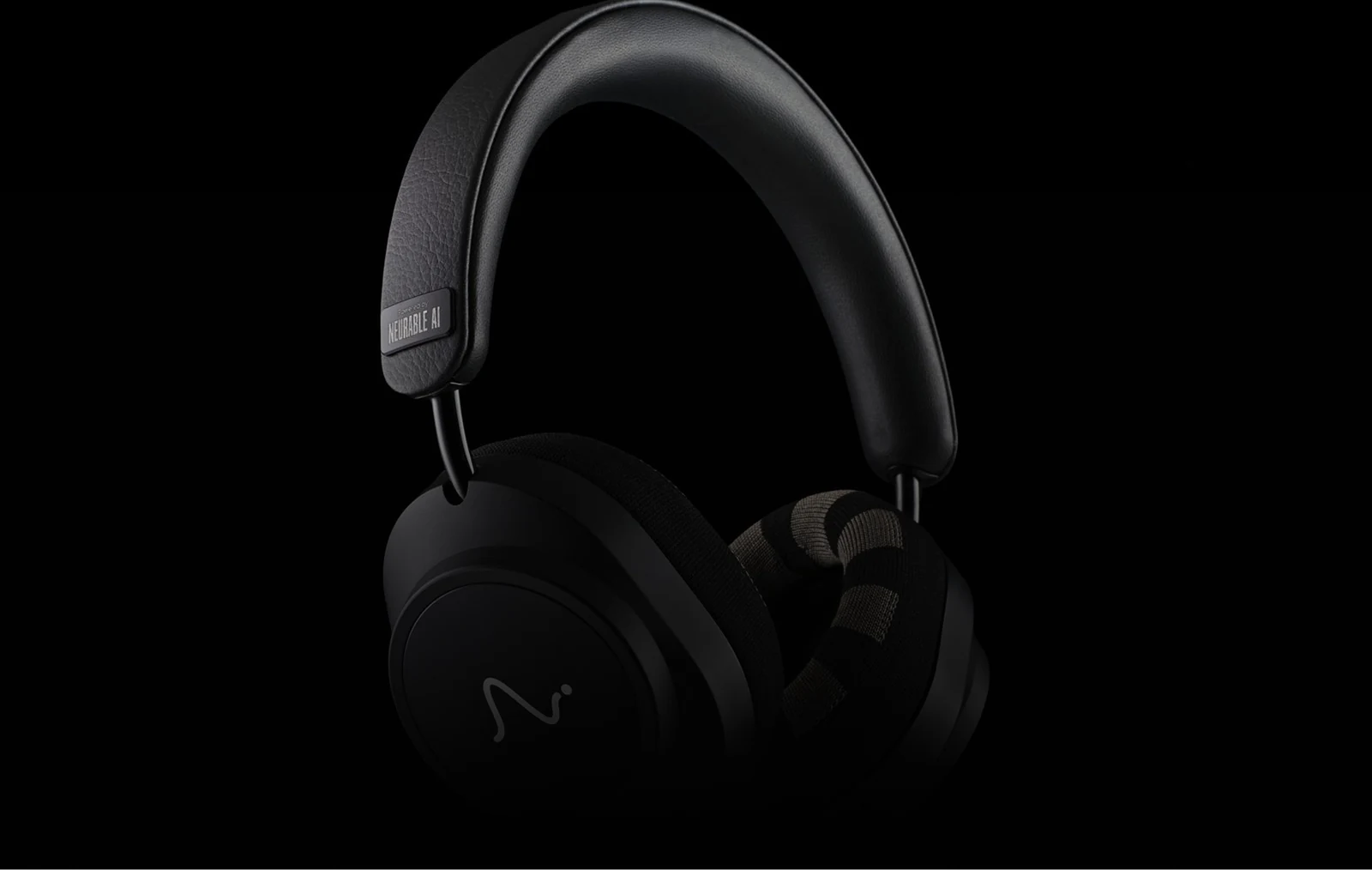
| Scalp EEG | Muse, Neurable | Headband or other wearable | Sold directly to consumers |
Neuralink is the most visible program. By its own count, it had a crew of 21 participants enrolled in trials worldwide by late January 2026, and it is moving from about 1,000 to 3,000 electrodes per implant while investigating a way to insert threads directly through the dura mater, the membrane around the brain. Its GB-PRIME study opened at University College London Hospitals and Newcastle, evaluating the implant and surgical robot for people with severe paralysis.
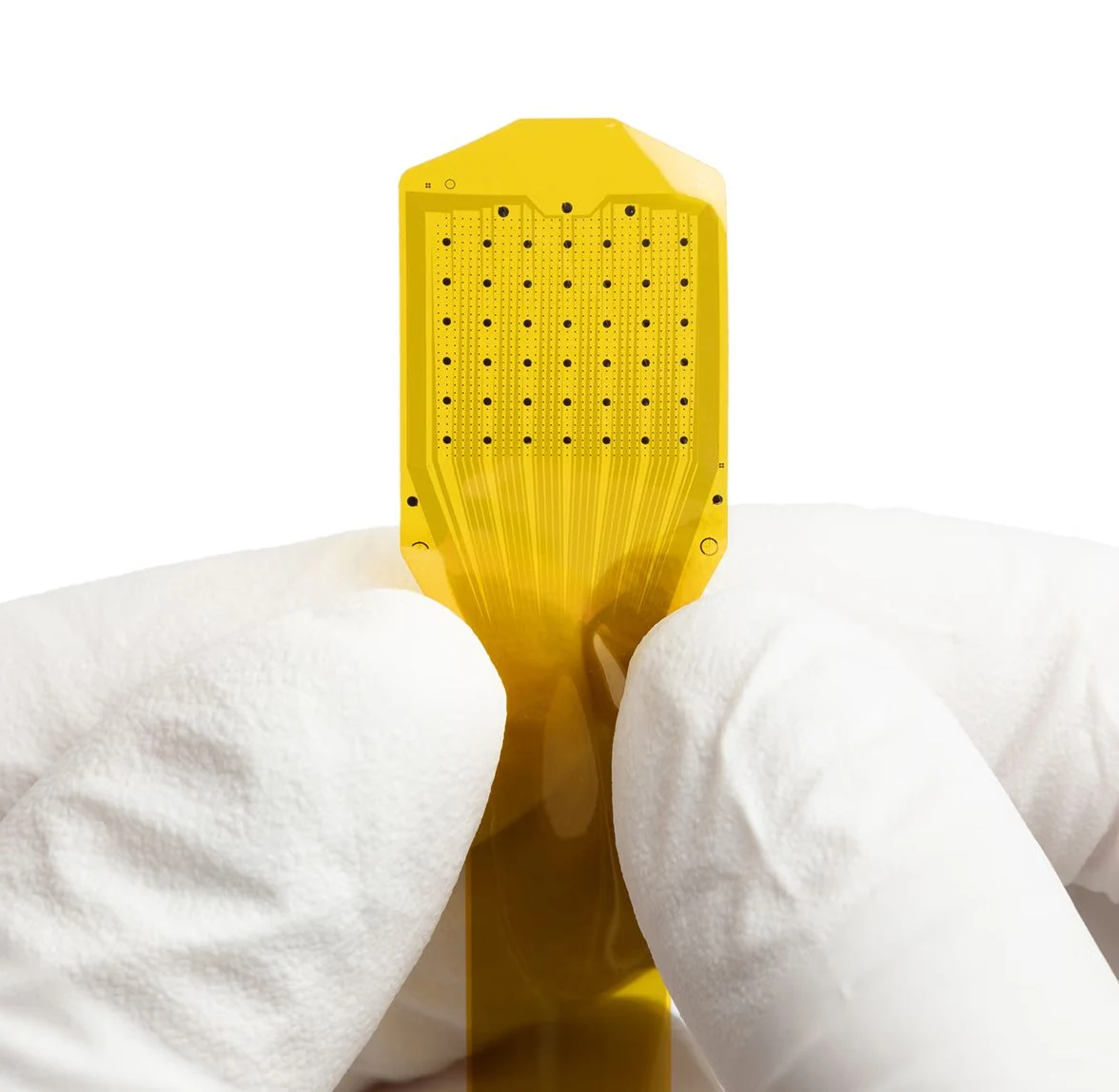
Paradromics took a different route to the same patients. Its Connexus device sends data from a microelectrode array to a transceiver in the chest, which relays it wirelessly through the skin. The FDA approved an investigational device exemption for the Connect-One study in November 2025, and Paradromics says surgeons at University of Michigan Health implanted the first participant, a woman with motor neuron disease, with follow-up planned over six years. On its study page, Paradromics says the device reads from the brain area that controls speech movement and is designed to turn those signals into text, a digital voice or commands for a phone or computer.
Synchron avoids open brain surgery altogether. Its Stentrode sits inside a blood vessel in the brain; the company says the trial procedure takes about two hours and most people go home the next day. Synchron's INTENT early feasibility study, registered on ClinicalTrials.gov, plans to enroll 10 people with ALS and bilateral upper-limb paresis.
Precision Neuroscience has the one FDA clearance in this group. The FDA cleared its high-resolution cortical electrode array through the 510(k) pathway for recording, monitoring and stimulation on the brain surface, with implantation of up to 30 days. Precision points to uses such as brain mapping during neurosurgery; Precision's full wireless brain-computer interface remains investigational.
What Brain-Computer Interfaces Are Used For
Brain-computer interface applications split into medical uses, reported so far from small trial groups and often a single participant, and consumer uses built on scalp sensors. The uses with published results or products include:
- Computer control: Neuralink participants use their implants for study and art; one medical student uses his for up to 17 hours a day, according to the company.
- Typing: by mapping ten imagined finger movements to keys, Neuralink says participants have reached up to 40 words per minute.
- Speech: a UC Davis team reported in Nature a speech neuroprosthesis that synthesized a man's voice with almost no delay from 256 microelectrodes, letting him change intonation and sing short melodies.
- Robotic arms: a Neuralink participant who had not moved his limbs in four years used a robotic arm to feed himself.
- Games: Neuralink's trial footage shows participants playing video games with the implant, alongside connecting with family and making art.
- Brain mapping: Precision Neuroscience points to brain mapping during neurosurgery as a use for its temporary surface array.
- Focus, meditation and sleep: consumer headbands such as the Muse S Athena use EEG for biofeedback and overnight sleep tracking, and Neurable says its technology lets users track focus and prevent fatigue.
The voice study matters because text alone loses tone. The participant has ALS and severe dysarthria, and the Nature paper describes decoding from the ventral precentral gyrus with closed-loop audio feedback, so he heard his synthesized voice as he spoke. Neuralink is chasing the same goal through VOICE, a trial it says aims for conversational speech at 140 words per minute. Speech restoration is a second front alongside cursor control in both of these programs.
The Apple change is the quieter milestone. In announcing its accessibility features, Apple said iOS, iPadOS and visionOS would add a protocol supporting Switch Control for brain-computer interfaces, aimed at users with severe mobility disabilities. Apple describes these interfaces as an emerging technology that lets users control a device without physical movement, and visionOS is the operating system of the Apple Vision Pro headset.
Brain-Computer Interface Risks, Side Effects and Security
Every implanted brain-computer interface carries the risks of neurosurgery, and the devices themselves are still being debugged in people. The trial registrations show which side effects researchers check first. Neuralink's PRIME study lists device-related and procedure-related adverse events as its primary outcomes, its VOICE study measures the share of participants with each at the 12-month follow-up visit, and Synchron's INTENT study tracks device-related serious adverse events up to 180 days after implant.
Neuralink's first participant saw threads retract from the brain, which affected signal quality and prompted surgical and postoperative changes. The company reports higher signal quality in 18 of the 20 participants who followed, along with a record of zero serious device-related adverse events, but it also says performance still varies, which appears correlated with anatomy, such as the spacing inside the skull, and with the stage of a disease like ALS. The main limits that remain:
- Tiny samples: trials enroll small numbers of people, so results do not yet show how a device performs, or which side effects appear, across thousands of users.
- Signal stability: electrodes can shift, as Neuralink's thread retraction showed, and Paradromics plans six years of follow-up in Connect-One to evaluate long-term use.
- Calibration: high-bandwidth implants have relied on bespoke decoders built for single individuals, a point the Meta team makes in its Nature paper.
- Security: Neuralink's implant and Paradromics' chest transceiver both send data wirelessly, and the FDA publishes cybersecurity recommendations for medical devices.
- Privacy: neural data can reveal health and mental states, and outside medicine the field remains largely unregulated, in UNESCO's assessment.
On security, the FDA's guidance on cybersecurity in medical devices, reissued in February 2026, sets out the design, labeling and documentation the agency recommends for premarket submissions of devices with cybersecurity risk, and covers section 524B of the Federal Food, Drug, and Cosmetic Act for cyber devices.
Privacy is drawing policy attention too. UNESCO's Member States adopted the Recommendation on the Ethics of Neurotechnology, which UNESCO describes as the first global standard in the area. UNESCO notes that connected headbands and headphones collect neural data that may be shared without consent. The Recommendation advises against non-therapeutic use on children and cautions against workplace monitoring of productivity. In the US Senate, the MIND Act of 2025 (S. 2925) would direct the Federal Trade Commission to study how neural data should be governed and where current law, including HIPAA, leaves gaps. Existing rules for body-derived data, set out in the overview of biometric data protection frameworks, already cover part of this ground.
Where Brain-Computer Interfaces Stand With Regulators
None of the implanted brain-computer interface systems above is on the market for paralysis, and Synchron states plainly that its system is not approved for commercial use in any geography. In the US, an implant can pass through the FDA steps below, though not always in this order, and the companies above sit at different points:
- Breakthrough Device Designation: a voluntary FDA program for devices that offer more effective treatment of life-threatening or irreversibly debilitating conditions, with prioritized review. Neuralink says it received Breakthrough Device Designation for speech restoration, covering people with severe speech impairment from ALS, stroke, spinal cord injury, cerebral palsy and multiple sclerosis.
- Investigational device exemption: an IDE allows an investigational device to be used in a clinical study to collect safety and effectiveness data, and a study of a significant-risk device needs FDA approval of the IDE as well as an institutional review board's.
- Early feasibility study: the FDA describes an early feasibility study as a limited clinical investigation early in development that typically enrolls a small number of subjects to evaluate the design concept for initial clinical safety and device functionality. Paradromics registers Connect-One as one, with an estimated two participants.
- Market authorization: the FDA says clinical studies under an IDE are most often conducted to support a premarket approval application, while only a small percentage of 510(k)s require clinical data. Precision's temporary surface array took the 510(k) clearance route.
Outside the US, Neuralink's GB-PRIME launched after approvals from the MHRA and the Health Research Authority in Britain, and Health Canada authorized CAN-PRIME. The FDA and EU rules for AI in healthcare matter here too, because a decoder is trained software, and the questions of how to validate and update AI inside a medical device apply to it as well.
Consumer headsets follow a different track. The FDA reissued its General Wellness policy for low-risk devices in January 2026, setting out when products that promote a healthy lifestyle fall outside device review. A band that tracks focus or sleep can stay a general wellness product; one that claims to diagnose or treat a condition cannot. Neurable, for instance, pitches its brain-sensing technology around tracking focus and preventing fatigue.
What Brain-Computer Interfaces Cost
Consumer brain-computer interface headbands carry retail prices, while implants have none because they are not on sale. On its US store, Muse listed the Muse S Athena headband at $474.99 in October 2026, and its home page listed the Muse 2 at $249.99, with an optional Premium subscription at $49.99 a year ($45 when bundled with a headband) that Muse says unlocks sleep optimization, focus training and AI coaching.
Implanted systems are reached through a study, not a shop. Paradromics labels its Connexus BCI an investigational device limited by United States law to investigational use, and says participants meet with the Connect-One team several times a week to adjust the system, with support throughout the six-year study. Until a company files for and wins market authorization, there is no list price to compare.
Brain-Computer Interfaces and the Alternatives
For most people with limited movement, a brain-computer interface is the last resort, not the first tool. Apple's accessibility announcement put several simpler inputs next to the new BCI protocol: Head Tracking lets users control an iPhone or iPad with head movements, alongside Eye Tracking and Switch Control. The comparison below sets out where each fits:
| Input | Needs | Fits best when |
|---|---|---|
| Voice control | Clear speech | Hands are limited but speech is intact |
| Eye tracking | Reliable eye movement | Speech and hands are both affected |
| Head tracking or switches | Some head, cheek or finger movement | One dependable movement remains |
| Wrist sEMG | Residual muscle signals at the wrist | Small hand movements still reach the muscles |
| Implanted BCI | Surgery and trial eligibility | Movement and speech are both lost or failing |
Wrist sEMG is the alternative closest to a brain-computer interface without surgery. Reality Labs researchers at Meta reported in Nature a surface electromyography wristband whose decoding models, trained on data from thousands of consenting participants, worked across people without individual calibration and reached handwriting at 20.9 words per minute. It reads signals at the muscles rather than the brain, so it needs some intact connection to the hand. The wrist-worn health sensors already on sale are covered in the comparison of smartwatches, rings and trackers.
The deciding factor is what the person can still do reliably. Paradromics asks Connect-One candidates for experience with assistive communication devices such as eye-tracking systems, which suggests Paradromics treats its implant as the step after those tools, not a replacement for them. Consumer EEG is a wellness tool, and its focus scores are best read as trends, not diagnoses. For anyone with a serious motor condition, the practical move is to master the non-invasive tools first and register with a trial only when they stop being enough.
Further reading
Frequently Asked Questions
Can you buy a brain-computer interface?
Only the non-invasive kind, because implanted brain-computer interfaces for paralysis are available only inside clinical trials. Headsets such as the Muse S Athena are sold for focus, meditation and sleep tracking, the kind of low-risk use the FDA's General Wellness policy covers. Synchron says its implanted system is not approved for commercial use in any country. Neuralink recruits through a patient registry, and Paradromics through an online eligibility screener for adults aged 22 to 75 who live within four hours of Sacramento, Ann Arbor or Boston.
How much does a brain-computer interface cost?
Consumer EEG headbands cost a few hundred dollars: Muse listed its Muse S Athena headband at $474.99 on its US store in October 2026. Implanted brain-computer interfaces have no price, because they are investigational devices used only inside clinical studies, and none is approved for sale for paralysis.
What are the side effects of a brain-computer interface?
Implants carry the risks of brain surgery, which is why trials measure safety first: Neuralink's PRIME and VOICE studies list device-related and procedure-related adverse events as primary outcomes. Neuralink reports zero serious device-related adverse events so far, but threads retracted in its first participant, which affected signal quality. Scalp EEG headsets involve no surgery.
What brain implant is Neuralink testing?
Neuralink is testing a wireless implant, used through its Telepathy product, whose threads are inserted by a surgical robot. It records from the brain regions that control the hands and arms and translates attempted movement into commands. Neuralink counted 21 participants enrolled in trials worldwide by late January 2026, across studies that include PRIME, CAN-PRIME, GB-PRIME and VOICE, and reports typing speeds of up to 40 words per minute.
How close are brain-computer interfaces to everyday use?
Consumer headbands are on sale now, but implants are still in early clinical studies with small numbers of people. Synchron's INTENT study plans to enroll 10 participants, and Paradromics plans to follow Connect-One participants for six years. The one FDA clearance in the field so far, Precision Neuroscience's, covers a surface array implanted for up to 30 days, not a long-term brain-computer interface.
Can a brain-computer interface read your thoughts?
Not in the everyday sense, because current implants decode attempted movement or attempted speech from specific brain regions rather than free-floating thoughts. Neuralink records from the areas that control the hands and arms, and the UC Davis voice system decodes activity from the ventral precentral gyrus, a region involved in producing speech. Neural data is still sensitive, which is why the UNESCO Recommendation on the Ethics of Neurotechnology and the proposed MIND Act both center on consent and privacy.