A private 5G network is a cellular network that one organization builds or leases for its own site, with dedicated radios, a 5G core and its own SIMs, so it controls coverage, capacity and policies instead of sharing a carrier's public network.
What a private 5G network is
The technology underneath is standard. 3GPP defined the 5G system from Release 15 onward, including the air interface and the core protocols that let equipment from different vendors work together. What changes in a private deployment is who owns the radios and the core, and who decides how they are configured.
- Private 5G
- A dedicated 5G network for one organization, covering a defined site such as a plant, port or campus network, often to connect industrial IoT equipment.
- Private LTE
- The same idea on 4G LTE. Ericsson groups both under the term private cellular network: a dedicated network with its own infrastructure within a defined geographic area.
- Carrier network slice
- A logical portion of a mobile carrier's public network reserved for one customer. There are no radios of your own, and the carrier runs everything.
The parts of a private 5G network
Every private 5G network, whatever the vendor, assembles the same five building blocks.
- Radio access network (RAN)
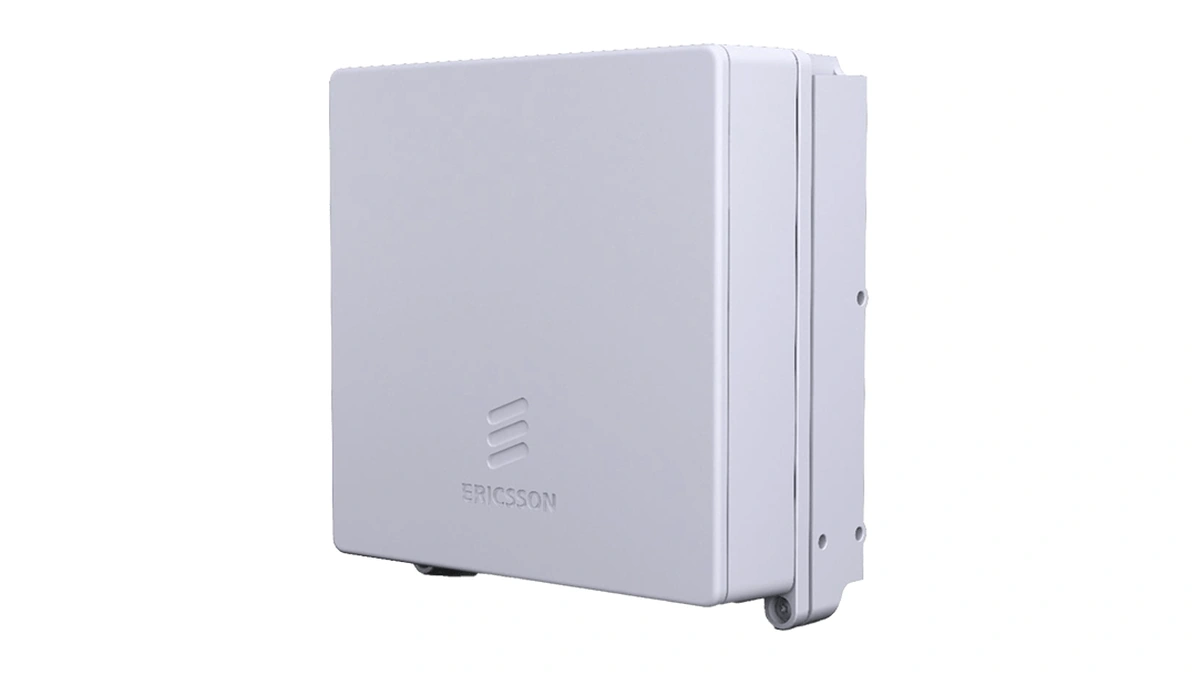
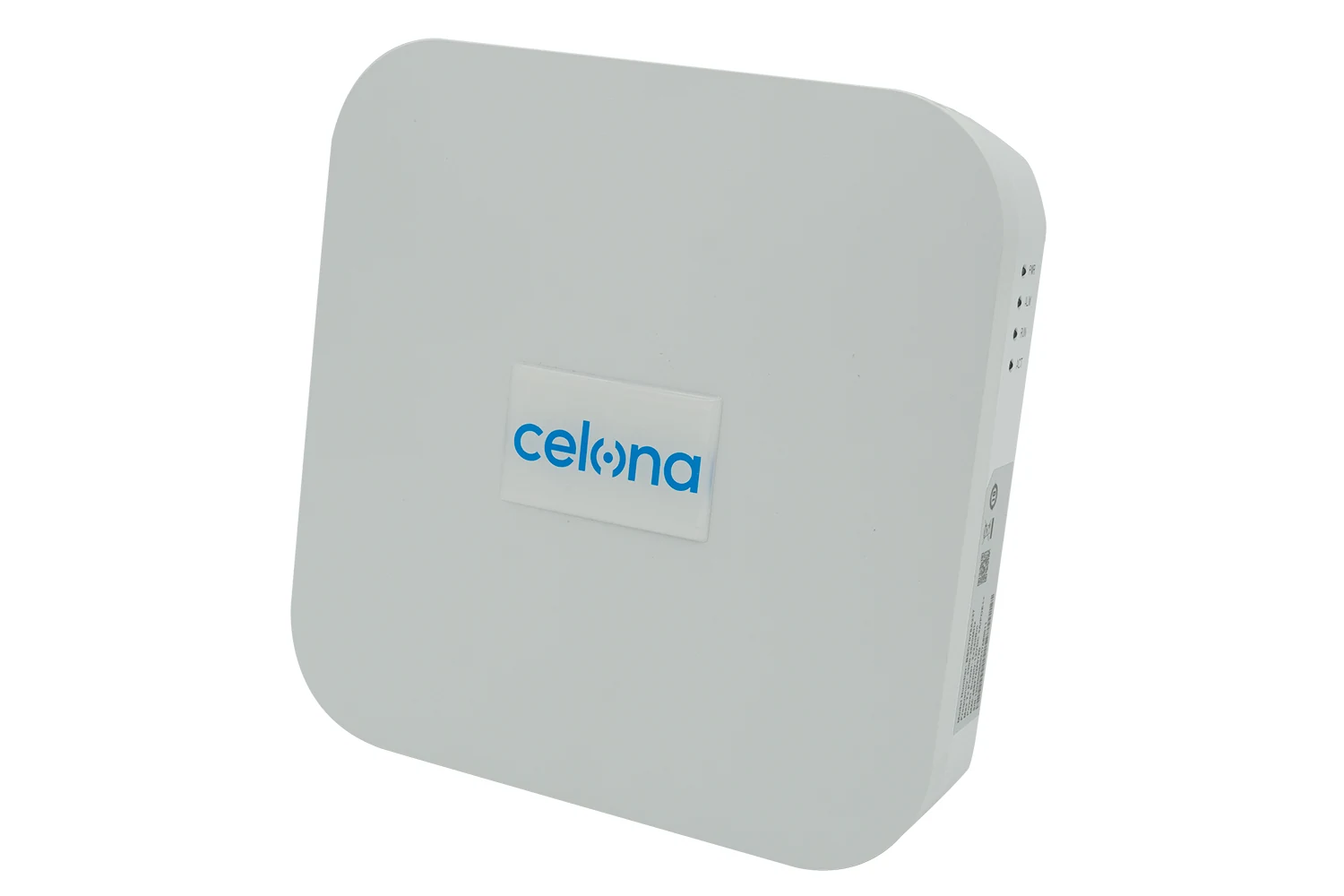
- The base stations and small cells that cover the site, indoors or outdoors. Vendors such as Nokia and Ericsson supply this layer.
- 5G core
- The software functions that handle device registration, mobility (AMF), sessions (SMF) and user traffic forwarding (UPF). In a standalone deployment (SA), the radios connect to this 5G core instead of a 4G core.
- SIMs and eSIMs
- The credentials each device presents to join. The organization, or its provider, issues and revokes them.
- Devices
- Phones, tablets, vehicles, sensors and gateways with a cellular modem that supports the site's bands.
- Management tools
- The portal and apps used to monitor coverage, onboard SIMs and troubleshoot.
Vendors package these parts differently. Ericsson says Ericsson Private 5G delivers 4G and 5G for indoor and outdoor use, with a cloud-based management portal and a troubleshooting app aimed at enterprise IT and OT (operational technology) staff. That split matters: the management tools can live in a vendor cloud while sensitive data stays on site.
Private 5G versus Wi-Fi versus public 5G
A private 5G network sits between the two networks most sites already use. Most of the comparison below comes from Ericsson, a vendor with a stake in the answer, so read the cells marked per Ericsson as its position and not as consensus.
| Factor | Wi-Fi | Private 5G | Public 5G |
|---|---|---|---|
| Coverage | Local, around each access point | Site-wide, designed around a coverage plan | Wide area, set by the carrier |
| Mobility | Not designed with mobility in mind, per Ericsson | Designed for mobile devices and applications, per Ericsson | Built for roaming |
| Reliability and latency | Shared airtime with other users | Dedicated control and consistent low latency, per Ericsson | Shared with the carrier's other customers |
| Interference | Unlicensed spectrum, higher risk, per Ericsson | Licensed or shared spectrum | Licensed spectrum held by the carrier |
| Devices | Nearly everything has Wi-Fi | Needs a SIM or eSIM and supported bands | Any carrier-compatible device |
| Who runs it | Your IT team | You, a vendor or an integrator | The carrier |
| Cost model | Low entry cost; large sites need many access points, per Ericsson | Radios, core and skills, billed as capex or service | Subscription per line or slice |
Ericsson's own blog says enterprises turn to private cellular for coverage, capacity, mobility and control, and its private networks page describes private 5G as combining the control and fixed costs of Wi-Fi with the flexibility and security of public cellular. Wi-Fi still wins on simplicity, device support and cost for offices and homes. Each new Wi-Fi generation keeps changing the comparison, and the article on where the next generation of Wi-Fi is heading covers what comes after. Treat the table as a map of where each technology was designed to work, not a scoreboard.
Spectrum: licensed, shared and local
Spectrum decides who can interfere with a private 5G network. Ericsson says private 5G runs on licensed or shared spectrum, while Wi-Fi runs on unlicensed spectrum. Unlicensed bands need no individual license, though equipment must follow the regulator's power and device rules, so any compliant device can share the band. Private 5G does not always use licensed spectrum, which is why the route you pick shapes the project.
| Spectrum type | Who grants access | Interference risk | Example |
|---|---|---|---|
| Licensed | A carrier holds it, or a regulator offers local licenses | Dedicated control, per Ericsson | A carrier's 5G bands |
| Shared | Regulator-defined sharing rules | Depends on the tier: in CBRS, Priority Access licensees are protected and General Authorized Access users are not | CBRS in the US |
| Unlicensed | No license needed; device rules apply | Higher, per Ericsson | Wi-Fi bands |
In the US, the shared route is the Citizens Broadband Radio Service (CBRS). CBRS has tiers: Priority Access License holders get protection from interference, while General Authorized Access users need no license but must accept interference from other users. The OnGo Alliance, the industry group behind CBRS certification, counted more than 440,000 active CBRS base stations and access points (CBSDs) across the US and over 1,100 certified devices as of June 2026. Those are OnGo's own numbers, from a group that promotes the band. Outside the US, some regulators offer local licenses for private networks. Check yours before designing around a band, because availability and terms vary by country.
Ways to deploy it: on-premises, hybrid or managed
A private cellular network can be built in four ways, and the choice mostly moves the work between your staff and a provider.
- Fully on-premises: the radio access network and an on-premises core both sit at the site, so traffic and subscriber data stay local. You carry the operations.
- Hybrid: radios stay on site while a provider or cloud hosts the core. Because 3GPP designed the core around virtualized network functions, it can run on general-purpose cloud infrastructure.
- Carrier-managed: a provider builds and runs the network for you. Ericsson says Ericsson Private 5G is available through Verizon Business private wireless deployments.
- Network slice on the public network: a carrier carves out a logical slice for your devices. No radios of your own, and less control over coverage.
Ericsson also says Port Nelson deployed its private 5G network with Spark New Zealand and Ericsson Enterprise Wireless Solutions, a reminder that a carrier can act as the integrator. The Ericsson Enterprise Wireless press releases list further examples. Slicing, network function virtualization and edge computing all appear among the technologies 3GPP lists for 5G, which is why placing the core near the machines it serves is a common design question. The comparison of when processing belongs at the edge rather than in the cloud applies directly to that choice.
Where private 5G is used
Private 5G tends to appear where sites are large, outdoors or full of moving machines. The examples below come from Ericsson, Nokia and OnGo Alliance materials, so each carries its source.
- Ports and logistics: according to Ericsson, a private 5G campus network runs at the Container Terminal Altenwerder of Hamburger Hafen und Logistik AG, and Port Nelson has deployed one. Nokia lists Husky Terminal at the Port of Tacoma, which runs marine freight operations on a Nokia private 4.9G/LTE network.
- Mining: Ericsson says it is expanding an alliance with Epiroc on mining automation. Nokia cites VTT, Sandvik and Nokia working on autonomous underground mining.
- Manufacturing and process plants: Nokia says Chevron Phillips, Kyndryl and Nokia run private wireless networks across eight plants and 3,000 mobile devices. Nokia also lists Jacto, for what it calls the first private wireless 5G network in agricultural machinery.
- Energy and neutral host: Nokia reports a private wireless milestone with Ooredoo Qatar in the energy sector and features Cellnex explaining how neutral host companies give mobile operators open access.
- Campuses and airports: Miami International Airport, DFW Airport, Stanford University and John Deere appear on the OnGo Alliance members list. Membership says nothing about what each runs.
The common thread is industrial IoT: machines, vehicles and sensors that move across a wide site and need predictable connectivity with low latency. Every connected sensor also widens the attack surface, so guidance on securing the IoT devices that connect to site networks belongs in the same project plan.
What it costs and what drives the price
No citable standard price exists for a private 5G network, and its total cost of ownership depends on choices made site by site. Vendors quote per site and rarely publish price lists, so any single dollar figure circulating online deserves suspicion. What can be described honestly is what moves the bill:
- Site size and the coverage plan, including indoor and outdoor areas.
- Number of radios needed to meet that plan.
- Core model: an on-premises core, a hosted one or a managed subscription.
- Spectrum route: shared spectrum, a local license or carrier-held bands.
- Devices and SIM or eSIM provisioning.
- Integration with existing IT, OT and security systems.
- Skills and ongoing management, including the support SLA.
Vendor pages tend to leave out the later items: modems for existing equipment, integration effort, the staff time to run a cellular core, and lock-in when radios and core come from one supplier. Over the life of the network, the total cost of ownership (TCO) is the fair comparison against extending Wi-Fi, and the OnGo Alliance publishes a TCO calculator for CBRS projects. Ericsson's framing is that private 5G offers the fixed costs of Wi-Fi with cellular-grade security, a claim worth testing against a written quote.
Security and its limits
A private 5G network gives an organization local control over who connects, but it is not secure by default. SIM-based authentication means each device presents a SIM or eSIM credential that the organization issues, unlike a Wi-Fi network secured by one shared password. An on-premises core keeps subscriber and traffic data on site. In a standalone deployment the 5G radios connect to a 5G core rather than a 4G core, per 3GPP, so the network does not depend on 4G core equipment. The article on how 5G's built-in security protections compare with 4G gives the background.
The risks that remain are ordinary ones: misconfigured core functions, unmanaged devices and an exposed management plane. SIM-based authentication also only helps if lost or retired devices are revoked promptly. CISA and the NSA published 5G Network Slicing: Security Considerations for Design, Deployment, and Maintenance on July 17, 2023, as Enduring Security Framework guidance on standalone 5G network slices. CISA has since marked that page archived, so check for newer guidance. A cellular network should not replace segmentation either: the principles behind how a zero-trust network architecture limits what a connected device can reach still apply, and NIST SP 800-207 is the reference architecture for that approach.
When private 5G beats Wi-Fi, and when it does not
The decision depends on the site and the workload, not on which technology is newer. This table is editorial judgment built on the Ericsson and Nokia claims above, not a benchmark.
| Situation | Wi-Fi is enough | Private 5G wins | Carrier slice fits |
|---|---|---|---|
| Office or light-duty floor | Usually, with current Wi-Fi access points | Rarely | Rarely |
| Large or outdoor site with mobile machines | Possible with dense planning | Often, for coverage and control | If carrier coverage is already good |
| Vehicles roaming across a wide site | Weak fit, per Ericsson's mobility framing | Strong fit | Possible |
| Many small sites, one managed service | Hard to standardize | Costly per site | Often the best fit |
| Short pilot, few devices | Best starting point | Only to test one use case | Fast to try |
Size a pilot narrowly: one area, one use case and written pass criteria, such as coverage in a named zone or a vehicle completing its route without dropping a session. Honest limits apply. Device and handset support can be uneven, integration takes effort, skills take time to build and vendor lock-in is real. Before signing, put these questions to each vendor:
- What do the core and management tools include, and what costs extra?
- Which devices are certified to work, and who tests ours?
- Who holds the spectrum authorization, and what happens if it changes?
- What are the exit terms, and can radios or the core move to another supplier?
- What support SLA applies, and who responds at the site?
Further reading
Frequently Asked Questions
How much does a private 5G network cost?
There is no standard price, because cost depends on site size, radio count, spectrum route, and whether you buy equipment or subscribe to a managed service. Vendors quote per site after a coverage survey, and public price lists are rare. Budget for radios, the core, SIMs and devices, installation, integration and ongoing management, then compare the total cost of ownership with extending Wi-Fi or buying a carrier network slice.
How can I create my own private 5G network?
Start with a site survey and a use-case list, pick a spectrum route and a vendor, then run a small pilot before scaling. You need radios, a 5G core, SIMs or eSIMs, compatible devices and a management tool. In the US, many builders use shared CBRS spectrum, while others lease licensed spectrum or buy a managed service from a provider. Measure coverage and device behavior in one area first, then extend.
Is it better to be on a public or private network?
Public 5G is better for wide-area coverage with no equipment to run, and a private network is better for local control over coverage, capacity and data. Some sites combine the two. A carrier network slice sits between them for sites that cannot justify their own core.
Will my existing phones and laptops work on a private 5G network?
Whether a device connects depends on its supported frequency bands and on whether you can load your own SIM or eSIM profile on it. Check support before you buy radios. The OnGo Alliance says it has certified more than 1,100 end-user devices for CBRS, so that list is a sensible first check in the US. Industrial equipment often needs a cellular module or gateway.