A cloud platform is an on-demand infrastructure layer that provides compute, storage, and managed services through a provider-operated global network. For engineering teams selecting infrastructure, the three dominant hyperscalers, Amazon Web Services (AWS), Microsoft Azure, and Google Cloud Platform (GCP), cover the same fundamental categories but pull in different directions on depth, integrations, and AI-native tooling. The right choice depends on where your existing workloads, team skills, and compliance requirements already point.
Platform Overviews at a Glance
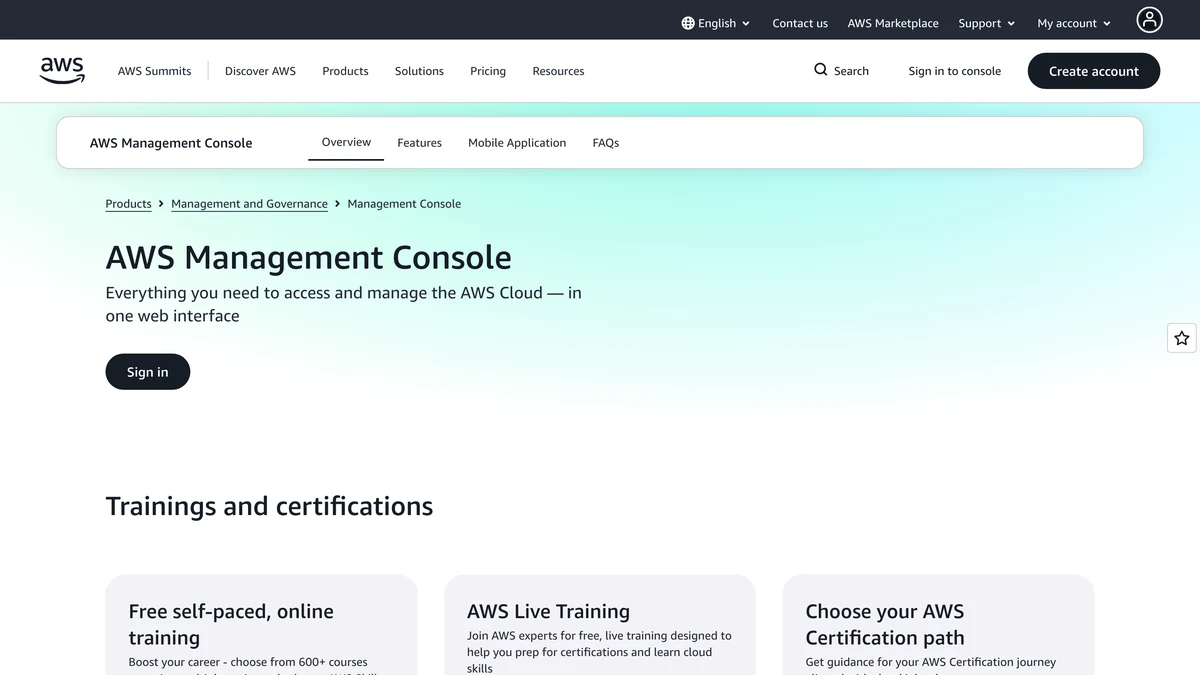
AWS, Azure, and Google Cloud each lead the market but position themselves around distinct strengths: infrastructure breadth, enterprise integration, and AI-native services, respectively. The table below maps each cloud provider across the service categories most teams evaluate first.
| Category | AWS | Azure | Google Cloud (GCP) |
|---|---|---|---|
| Primary strength | Broadest service catalog; largest global footprint (vendor-stated) | Microsoft ecosystem depth; hybrid and Windows Server integration | AI/ML tooling; container-native infrastructure; data analytics |
| IaaS compute family | EC2 (Elastic Compute Cloud) | Azure Virtual Machines | Compute Engine |
| Object storage | S3 (Simple Storage Service) | Azure Blob Storage | Cloud Storage |
| Managed Kubernetes | EKS (Elastic Kubernetes Service) | AKS (Azure Kubernetes Service) | GKE (Google Kubernetes Engine) |
| AI/ML platform | SageMaker | Azure AI and Cognitive Services | Vertex AI; TPU access |
| Free-tier entry | 12-month free tier; always-free services | 12-month free trial; always-free services | $300 free credit for new accounts; 20+ always-free products (cloud.google.com) |
| Pricing model | On-demand, reserved, spot instances; savings plans | On-demand, reserved, spot VMs; hybrid benefit licensing | On-demand, committed use, preemptible VMs; automatic sustained-use discounts |
Compute, Storage, and Networking Compared

The three platforms converge on the same service categories but differ in naming conventions, depth of options, and operational defaults. The mapping below uses the Google Cloud service comparison reference as the cross-provider anchor.
- Compute instances
- AWS offers EC2 with a wide range of instance families tuned for general purpose, memory-optimized, compute-optimized, and accelerated workloads. Azure Virtual Machines follow a similar taxonomy with additional options for Windows Server hybrid licensing. GCP's Compute Engine instances include custom machine types that let teams specify exact vCPU-to-memory ratios without locking into a preset family. Across all three providers, compute instances bill per second once the first minute elapses, so right-sizing the family matters more than the hourly rate alone. For load balancing and auto-scaling patterns tied to compute provisioning, the load balancing and auto-scaling patterns explainer covers the orchestration layer above instance selection.
- Object storage
- AWS S3 is the reference implementation for object storage, with a mature lifecycle policy system and deep integration across the AWS service catalog. Azure Blob Storage offers tiered access (hot, cool, archive) with native integration into Microsoft data services. GCP Cloud Storage uses a single-namespace bucket model with strong consistency guarantees built in by default.
- Managed Kubernetes
- EKS on AWS, AKS on Azure, and GKE on Google Cloud all abstract away control-plane management. GKE is generally considered the most operationally mature of the three, reflecting Google's internal Borg heritage. AKS integrates directly with Azure Active Directory for role-based access control. EKS offers the broadest compatibility surface for teams already running large EC2 footprints.
- Content delivery
- AWS CloudFront, Azure CDN, and GCP Cloud CDN each provide points of presence for static asset acceleration and API caching. The edge compute vs cloud computing trade-offs covered in the edge computing vs cloud computing trade-offs guide apply directly to CDN-adjacent latency decisions.
Pricing Models and Cost Structures
All three platforms use consumption-based billing, but the discount mechanisms, egress pricing, and commitment structures differ in ways that can shift total cost by a significant margin depending on workload profile. Teams planning a cloud infrastructure budget should model these levers before locking in a provider. For e-commerce-specific considerations, the cloud platform cost considerations for e-commerce teams article covers transaction-heavy workload patterns.
- On-demand vs reserved vs spot or preemptible: All three providers offer on-demand rates for variable workloads, reserved or committed-use pricing for predictable baselines, and interruptible instance types (spot on AWS and Azure, preemptible on GCP) for fault-tolerant batch jobs. Reserved-instance discounts on AWS and Azure require upfront commitment; GCP applies sustained-use discounts automatically based on monthly usage without requiring a reservation purchase (azure.microsoft.com/pricing).
- Egress costs: All three providers charge for data egress out of their networks. Egress costs can become a significant budget variable for data-intensive applications or multi-cloud architectures that move large volumes between providers. Architect your data flows with egress costs in mind before committing to storage topology.
- Savings plans and committed use: AWS offers Compute Savings Plans and EC2 Instance Savings Plans, which provide flexibility across instance families. Azure offers reserved VM instances with additional hybrid-use benefits for teams with existing Microsoft licensing. GCP's committed-use contracts apply at the project level and cover Compute Engine and some managed services.
- Free-tier scope: AWS and Azure both provide 12-month free tiers covering major services with usage caps, plus a smaller always-free tier. GCP provides $300 in free credits for new accounts alongside more than 20 always-free products, including a permanent free tier for Cloud Storage, BigQuery, and Cloud Run (cloud.google.com).
- Pricing model transparency: Each vendor publishes a pricing calculator. Model your specific workload configuration on the calculator before making a commitment, since list rates rarely reflect what a production environment actually pays after discounts and reserved capacity.
AI, Machine Learning, and Managed Services
Each platform has built a distinct AI services stack, and the right choice often hinges on where model training data already lives and which ML toolchain the engineering team uses. Machine learning infrastructure is now a first-class selection criterion alongside compute and storage.
- AWS SageMaker: SageMaker covers the full machine learning lifecycle from data labeling through model deployment and MLOps monitoring. It integrates with EC2 GPU instance families and connects naturally to S3 for training data and model artifacts. SageMaker's managed services abstractions let teams skip cluster management for standard training and inference workflows.
- Azure AI and Cognitive Services: Azure's AI stack is differentiated by its tight integration with Microsoft 365, the OpenAI partnership (through Azure OpenAI Service), and enterprise identity via Azure Active Directory. For organizations already running Microsoft-stack applications, this integration reduces the friction of adding AI capabilities to existing workflows. Azure AI services include vision, speech, language, and decision APIs available as managed services endpoints.
- Google Vertex AI and TPUs: Google Cloud provides access to Tensor Processing Units (TPUs) for large-scale model training, a managed AI platform through Vertex AI, and over 200 foundation models available for tuning and deployment (cloud.google.com). BigQuery ML lets teams run predictive models directly against data warehouse tables without moving data to a separate training environment. GKE's native container orchestration makes GCP a natural fit for teams that package ML workloads as containerized microservices.
- Infrastructure as a service (IaaS) and managed services breadth: For teams that want to understand where IaaS, platform as a service (PaaS), and software as a service (SaaS) boundaries sit across these providers, the Google Cloud IaaS/PaaS/SaaS explainer provides a clear taxonomy.
Use Cases: Matching Workload to Platform
The right cloud platform depends less on market share and more on where your team's existing toolchain, data, and compliance requirements point. The following scenarios map common workload profiles to the provider most structurally suited to handle them.
- Greenfield web infrastructure and regulated industries (AWS): AWS's breadth of services and its mature compliance program make it a strong default for greenfield projects without existing ecosystem dependencies. Teams building in regulated industries, including healthcare and federal agencies, benefit from AWS's broad certifications and the availability of FedRAMP-authorized services and HIPAA business associate agreements. AWS's documented global infrastructure (aws.amazon.com/about-aws/global-infrastructure) gives architects clear visibility into availability zone options when designing for fault tolerance.
- Windows Server and Microsoft 365 shops (Azure): Azure is the natural fit for organizations running Windows Server, Active Directory, and the Microsoft 365 suite. Azure Arc extends on-premises Windows environments to cloud management, and Azure Active Directory handles identity federation without requiring a separate identity provider. Fortune 500 adoption of Azure reflects its enterprise identity and compliance tooling depth (azure.microsoft.com). Hybrid cloud architectures connecting on-premises data centers to Azure are significantly easier to operate for Microsoft-stack teams than an equivalent hybrid cloud setup on a different provider.
- Container-native and ML-first workloads (Google Cloud): GCP is well suited for teams building on Kubernetes from the start and for organizations whose primary differentiation comes from data analytics or machine learning pipelines. BigQuery as a managed analytics warehouse, GKE as a Kubernetes runtime, and Vertex AI as an ML platform form a coherent stack that requires less glue code than assembling equivalent capabilities on other providers. Workload migration for teams moving from on-premises Hadoop or Spark clusters often lands naturally on GCP's managed data services.
- Multi-cloud for vendor lock-in avoidance or data residency (any combination): Multi-cloud deployments make sense when regulatory data-residency requirements mandate storage in a geography served by only one provider, when critical services have no acceptable open-source equivalent and a single-vendor dependency is unacceptable, or when best-of-breed managed services span more than one platform. The tradeoff is operational complexity: cross-cloud networking, egress costs, and differing identity models add overhead. For CDN distribution decisions in multi-cloud architectures, the how content delivery networks accelerate global distribution guide covers the edge-delivery layer.
How to Choose: A Decision Framework
Selecting a cloud platform is a medium-term infrastructure commitment, so matching the decision to measurable criteria reduces the risk of an expensive pivot later. Run through this checklist before shortlisting providers.
- Audit your existing stack: Windows Server workloads and Active Directory dependencies point toward Azure. Google Workspace data and container-native applications point toward GCP. Everything else is broadly AWS-neutral, making AWS the default for teams with no strong existing ecosystem pull.
- Map compliance requirements to provider certifications: Identify the regulatory frameworks your workloads must satisfy before evaluating providers. Each hyperscaler publishes a compliance program page; verify that the specific service you need, not just the platform category, holds the required certification before committing to an architecture.
- Estimate egress costs against your data-out volume: Pull your current monthly data egress volume (or model it for new projects). Egress costs scale directly with outbound data and can make a nominally cheaper compute option significantly more expensive at production scale. Build egress costs into any cloud infrastructure cost model from the start, not as an afterthought.
- Run a free-tier proof of concept: All three providers offer trial credits or persistent free tiers. Deploy a representative sample of your workload on the shortlisted provider before signing a commitment. This surfaces operational surprises, such as managed service configuration gaps or unexpected network topology constraints, before they become expensive problems.
- Evaluate vendor lock-in exposure for managed services: Managed services that lack open-source equivalents, proprietary data formats, or tightly coupled SDKs increase vendor lock-in risk. Before adopting a high-abstraction managed service, assess whether a workload migration away from that service would be feasible within a reasonable time frame and budget. For CDN-layer alternatives that preserve portability, the CDN alternatives to AWS CloudFront comparison is a useful reference.
References
- AWS Global Infrastructure (Amazon Web Services)
- Microsoft Azure vs AWS: enterprise positioning overview (Microsoft)
- Azure pricing overview (Microsoft)
- Google Cloud: product overview and free tier (Google)
- Google Cloud IaaS/PaaS/SaaS explainer (Google)
- AWS, Azure, and GCP service comparison (Google Cloud)
Further reading
Frequently Asked Questions
Is AWS, Azure, or Google Cloud the cheapest option?
No single platform is cheapest across all workloads; cost depends on compute family, storage tier, egress volume, and commitment model. AWS and Azure both offer reserved-instance discounts; Google Cloud offers sustained-use discounts automatically. Model your specific workload on each vendor's pricing calculator before committing.
Can a team already using Microsoft 365 benefit from choosing Azure?
Yes. Azure integrates natively with Microsoft 365, Active Directory, and on-premises Windows Server environments through Azure Arc and Azure AD, which reduces identity management overhead. Teams already licensed through Microsoft can often apply hybrid-use benefits that lower compute costs.
What makes Google Cloud stand out for AI and machine learning workloads?
Google Cloud provides access to Tensor Processing Units (TPUs), a fully managed AI platform, and over 200 foundation models through Vertex AI. Its Kubernetes Engine (GKE) is considered mature for container-native ML pipelines, and BigQuery ML lets teams run models directly against data warehouses without data movement.
What is multi-cloud and when does it make sense?
Multi-cloud means running workloads across two or more cloud providers simultaneously. It makes sense when avoiding vendor lock-in on critical services, meeting data-residency requirements in regions served by only one provider, or sourcing best-of-breed managed services. The tradeoff is increased operational complexity and networking egress costs.