Google TPUs will be available on Oracle Cloud Infrastructure in calendar year 2027, which Oracle calls the first time Google TPUs will be offered on a hyperscale cloud platform outside Google. Oracle and Google announced the arrangement at Oracle AI World in Las Vegas.
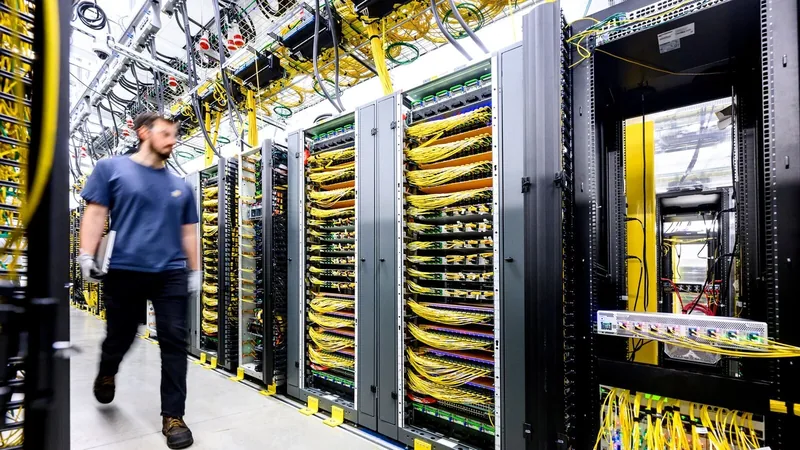
Under the plan, OCI supplies the power, cooling and datacenter networking to deploy the chips at scale inside its own infrastructure, Oracle says. Oracle expects the capacity to ramp over a multi-year period, and it has not said which TPU generation OCI will offer or what customers will pay.
Mahesh Thiagarajan, president of Oracle Cloud Infrastructure, described the aim as giving customers "multiple leading AI compute architectures in one cloud," so each workload can be matched to the hardware that suits its performance, throughput and economics.
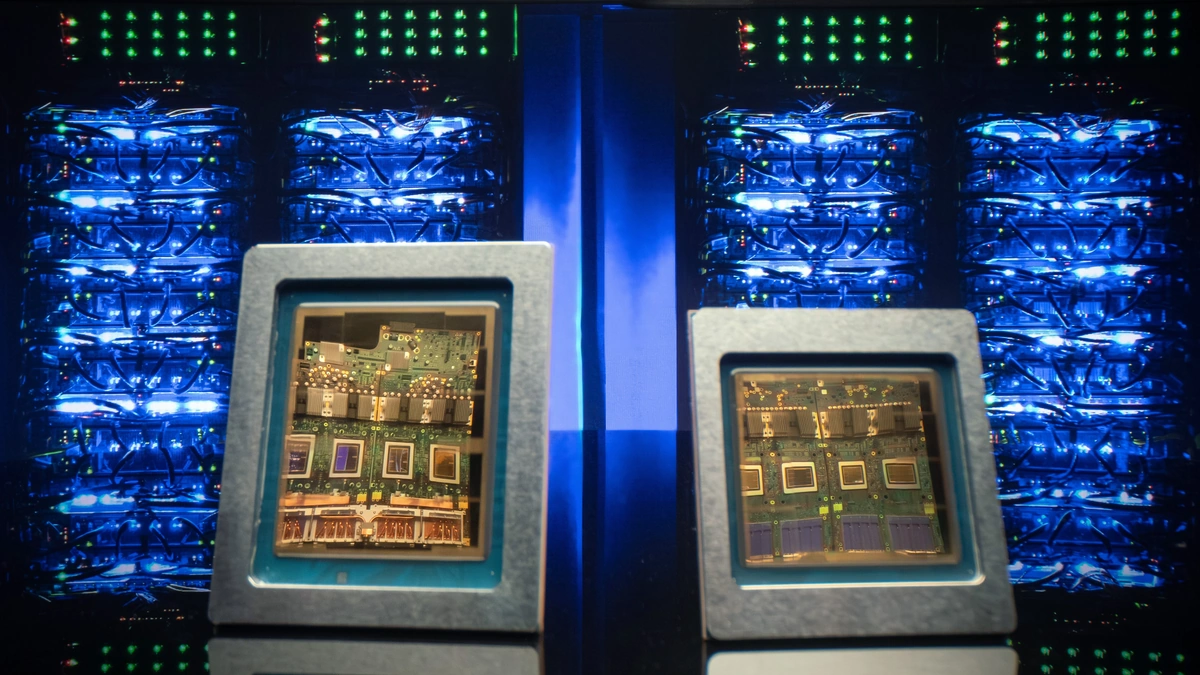
Oracle's release describes Google's eighth generation, split by job, without saying OCI will carry it: TPU 8t for training and TPU 8i for inference. Google's own TPU product page lists 8t at 9,600 chips in a single superpod, with nearly 3x the compute performance per pod of the previous generation, and 8i at an 80% performance-per-dollar improvement over earlier generations for low-latency inference on large mixture-of-experts models. Both are still marked "coming soon" on Google Cloud itself.
| Chip | Built for | Scale per Google | Status on Google Cloud |
|---|---|---|---|
| TPU 8t | Pre-training, embedding-heavy workloads | 9,600 chips per superpod | Coming soon |
| TPU 8i | Post-training and inference | n/a | Coming soon |
| Ironwood (7th generation) | Training, reasoning, inference | 9,216 chips per pod | Generally available |
On Google Cloud, Ironwood, the seventh generation, is generally available, with 9,216 liquid-cooled chips per pod and 42.5 exaflops, per Google. Google rates it at four times the per-chip performance of Trillium, the sixth generation.