Lenovo Yoga arrived at MWC 2026 with a consumer refresh built to make one argument: that Lenovo can put ambient AI, premium displays, and unusual form factors into a single coordinated portfolio rather than a scatter of one-off products. The clearest signal is not any single laptop but Lenovo Qira, a system-level intelligence the company said will begin rolling out across more than 20 devices spanning the ThinkPad, Yoga, Legion, and IdeaPad families over the coming weeks. The hardware shown in Barcelona is where that layer starts to land.
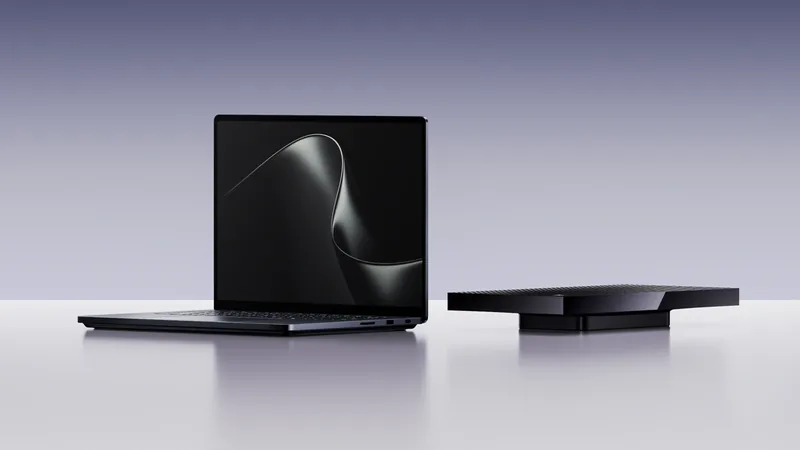
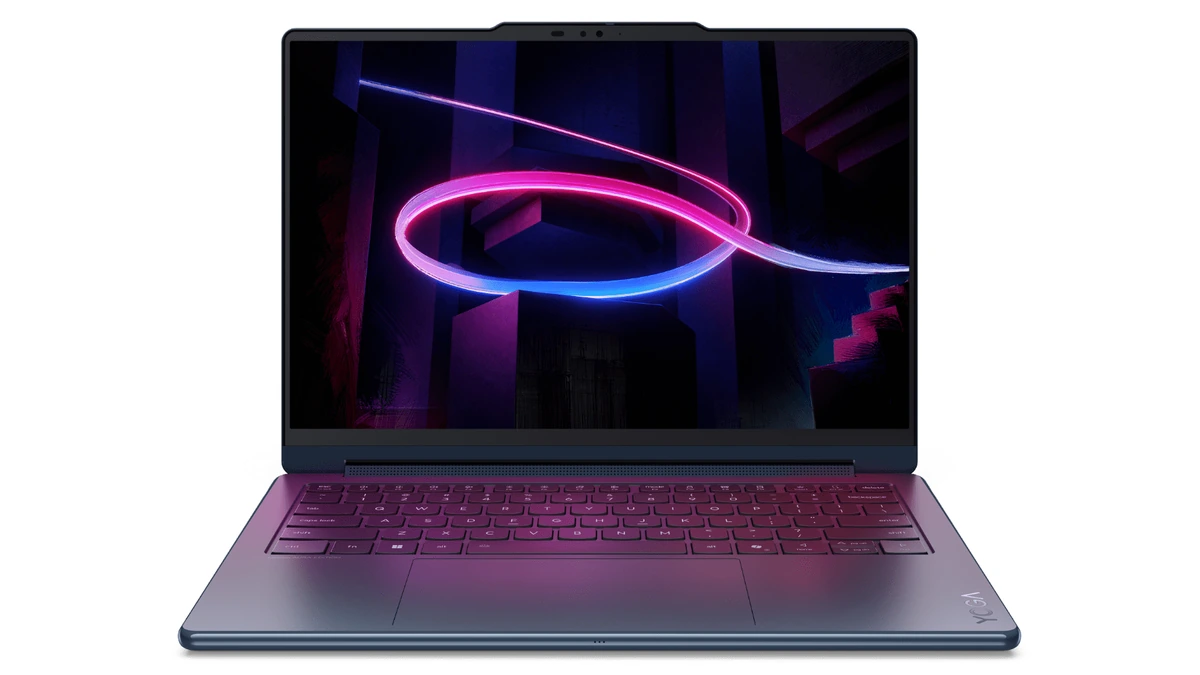
The headline machine is the Yoga 9i 2-in-1 Aura Edition, a 14-inch convertible built around a 2.8K PureSight Pro OLED touch display rated at up to 1100 nits peak brightness with full coverage of the DCI-P3, Adobe RGB, and sRGB color spaces. It runs Intel Core Ultra Series 3 processors as a Windows 11 Copilot+ PC and adds a Canvas Mode that elevates the panel slightly for pen work. Around it, Lenovo detailed the Yoga Pro 7a with AMD Ryzen AI Max Plus processors and up to 128GB of unified memory, the aluminum IdeaPad Slim 5i Ultra starting at 1.15kg, and the Idea Tab Pro Gen 2, a 13-inch Snapdragon 8s Gen 4 tablet that is the first Lenovo device to ship with Qira.
Two proof-of-concept devices carried the more ambitious ideas. The Yoga Book Pro 3D Concept pairs dual PureSight Pro Tandem OLED displays with a glasses-free 3D upper screen, and Lenovo says it converts 2D reference material into 3D on-device and accepts zero-touch hand gestures through an RGB camera, driven by a Core Ultra 7 processor and an NVIDIA GeForce RTX 5070 GPU. The Legion Go Fold Concept takes a different swing, folding a POLED handheld screen open from 7.7 inches to 11.6 inches across four gaming modes. Neither has a price or a ship date, which is the honest way to read them: they are Lenovo showing where it wants the Yoga and Legion lines to go, not products a buyer can plan around.
Qira is the more consequential piece, and also the one that is easiest to overstate. Lenovo describes it as a personal ambient intelligence built at the system level rather than bolted on as an app, able to work across a user's PC, phone, tablet, and wearables, carry context between them, and suggest next steps inside an active session. That framing puts it directly against Microsoft Copilot and Google Gemini as an assistant layer, with the difference that Lenovo controls the hardware it runs on. The first wave is deliberately narrow, six languages across nine regions, and every capability the company lists is described as something the assistant can do rather than something reviewers have tested.
On price, the shipping products are concrete: Lenovo gave estimated EMEA starts of 1799 euros for the Yoga 9i 2-in-1 Aura Edition and 549 euros for the Idea Tab Pro Gen 2 in March 2026, with the Yoga Pro 7a at 2499 euros and the IdeaPad Slim 5i Ultra at 899 euros following in June. The harder question is whether the coordination is real. Lenovo has shown coherent hardware at trade shows before; what will decide this cycle is whether Qira actually behaves like one intelligence across a Yoga laptop and a Motorola phone once it reaches devices, or whether it lands as another assistant that works best in a demo.