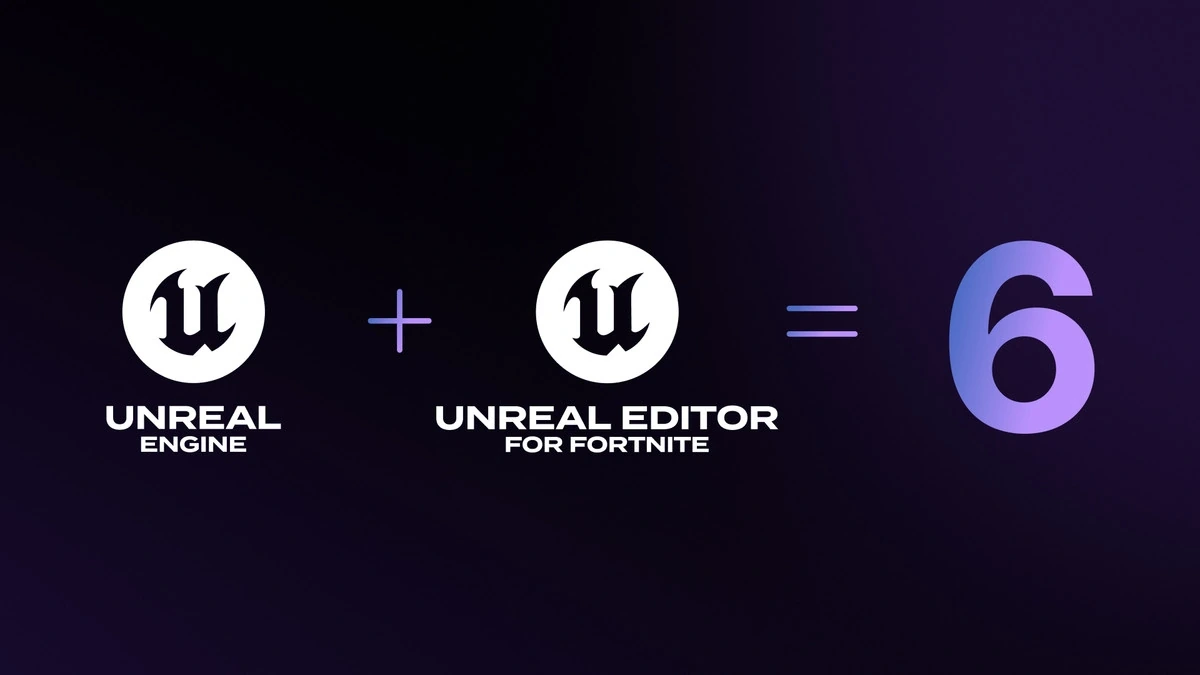
Epic Games used this year's State of Unreal to make its next engine sound less like a version bump and more like a bet on where game development is heading. Among the news out of State of Unreal 2026, the company confirmed that Unreal Engine 6 is in development and is targeting an Early Access release at the end of 2027, and shipped Unreal Engine 5.8 the same day. Epic says the keynote drew more than 2,000 developers in person and hundreds of thousands online.
The pitch for Unreal Engine 6 is that it merges the AAA capabilities built up in UE5 with a next-generation pipeline Epic has been developing live inside Fortnite, so a team can build a game once and deploy it to traditional platforms or into Fortnite and its own live ecosystems. Three shifts sit under that goal. Epic is moving the gameplay programming model to Verse, a language it describes as transactionalizing C++ to support persistent, large-scale experiences with thousands of contributors. It wants content, code, and economies to become portable across games and engines through open standards. And it is building pipeline features such as a Model Context Protocol layer with integrations for Claude, Gemini, and others, so that AI models operate as collaborators inside specific engine workflows rather than as copy-and-paste assistants.
Unreal Engine 5.8 is the more immediately useful release, and Epic is candid that it is a maturing pass rather than a headline one. Lumen gains a lightweight dynamic global illumination mode aimed at holding 60 fps on Nintendo Switch 2 and PCs, and a batch of features move to Production Ready status, including MegaLights, Audio Insights, Live Link Hub, Iris, and Movie Render Graph. Shader compilation and deduplication work cut Fortnite's shader count by 68 percent, a concrete win for a game that has long stressed that part of the pipeline. An experimental Model Context Protocol plugin lands here too, letting developers wire models like Claude directly into projects. Epic frames 5.8 as the last planned major release for Unreal Engine 5, while reserving the option to ship a 5.9 if needed.
The show also introduced Lore, an open-source version control system available now and free to use, built to handle both source code and large binary assets in one place rather than optimizing for one at the expense of the other. On the business side, Epic said it has now paid out more than 1 billion dollars to Fortnite developers since UEFN launched, and that it cut UEFN iteration times by an average of 40 percent over the year, evidence it is trying to make the Fortnite creator economy central to the UE6 story rather than a side project.
What Epic laid out is a coherent direction and a long runway. Verse, portable economies, and a Fortnite-forged pipeline are ambitious commitments, and most of them will be judged on delivery rather than on a keynote. With 5.8 marked as the end of the UE5 line and Early Access still 18 months out, Epic is asking studios to plan around an engine they cannot use yet, on the strength of a pipeline whose most complete proof so far is Fortnite itself.