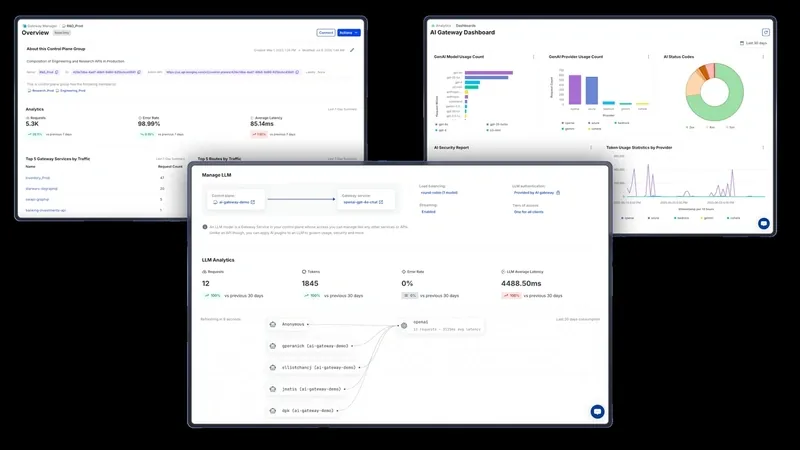
An API integration platform is a managed service layer that connects disparate software systems by exposing, routing, and governing application programming interfaces across hybrid and cloud environments. The category sits one tier above a raw API gateway: it folds in policy enforcement, a management plane for product packaging, and a developer portal for onboarding. Most teams reach for an API integration platform (AIP) once a handful of microservices balloons into dozens of producer and consumer pairs that need consistent authentication, rate limiting, observability, and versioning.
Vendor terminology blurs the line between API management, API gateways, and broader integration middleware. The distinction matters because procurement, security review, and operational burden differ at each layer. The four platforms profiled below, Azure API Management, Google Apigee, Kong Gateway, and IBM API Connect, anchor the upper end of the API integration platform market, and each represents a different deployment philosophy.
What API Integration Platforms Do

An API integration platform bundles three functional layers that historically lived in separate tools. Each layer addresses a different audience: runtime traffic for operators, product packaging for API owners, and discovery for external consumers. Together they cover the full API lifecycle, from design and publication to retirement.
- API gateway
- The data-plane component that terminates client requests, enforces authentication, applies rate limiting and quota policies, then forwards traffic to backend services. This is where latency budgets are spent and where most integration middleware proves its operational value.
- Management plane
- The control-plane interface where API owners import OpenAPI specs, bundle operations into products, attach policies, and version revisions. The management plane is also the integration point for CI/CD pipelines that deploy API definitions alongside backend services.
- Developer portal
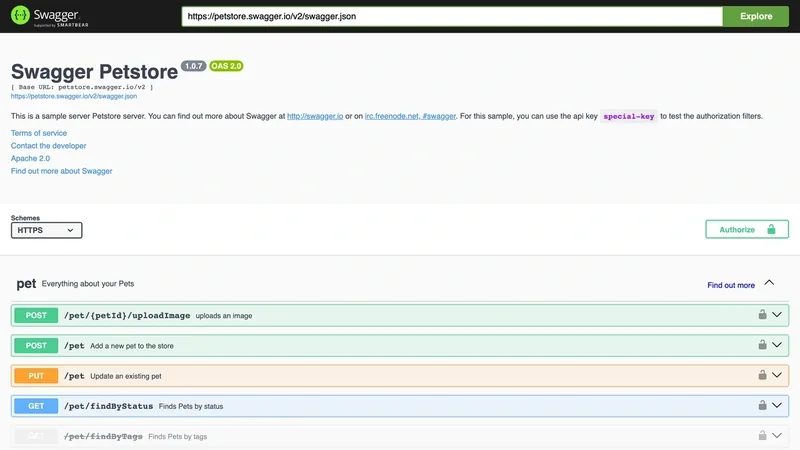
- A consumer-facing site that publishes documentation, issues subscription keys, and hosts an interactive console for trial calls. The portal is the front door for internal app teams and external partners alike, and its quality often decides whether an API gets adopted.
Beyond these three layers, mature platforms add analytics, monetization hooks, mediation for protocol translation, and policy templates for common patterns like OAuth 2.0 flows or JSON schema validation. Some, like Azure API Management, extend the gateway into a containerized binary that runs inside customer infrastructure for hybrid deployment scenarios.
Azure APIM
Azure APIM is Microsoft's platform-as-a-service (PaaS) offering for the full API lifecycle, documented as a "hybrid, multicloud management platform for APIs across all environments" (Microsoft Learn). The vendor markets it as a single multicloud API management surface across all environments. The service is organized around the canonical three-plane model: a gateway that proxies inbound calls, a management plane exposed through the Azure portal and ARM APIs, and a generated developer portal that ships with every instance. The platform handles RESTful API workloads natively alongside SOAP, GraphQL, and gRPC.
- Three-plane architecture. The gateway handles request routing, transformation, and policy execution; the management plane owns configuration and versioning; the developer portal is an automatically generated, customizable site that publishes API documentation and credentials.
- Self-hosted gateway option. Microsoft offers a self-hosted gateway as "an optional, containerized version of the default managed gateway that's included in every API Management instance." Teams deploy it to Kubernetes clusters in AWS, on-premises racks, or edge locations to keep traffic local while preserving central management.
- Policy DSL. Inbound, backend, outbound, and on-error sections accept XML-based policy snippets for caching, JWT validation, IP filtering, and rewrite rules, applied per API, per product, or globally.
- CI/CD friendly. ARM templates and Bicep modules let teams ship API revisions through the same pipelines as application code. The CI/CD pipeline comparison of GitHub Actions, GitLab CI, and Jenkins covers the release tooling these pipelines standardize on.
- Tier ladder. Consumption, Basic, Standard, and Premium tiers gate features like virtual network injection, multi-region deployment, and self-hosted gateway support.
Azure API Management fits organizations already invested in the Microsoft cloud, particularly those running .NET workloads on App Service or AKS. The hybrid deployment story is strong, though scope claims should stay precise: it is a platform for the management layer, not a general-purpose iPaaS for arbitrary system-to-system data movement.
Google Apigee
Apigee is Google Cloud's dedicated API management platform, built around the API proxy abstraction. Per Google's own documentation, "[w]ith Apigee, you can build API proxies" that are "RESTful, HTTP-based APIs that interact with your services" (Apigee docs). The proxy is a configurable pipeline of policies that sits between the consumer and the backend, decoupling the two so the backend can change without breaking published contracts.
- API proxy model. Each proxy bundle defines endpoints, conditional flows, and policy steps. The official proxy guide describes how a REST-based facade can front a SOAP service, a database, or another HTTP backend without exposing the underlying implementation.
- Hybrid runtime. Apigee Hybrid splits the management plane in Google Cloud from the runtime gateway that customers operate inside their own Kubernetes clusters, addressing data-residency and latency requirements.
- Analytics depth. Built-in dashboards track traffic, latency, error rates, and developer-app activity, with custom report support for monetization or compliance reporting.
- Security policies. OAuth 2.0, API key validation, JWT verification, threat protection for SQL injection and XML or JSON bombs, plus quota and spike-arrest policies for rate limiting.
- Developer portal. Drupal-based and integrated portal templates let teams publish OpenAPI specs and provision credentials in a self-service flow.
Kong Gateway
Kong Gateway is the open-source API gateway that anchors Kong Inc.'s broader Konnect platform. Where Azure and Apigee start from the control plane and work down, Kong starts at the data plane and layers management on top. The result is a gateway-first integration middleware popular with teams that want a self-hosted gateway as the default rather than the exception.
- Plugin architecture. Over a hundred bundled plugins cover authentication, rate limiting, request transformation, logging, and observability. Custom plugins can be written in Lua, Go, JavaScript, or Python.
- Deployment flexibility. Kong runs on bare metal, VMs, Docker, or Kubernetes. The Kubernetes Ingress Controller treats Kong as a native ingress, which appeals to platform-engineering teams already managing cluster traffic.
- Konnect control plane. The hosted Konnect SaaS layer adds the admin plane, developer portal, service catalog, and analytics on top of one or more self-managed gateway data planes.
- Rate limiting and policy. Local, cluster-wide, or Redis-backed rate limiting policies with sliding-window or fixed-window enforcement, plus circuit breakers and request-size validation.
- Strong open-source core. The free tier covers most production needs, with the paid Enterprise tier adding RBAC, secrets management, and audit logging.
The API gateway comparison of AWS, Kong, and Zuul runs the deeper head-to-head against those alternatives. At the integration-platform layer, Kong's draw is operational control: teams own the runtime end to end and adopt Konnect when management overhead outgrows manual configuration.
IBM API Connect
IBM API Connect covers the full API lifecycle as either a SaaS subscription or as a component of Cloud Pak for Integration, IBM's container-based integration middleware suite. The platform pairs the DataPower Gateway for runtime enforcement with the control plane and the portal for consumer onboarding. A separate IBM product, Databand, documents custom API integration hooks for data orchestration, but Databand is not itself an API integration platform. API Connect is the relevant IBM offering for this category.
- Lifecycle coverage. Design, test, publish, secure, and analyze APIs through a single control plane, with REST and GraphQL support and an OpenAPI-first authoring flow (IBM API Connect REST APIs reference).
- DataPower Gateway. Hardware-grade gateway runtime with deep XML, JSON, and security protocol support, often selected by enterprises with regulated workloads.
- Deployment models. SaaS on IBM Cloud, customer-managed on OpenShift via Cloud Pak for Integration, or hybrid deployment that splits planes across environments.
- Developer portal. Drupal-based portal with theming, API discovery, and self-service subscription approval workflows.
- Platform-as-a-service economics. The SaaS edition removes infrastructure operations from the buyer's plate, while Cloud Pak suits shops that already standardize on OpenShift.
Platform Comparison at a Glance
The four platforms cluster differently across deployment model, portal maturity, and self-managed deployment story. The table below summarizes the practical differences that drive shortlist decisions. AWS WAF is intentionally absent: it is a web application firewall that protects API endpoints, not an API integration platform.
| Platform | Deployment Model | Developer Portal | Self-Hosted Option | Primary Strength |
|---|---|---|---|---|
| Azure API Management | PaaS with hybrid deployment | Generated, customizable | Containerized gateway | Microsoft-stack integration and policy DSL depth |
| Google Apigee | SaaS plus Apigee Hybrid | Integrated portal templates | Hybrid runtime on Kubernetes | API proxy abstraction and analytics |
| Kong Gateway | Self-hosted plus Konnect SaaS | Konnect portal | Default deployment mode | Plugin ecosystem and operator control |
| IBM API Connect | SaaS or Cloud Pak for Integration | Drupal-based portal | OpenShift or on-prem | DataPower runtime and regulated-workload fit |
How to Choose the Right API Integration Platform
The shortlist is rarely about feature checkboxes; the differentiating questions are operational. The full-lifecycle iPaaS lens matters here because most teams underweight the developer portal and the management plane during procurement, then discover the gap once internal adoption stalls. Run through the five criteria below in order, since each one narrows the field meaningfully.
- Deployment model fit. Cloud-native PaaS is simplest, but regulated workloads, data-residency rules, and latency-sensitive paths may require hybrid deployment with the self-managed gateway. Decide whether the runtime needs to live inside your VPC, on-premises, or at the edge before evaluating features.
- Ecosystem lock-in risk. Apigee favors Google Cloud, Azure API Management favors Microsoft Azure, IBM API Connect favors Cloud Pak deployments, and Kong stays platform-neutral. Multicloud API control strategies usually settle on Kong or Apigee Hybrid for that reason.
- Developer portal maturity. Inspect the out-of-the-box portal as a real partner would. Self-service subscription, OpenAPI rendering, sandbox credentials, and theming control determine whether external developers will onboard or open a support ticket.
- request capping and policy granularity. Check whether policies attach at the global, product, API, operation, and consumer scope, and whether request throttling is local-node or coordinated across the cluster. Granular policy is what keeps a runaway client from degrading shared backends.
- Vendor support and SLA tier. Production API traffic is revenue-bearing. Confirm SLA percentages, escalation paths, and the gap between community and commercial support. Pair the platform with observability tooling early; our Datadog vs New Relic vs Sentry comparison for developers covers the monitoring side, and the API testing tools comparison covers contract verification.
The right platform is the one that survives the second year, when the catalog grows past a hundred APIs, the developer portal needs to scale to external partners, and the control plane has to coexist with the rest of the platform engineering stack. Choose for the lifecycle, not the launch.