RESTful API documentation is a structured reference system that communicates endpoint contracts, request schemas, authentication requirements, and error codes to the developers who integrate with a service.
Poor documentation does not just slow integration; it transfers the cognitive cost of understanding the API surface onto every consumer who attempts to connect. A missing error code in the docs becomes a mystery failure at 2 a.m. An undocumented required header becomes a support ticket. Teams that treat documentation as an afterthought pay that cost repeatedly, across every developer who integrates the service. The Representational State Transfer (REST) architectural style defines a resource model and a set of HTTP constraints; documentation is the contract that makes those constraints usable without reading the source code. Microservices communication patterns covering gRPC, REST, and message queues provides context on how service contracts fit into broader distributed system design.
What RESTful API Documentation Must Cover

RESTful API documentation must cover every API endpoint's URL pattern, supported HTTP methods, required and optional request parameters, request body schema, authentication scheme, and the complete set of HTTP status codes the endpoint can return. Six coverage areas are non-negotiable; omitting any one of them forces integrators to guess or test-probe the API for what the documentation should have stated. IETF RFC 9110 (HTTP Semantics) defines the normative semantics for each HTTP status code class, making it the authoritative anchor for the error code table.
- URL pattern and HTTP method matrix
- List every endpoint path with its supported HTTP methods (GET, POST, PUT, PATCH, DELETE) so developers can identify resource operations without probing the API.
- Path and query request parameter table
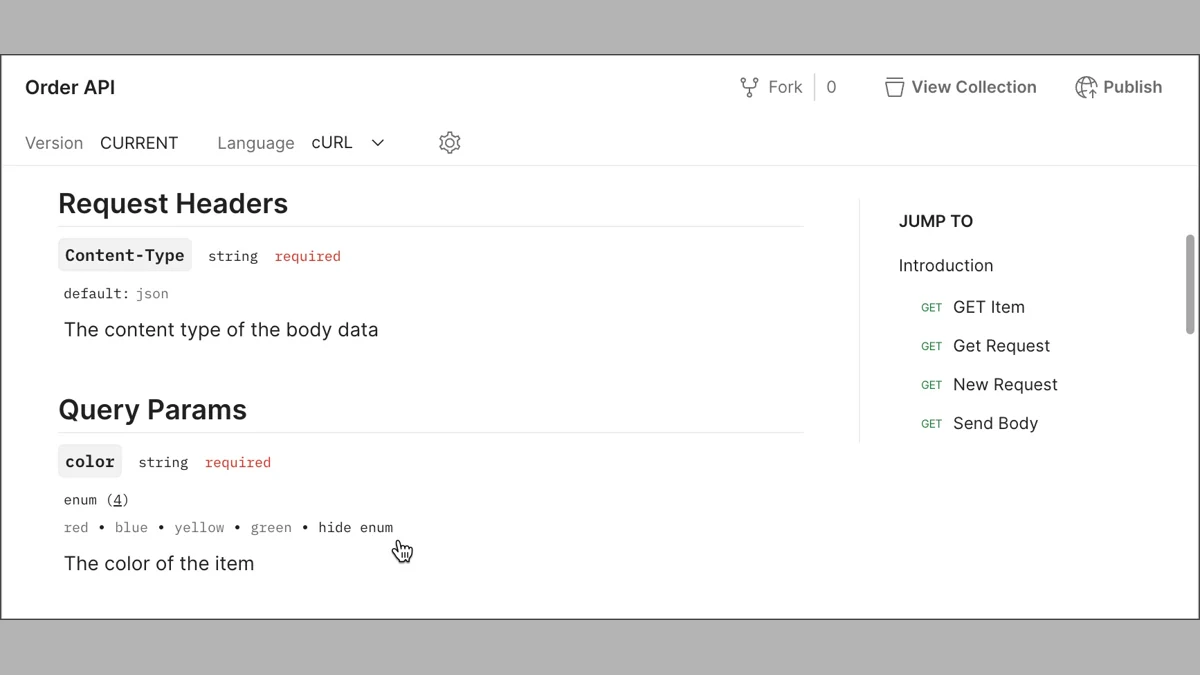
- Enumerate each request parameter with its data type, required or optional designation, and a realistic example value rather than a generic placeholder.
- Request body schema
- Provide the JSON Schema definition or an OpenAPI Specification component reference so clients can validate their payload structure before sending a request.
- Authentication scheme
- State the credential type (API key, bearer token, OAuth 2.0 scope), its location in the HTTP request, and the steps to obtain credentials.
- HTTP status code table
- Document every status code the API endpoint can return, including error codes, with the meaning of each code and an example error response body.
- Rate limit policy
- Specify the request quota (requests per second or per minute), the HTTP 429 Retry-After header behavior, and the endpoint or global scope of the limit.
The Spec-First Workflow: OpenAPI Specification as the Documentation Source of Truth
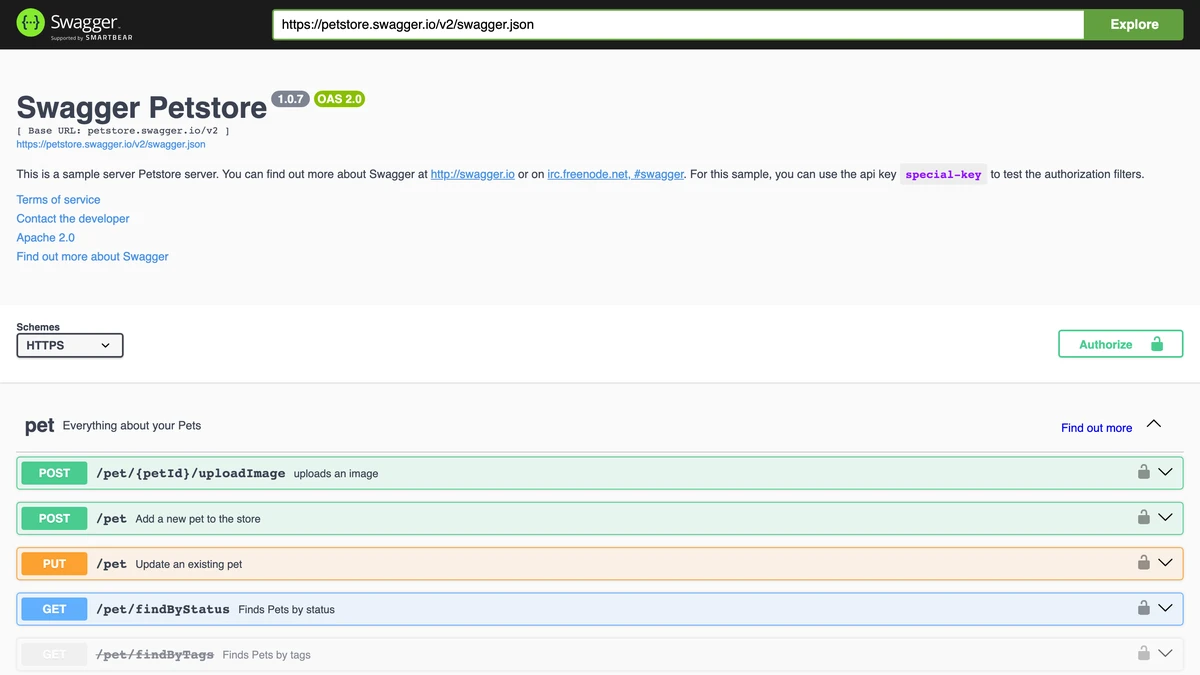
RESTful API documentation written in the OpenAPI Specification format gives every downstream tool, from Swagger UI to CI/CD validation pipelines, a single machine-readable contract that eliminates documentation drift. The OpenAPI Specification (OAS) defines endpoints, parameters, response schemas, and authentication schemes in a YAML or JSON file that both humans and tooling can parse. Writing that OAS file before implementation code, rather than after, is the spec-first workflow; it makes the documentation the source of truth rather than a retrospective summary of decisions already made. Tool selection for rendering OAS files into developer portals is covered at the best API documentation tools comparison.
Without a machine-readable contract, API reference documentation and the live API surface diverge within weeks of any release that renames a field or adds an optional parameter. The spec-first workflow prevents that drift by making the OAS file the artifact that both the implementation and the rendered docs derive from. The OpenAPI Specification repository maintained by the OpenAPI Initiative is the canonical normative reference for the schema format.
- Author endpoint definitions in an OAS YAML file using Swagger Editor's live linter to catch schema errors before committing.
- Commit the OAS file to version control alongside the application source code so documentation changes receive the same review process as code changes.
- Configure a CI/CD hook to validate the OAS file on every pull request; any endpoint change not reflected in the spec fails the build before merge.
- Render API reference documentation automatically with Swagger UI or Redoc on merge to the main branch, so the published docs always match the accepted spec.
- Publish the rendered docs to the developer portal and trigger a changelog entry for any breaking change, giving integrators an auditable record of what changed and when.
Writing Endpoint Documentation That Developers Actually Use
RESTful API documentation for individual endpoints fails when it documents only the happy path and omits the error codes, parameter constraints, and example payloads that developers encounter during integration. The happy-path bias is the most common endpoint documentation failure mode: a page that shows the 200 response but says nothing about what triggers a 422 Unprocessable Entity leaves integrators writing defensive code against an undocumented surface. The HTTP endpoint model and resource semantics underlying REST are explained in context at GraphQL vs REST for beginners.
Five elements distinguish endpoint documentation that developers actually use from documentation that merely exists. The W3C Web API Design Principles identifies worked examples and accurate error descriptions as the two factors that most directly reduce integration friction for API consumers.
- A worked example request using realistic sample data, not placeholder "string" or "integer" values, so developers can copy, modify, and run the request immediately.
- A complete HTTP status code table covering at minimum 200, 201, 400, 401, 403, 404, 422, and 429, per IETF RFC 9110 (HTTP Semantics), with the semantic meaning of each code in the context of that specific API endpoint.
- An error response body schema that includes a machine-readable error code field (a string identifier, not just the HTTP status integer) that integrators can catch programmatically in their error-handling logic.
- Request parameter constraints stated precisely: string maxLength, integer minimum and maximum, enum allowed values, and the required versus optional designation for each parameter.
- An interactive API console, such as the Swagger UI try-it panel or a Postman Run-in-Workspace button, so developers can test the API endpoint without leaving the documentation page.
Worked examples outperform abstract schema descriptions for developer experience (DX) because they reduce the cognitive translation step between reading a spec and making a working API call. A schema definition tells the developer what is possible; a realistic example shows them what a production call actually looks like, including the headers, authentication, and body shape together. The developer experience gap between an API with realistic examples and one with abstract schema descriptions alone is measurable in integration time.
Documenting Authentication and Security Schemes
RESTful API documentation must make the authentication scheme explicit at the API level and at every endpoint that deviates from the global default, because undocumented security requirements are the most common cause of integration failures at the first API call. A developer who reaches an API endpoint without knowing whether to send an API key in a header or a query parameter, or which OAuth 2.0 scope to request, fails immediately and with no actionable error. The authentication documentation must answer those questions before the developer writes their first request. The trade-offs between OAuth 2.0, JWT, and API key security models are covered in depth at JWT vs OAuth vs API keys authentication.
- API key authentication
- Document the key location (Authorization header, X-API-Key header, or query parameter), the format (bare string or
Bearer {key}), and the steps to generate or obtain a key from the developer console. Example header:Authorization: Bearer sk_live_abc123. - OAuth 2.0 bearer token
- Document the authorization server endpoint, the required OAuth 2.0 scopes for each operation, the token expiry period, and the token refresh flow. Per IETF RFC 6749 (OAuth 2.0), the authorization code flow and client credentials flow serve different integration contexts; specify which flow the API supports.
- Mutual TLS (mTLS)
- Document the client certificate format required (PEM or PKCS#12), the certificate authority chain the server trusts, and whether client certificate pinning is enforced at the API gateway layer.
Each authentication scheme entry in the RESTful API documentation should include a sample HTTP request header showing exactly where the credential appears so developers can copy the pattern directly. Endpoint-level deviations from the global authentication scheme, such as a public status endpoint that requires no credentials, must be flagged explicitly rather than left for developers to discover through a 401 response.
API Versioning and Changelog Documentation
RESTful API documentation loses its value the moment a version increment ships without a changelog entry that distinguishes breaking changes from additive changes. Integrators maintaining production code against a versioned API need to know whether a new release will break existing calls, add optional features, or correct existing behavior. Without that signal, every release forces a full audit of the API reference documentation to determine what changed, which erodes trust in the documentation itself.
Two API versioning strategies dominate deployed REST services, and each carries different documentation maintenance implications.
| Strategy | URL structure | Caching behavior | Client migration path | Documentation maintenance overhead |
|---|---|---|---|---|
| URI versioning | /v1/users and /v2/users are distinct paths | Each version caches independently at CDN and proxy layers | Clients update base URL; old version remains accessible at /v1/ during support window | Requires maintaining parallel API reference documentation sets per active version |
| Header versioning | Single path; version in Accept header, e.g. Accept: application/vnd.api+json;version=2 | Caching requires Vary header configuration to prevent version bleed | Clients update Accept header value; URL stays stable | Single URL in documentation; version-specific behavior documented inline per operation |
Regardless of which API versioning approach a team adopts, changelog entries should use semantic versioning signals in the header: MAJOR for breaking changes that require client-side updates, MINOR for additive changes such as new optional request parameters or new response fields, and PATCH for corrections that do not alter the API surface. Deprecated API endpoints require a documented sunset date and a migration guide path pointing to the replacement endpoint; deleting deprecated endpoint documentation before the support window closes leaves integrators with no reference for their existing calls. Archived API reference documentation for past major versions should remain accessible at their versioned URL, such as /v1/, for the full declared support window.
Keeping RESTful API Documentation Accurate: Automation and Review Practices
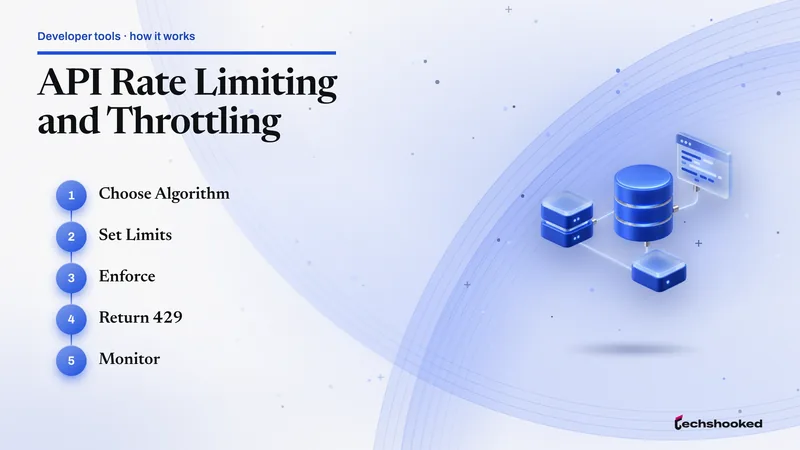
RESTful API documentation maintained only by manual update processes drifts from the live API surface within weeks of any release that adds or renames a field. Documentation drift is not a writing quality problem; it is a process architecture problem. Manual documentation updates require a developer to remember to update the OAS file after changing code, a dependency that breaks under release pressure. The five-practice accuracy framework below treats the OAS file as an enforced artifact rather than a voluntary document. Rate limit documentation and HTTP 429 handling in implementation context are covered at API rate limiting and throttling implementation.
- Treat the OAS file as the authoritative source of truth and generate API reference documentation from it automatically on every CI/CD merge, so no human remembers to update the docs separately from the code.
- Add an OAS schema validation gate to the pull request pipeline; any change to an endpoint that is not reflected in the OAS file fails the build before merge, making documentation drift structurally impossible to ship.
- Run contract tests using Dredd or Schemathesis against the live API with the OAS file as the test specification, catching any runtime divergence between the deployed code and the accepted spec before the release window closes.
- Schedule a quarterly documentation review cycle independent of release cycles to audit example values, refresh worked request examples with realistic data, and retire deprecated API endpoint entries that have passed their sunset date.
- Surface the documentation last-reviewed date and the OAS version string in the developer portal header so integrators can assess the freshness of the API reference documentation at a glance.
The spec-first workflow and CI/CD automation address documentation drift at the structural level, but they do not replace human review of example quality. Keeping an interactive API console current, with request examples that reflect the live API surface, requires the same quarterly review discipline applied to prose. Automated tools confirm that the OAS file matches the deployed API; they do not verify that worked examples use realistic data or that parameter descriptions are clear to a developer seeing the API for the first time. The MDN HTTP request methods reference is the practitioner reference for verifying how PATCH, PUT, POST, and DELETE differ at the protocol level, which affects how each method's endpoint documentation should frame parameter mutability and idempotency.
Further reading
Frequently Asked Questions
What is the difference between API documentation and an API specification?
An API specification (such as an OpenAPI Specification file) is a machine-readable contract defining endpoints, parameters, and response schemas. API documentation is the human-readable reference material, guides, and examples generated from or alongside that specification. The OpenAPI Specification drives interactive documentation renderers like Swagger UI; prose guides and tutorials are authored separately and contextualize the specification for developer onboarding.
Do I need an OpenAPI Specification file to document a RESTful API?
No, but starting with an OpenAPI Specification file dramatically reduces maintenance overhead. Without a machine-readable spec, every endpoint change requires a manual documentation update; with one, tools like Swagger UI regenerate the reference automatically. Teams that ship documentation-as-code in prose first often accumulate drift between the live API and its published documentation within a few release cycles.
Which HTTP status codes must RESTful API documentation explicitly cover?
At minimum, document 200 (success), 201 (created), 400 (bad request), 401 (unauthorized), 403 (forbidden), 404 (not found), 422 (unprocessable entity), and 429 (too many requests) for every endpoint. IETF RFC 9110 defines the normative semantics for each class; documentation that omits error codes forces integrators to discover failure modes through trial and error, which is the leading cause of integration delays reported in developer surveys.