Quantum computing in finance is a research-stage discipline that applies quantum mechanical principles to portfolio optimization, Monte Carlo risk simulation, and derivative pricing problems that overwhelm classical processors.
The financial services sector generates computational workloads at the intersection of combinatorial complexity and time sensitivity: a portfolio of hundreds of assets requires simultaneous optimization across correlated risk factors; a Monte Carlo risk simulation for a structured product may demand millions of paths to converge within regulatory reporting windows; derivative pricing for exotic instruments requires numerical methods that grow expensive as the number of underlyings increases. Classical hardware has served these workloads for decades, but the scaling mathematics are turning unfavorable. Quantum computing represents the most studied candidate for breaching those scaling walls, though no financial application has reached production on quantum hardware. The AI in finance applications landscape shows where classical machine learning already operates in production while quantum methods remain in the research pipeline.
Why Classical Computing Hits a Wall in Finance
Quantum computing in finance addresses a specific bottleneck: classical processors require exponentially more resources as portfolio size, simulation paths, or option complexity scales. The root cause is structural: classical bits represent one state at a time, so exponential problem spaces require exponential computation time or hardware parallelism that quickly becomes physically impractical.
Markowitz optimization, the mathematical framework underlying modern portfolio theory, requires minimizing a quadratic objective function across all asset pairs in a portfolio. For a 1,000-asset universe, the covariance matrix has roughly 500,000 unique entries, and the optimization runs over a search space that grows combinatorially as constraints multiply. Monte Carlo simulation, the workhorse of risk management, estimates value-at-risk and expected shortfall by sampling thousands to millions of random market scenarios. Accuracy scales with path count, but path count scales the computational bill linearly. Both problems collide with what mathematicians call the curse of dimensionality: adding one more variable multiplies the search space rather than adding to it. The classical vs quantum computing architecture comparison covers the hardware contrast underlying these scaling differences.
The specific classical ceilings that quantum approaches aim to raise:
- Markowitz optimization: quadratic programming over covariance matrices; NP-hard in constrained forms, making exact solutions infeasible for large portfolios on classical hardware.
- Monte Carlo simulation: statistical convergence requires path counts proportional to 1/epsilon squared for epsilon-accurate results; shrinking the error bound quadruples computational cost.
- Derivative pricing: finite-difference and lattice methods for path-dependent options scale polynomially with the number of underlyings and time steps, becoming prohibitive for high-dimensional payoffs.
- Fraud detection: real-time transaction classification across thousands of features must complete in milliseconds; classical models manage this with feature-selection trade-offs that reduce accuracy at the margin.
Portfolio Optimization: Quantum Annealing and QAOA
Quantum computing in finance finds one of its clearest near-term use cases in portfolio optimization, where D-Wave quantum annealing and QAOA-based gate circuits map Markowitz mean-variance problems to Ising Hamiltonians. The mapping works because both the Markowitz mean-variance problem and the Ising model describe optimization over pairwise interactions: asset correlations correspond to coupling terms between spins, and portfolio weights correspond to spin states. This structural equivalence allows financial optimization to be recast as a physics problem that quantum hardware can, in principle, explore more efficiently than classical search.
A detailed end-to-end assessment by Goldman Sachs and AWS, published on the AWS Quantum Blog, evaluated a quantum interior point method (QIPM) for portfolio optimization. The assessment found that while QIPM carries a favorable theoretical complexity profile, the physical resource requirements for any practical quantum advantage exceed what current hardware provides. A companion analysis from the same collaboration examined data-loading overhead, concluding that efficiently encoding classical financial data into a quantum state through block-encoding techniques is a barrier that can negate the algorithmic speedup unless methods improve substantially. The AWS blog post on data loading for quantum computers documents this constraint in detail.
Four concepts central to portfolio optimization research on quantum hardware:
- Quantum annealing (D-Wave)
- Uses the physical process of quantum tunneling to search for the low-energy state of an Ising Hamiltonian. D-Wave's systems accept portfolio problems as quadratic unconstrained binary optimization (QUBO) problems. Research programs at financial institutions have submitted constrained portfolio allocation problems to D-Wave hardware; results remain at the experimental level with no production deployment confirmed.
- Quantum approximate optimization algorithm (QAOA)
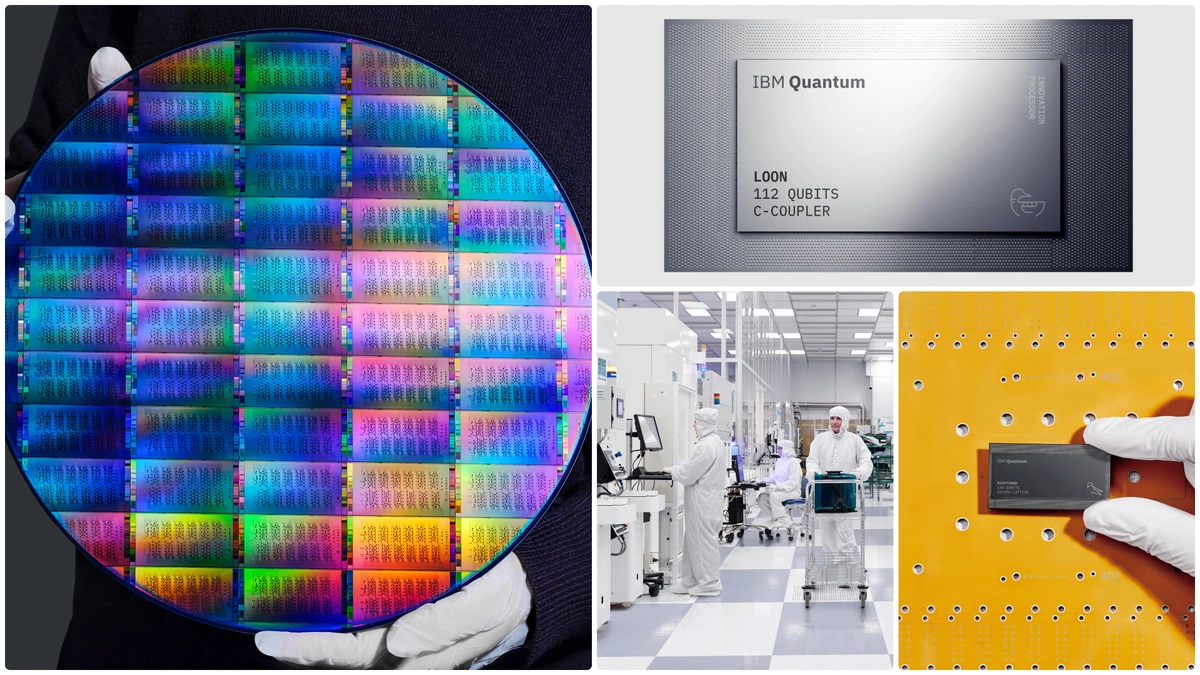
- The quantum approximate optimization algorithm (QAOA) is a gate-based variational algorithm that alternates between problem-encoding and mixing layers on a quantum circuit. QAOA is being studied for combinatorial finance optimization on near-term hardware from IBM Quantum and Google Quantum AI. Current research shows QAOA can find approximate solutions for small portfolio problems, but circuit depth requirements grow with portfolio size and noise on current hardware degrades solution quality before a useful answer emerges.
- Variational quantum eigensolver (VQE)
- The variational quantum eigensolver (VQE) is a hybrid quantum-classical algorithm designed for eigenvalue problems. Finance researchers have explored VQE-based formulations for risk minimization, but the circuit depth required for realistic portfolio sizes exceeds what noisy intermediate-scale quantum hardware can run reliably. VQE in finance is a longer-range research direction than QAOA.
- Ising model formulation
- The Ising model provides the shared mathematical language between quantum annealing and gate-based QAOA. Reformulating a constrained portfolio optimization as an Ising Hamiltonian is an active area of financial engineering; the quality of the encoding directly determines whether the quantum hardware produces a useful result.
Monte Carlo Risk Simulation with Quantum Amplitude Estimation
Quantum computing in finance targets Monte Carlo risk simulation through quantum amplitude estimation (QAE), an algorithm that in theory reduces sampling complexity compared to classical Monte Carlo. Classical Monte Carlo achieves epsilon-accurate estimates by drawing roughly 1/epsilon squared samples. QAE is theorized to achieve comparable accuracy with sample complexity closer to 1/epsilon, a qualitative improvement for high-precision risk estimates. A peer-reviewed study in npj Quantum Information, a peer-reviewed open-access journal published by Nature Portfolio, established the foundational complexity analysis for QAE-based estimation and is available via nature.com.
IBM Research has applied QAE directly to credit risk. The IBM Research publication on credit risk analysis using quantum computers frames economic capital as the difference between Value at Risk and the expected value of a loss distribution for a credit portfolio, and demonstrates QAE encoding of a loan loss distribution on real quantum hardware for small instances. The IBM quantum finance research program, documented at research.ibm.com/topics/quantum-finance, covers the broader scope of QAE and amplitude estimation methods applied to financial risk analysis.
A QAE-based financial risk analysis workflow proceeds in four conceptual steps:
- State preparation: encode the probability distribution of risk factors (interest rates, equity prices, credit spreads) into a quantum state. This step requires a quantum circuit that produces the target distribution with high fidelity.
- Payoff function encoding: map the financial payoff or loss function onto the quantum state using a quantum oracle. For value-at-risk or expected shortfall calculations, the oracle marks states corresponding to loss events.
- Amplitude estimation: run QAE to extract the probability amplitude associated with the marked states. This amplitude corresponds to the probability of the loss event needed for value-at-risk or expected shortfall.
- Classical post-processing: convert the amplitude estimate to a monetary risk figure such as economic capital, defined by IBM Research as the difference between Value at Risk and the expected loss value.
The obstacle to production deployment is the same as for other quantum finance algorithms: near-term quantum hardware carries noise levels that corrupt the amplitude estimate before enough circuit depth accumulates to outperform classical Monte Carlo. Fault-tolerant hardware capable of running QAE at financially useful scale does not exist yet.
Derivative Pricing and Path-Dependent Options
Quantum computing in finance applies to derivative pricing through hybrid quantum-classical algorithms that encode option payoff structures into quantum circuits. The Black-Scholes model handles European options with a closed-form formula, but path-dependent options such as Asian options, barrier options, and lookback options require numerical methods because payoffs depend on the price trajectory, not just the terminal price. Quantum circuits can, in principle, represent the entire path distribution in superposition and compute expected payoffs without sequential path sampling.
The comparison between classical and quantum approaches for derivative pricing reflects the research state of both methods:
| Method | Computational complexity (qualitative) | Maturity stage | Hardware requirement |
|---|---|---|---|
| Classical Monte Carlo | Scales as 1/epsilon squared in accuracy; manageable for standard options | Production-deployed | Standard CPU/GPU cluster |
| Finite-difference PDE methods | Exponential in the number of underlyings; impractical above 3-4 dimensions | Production-deployed (low-dimensional only) | Standard CPU cluster |
| Quantum amplitude estimation | Theoretical improvement over classical Monte Carlo in sampling steps; advantage requires fault-tolerant circuits | Proof-of-concept research | Fault-tolerant quantum processor (not yet available at scale) |
| Hybrid quantum-classical (QAOA / VQE) | Variational; accuracy depends on circuit depth and optimizer iterations | Early research-stage | Near-term quantum hardware (NISQ-era) |
Hybrid quantum-classical algorithms represent the practical research frontier for derivative pricing. The quantum circuit handles high-dimensional state preparation and payoff encoding; a classical optimizer adjusts circuit parameters to improve the result. Current research confirms the method works conceptually on small instances, but scaling to real derivative books requires hardware noise reduction well beyond current devices.
Fraud Detection and Quantum Machine Learning
Quantum computing in finance also encompasses fraud detection research, where quantum machine learning (QML) algorithms propose to pattern-match transaction anomalies across higher-dimensional feature spaces than classical classifiers. Classical fraud detection relies on gradient-boosted trees, neural networks, and rule-based engines operating on tabular transaction data: amounts, merchants, geolocation, time patterns, and behavioral sequences. QML research investigates whether quantum feature spaces, encoded through parameterized quantum circuits, can separate fraudulent from legitimate transactions with fewer labeled examples or with greater precision in edge cases.
Specific QML directions under research for fraud detection and anomaly detection:
- Quantum support vector machines (QSVM): encode transaction features into a quantum kernel function; the Hilbert space of the quantum kernel may separate anomalous transactions from baseline patterns more cleanly than classical kernels for certain data geometries. Research results are inconclusive at practical scale.
- Quantum neural networks (QNN): parameterized quantum circuits trained to minimize a classification loss over labeled transaction datasets. QNNs face the barren plateau problem, where gradients vanish during training at circuit depths large enough to be useful, complicating optimization.
- Quantum generative models: used to synthesize rare fraud patterns for data augmentation, addressing the class imbalance problem in transaction classification datasets. This remains a theoretical application without production evidence.
- Near-term feasibility: all QML approaches for fraud detection are early research-stage. No financial institution has deployed QML in a production fraud detection pipeline. Classical methods retain substantial performance advantages on current hardware.
Hardware Landscape: Gate-Based Systems vs Quantum Annealing
Quantum computing in finance depends on two distinct hardware paradigms: gate-based quantum computing systems from IBM Quantum and Google Quantum AI, and quantum annealing systems from D-Wave. The two paradigms are not interchangeable: they use different physical mechanisms, support different problem types, and impose different constraints on financial algorithm design. IBM Research's quantum finance program, documented at research.ibm.com/topics/quantum-finance, covers the algorithmic and hardware context for both paradigms as applied to financial services problems.
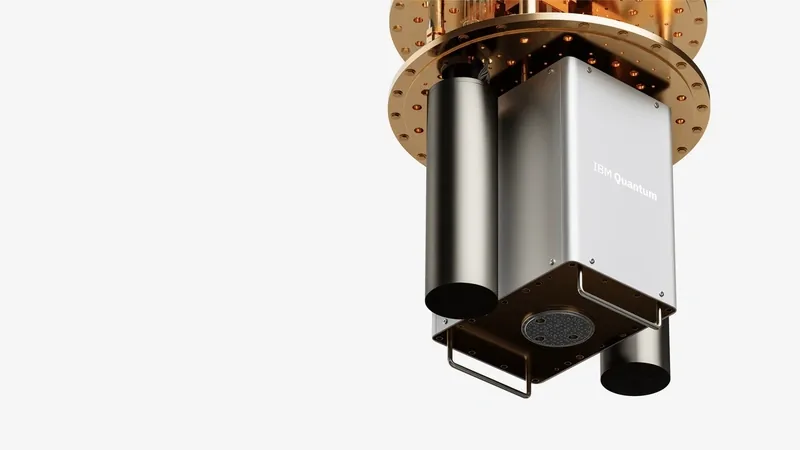
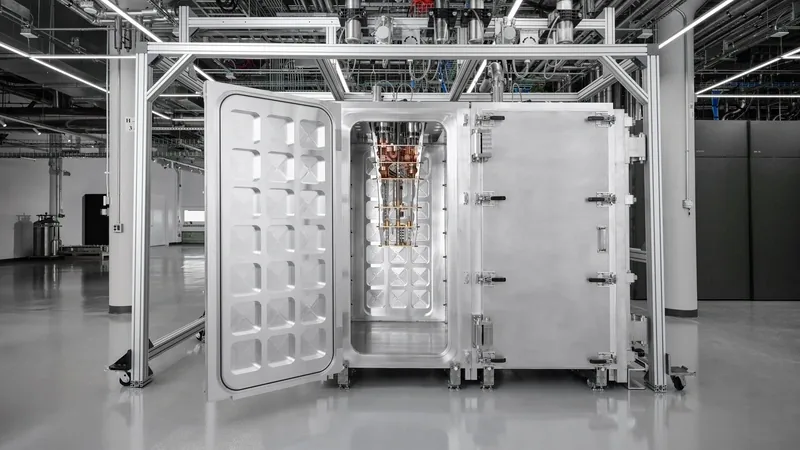
Gate-based quantum computing encodes information in superconducting qubits and manipulates them through precisely timed electromagnetic pulses. Gate circuits can implement any quantum algorithm, including QAE, QAOA, VQE, and QML. The limitation is noise: each gate operation introduces error, and circuit depth is constrained by the coherence time of the qubits. Current superconducting systems operate in the noisy intermediate-scale quantum (NISQ) regime, where per-gate error rates are on the order of a fraction of a percent to roughly one percent, precluding the deep circuits needed for quantum advantage in financial risk analysis. D-Wave annealing systems thread a quantum state through an energy minimum rather than executing gate sequences, targeting combinatorial optimization directly but lacking general programmability.
| Hardware type | Representative vendor | Problem class suited to | Current noise regime | Finance application fit |
|---|---|---|---|---|
| Superconducting gate-based | IBM Quantum, Google Quantum AI | General quantum algorithms (QAE, QAOA, QML) | NISQ; per-gate error rates on the order of a fraction of a percent to roughly one percent | Research and proof-of-concept; not production-ready |
| Quantum annealing | D-Wave | Combinatorial optimization (QUBO/Ising problems) | Analog annealing noise; not gate-model characterized | Portfolio optimization proof-of-concept; not general-purpose |
Barriers and the Road to Quantum Advantage in Finance
Quantum computing in finance faces three structural barriers before any application reaches production scale: qubit noise, quantum error correction overhead, and the requirement for fault-tolerant hardware. Each barrier is well-understood in physics; none has a near-term engineering solution that closes the gap to financial utility.
- Qubit noise and decoherence: physical qubits in current systems decohere in microseconds to milliseconds, limiting circuit depth. Gate errors accumulate with each operation. Financial algorithms like QAE require deep circuits that exceed the coherence budget of noisy intermediate-scale quantum (NISQ) hardware, producing results corrupted by noise before a useful answer emerges.
- Quantum error correction (QEC) overhead: quantum error correction (QEC) encodes one logical qubit across many physical qubits to detect and correct errors without measuring the quantum state directly. QEC requires many physical qubits to protect each logical qubit, with overhead that grows with the target error threshold, as described in the AWS Quantum Blog post on error-corrected quantum computing building blocks. Current machines carry a total physical qubit count that leaves fault-tolerant logical qubit counts extremely limited. Financial algorithms at production scale need large numbers of logical qubits, requiring substantially more physical qubits than current hardware generations provide.
- Fault-tolerant hardware timelines: roadmaps from IBM Quantum and Google Quantum AI project fault-tolerant quantum computing as a medium-to-long-term development. Research milestones are being reached in the laboratory, but the engineering path from laboratory demonstrations to hardware capable of running financial algorithms at production scale spans years. No credible timeline places fault-tolerant financial quantum advantage within a short-term horizon.
Quantum advantage in finance, meaning a quantum algorithm demonstrably outperforming classical methods on a financially relevant problem at equivalent cost, has not been demonstrated in a peer-reviewed, independently replicated benchmark. Theoretical complexity arguments favor quantum approaches; hardware reality is not yet aligned with them. The foundational algorithmic complexity context, including the Shor's and Grover's algorithm speedup classes underlying these arguments, is covered in the Shor's and Grover's algorithms analysis.
Post-Quantum Cryptography Implications for Financial Institutions
Quantum computing in finance has a defensive dimension: the same hardware that may accelerate optimization also threatens the RSA and elliptic-curve cryptography protecting financial data in transit. A sufficiently large, fault-tolerant quantum computer running Shor's algorithm could factor RSA keys and solve the discrete logarithm problem underlying elliptic-curve cryptography, breaking the encryption that secures interbank communications, payment networks, and customer data channels.
The relevant defensive actions for financial institutions center on post-quantum cryptography (PQC), the class of cryptographic algorithms designed to resist attacks from both classical and quantum computers. NIST finalized its first post-quantum cryptography standards in 2024: FIPS 203 (ML-KEM, lattice-based key encapsulation), FIPS 204 (ML-DSA, lattice-based digital signatures), and FIPS 205 (SLH-DSA, hash-based signatures). The full standardization documentation is available from the NIST post-quantum cryptography project.
Priority actions for financial institutions on the PQC migration front:
- Cryptographic inventory: catalog all RSA and elliptic-curve cryptography deployments across payment gateways, API authentication, certificate infrastructure, and data-at-rest encryption.
- Harvest-now-decrypt-later threat: adversaries may be recording encrypted financial communications now to decrypt them once fault-tolerant quantum hardware matures. Long-lived sensitive data faces this risk independent of when large-scale quantum hardware arrives.
- FIPS 203 and FIPS 204 migration planning: regulators and standards bodies recommend beginning PQC migration planning promptly. The transition timeline is measured in years; starting late compresses the available runway for testing and certification.
- Hybrid cryptography: transitional deployments can run classical and PQC algorithms in parallel, maintaining backward compatibility while introducing quantum-resistant protection.
PQC migration is the one quantum computing action financial institutions can take on a definite timeline, independent of when production quantum computers arrive. The offensive quantum computing research agenda remains speculative; the defensive cryptographic migration is a concrete, standards-backed engineering task.
References
- AWS Quantum Blog: Goldman Sachs and AWS end-to-end portfolio optimization assessment (QIPM)
- AWS Quantum Blog: Goldman Sachs and AWS data loading and block-encoding overhead
- IBM Research: Credit risk analysis using quantum computers
- IBM Research: Quantum finance research topics
- npj Quantum Information: Quantum amplitude estimation algorithms (Nature Portfolio)
- NIST: Post-quantum cryptography standards (FIPS 203, 204, 205)
- AWS Quantum Blog: Error-corrected quantum computing building blocks
Further reading
Frequently Asked Questions
Has quantum computing been deployed in production by financial institutions?
No financial institution has deployed quantum computing as a primary production system for trading, risk analysis, or fraud detection as of mid-2026. Pilot programs and research partnerships with IBM Quantum, Google Quantum AI, and D-Wave test algorithms on real hardware, but noisy intermediate-scale quantum (NISQ) devices lack the error correction required for reliable financial calculations at scale. Production use is a medium-to-long-term research target.
What is quantum advantage in finance, and has it been demonstrated?
Quantum advantage in finance would mean a quantum algorithm solving a financial problem faster or more accurately than any classical method at equivalent cost. As of mid-2026, quantum advantage has not been demonstrated for any financial use case in a peer-reviewed, independently replicated benchmark. Theoretical complexity arguments favor quantum approaches for Monte Carlo sampling and optimization, but fault-tolerant hardware capable of realizing them does not yet exist at financial scale.
Should financial institutions invest in quantum computing readiness now?
Quantum readiness for financial institutions means two things: monitoring research progress and migrating encryption to post-quantum cryptography (PQC) standards. NIST finalized its first post-quantum cryptography standards in 2024 under FIPS 203, 204, and 205; regulators and standards bodies recommend beginning PQC migration planning regardless of when large-scale quantum hardware arrives. Speculative investment in quantum hardware access is optional; PQC migration planning is not.